Adobe Faces Backlash After Artists Accuse New AI Tools of Copying Styles Without Consent
Adobe is under fire after artists claimed its latest AI tools mimic creative styles without permission. The controversy has reignited debate around AI ethics, copyright, and the future of digital art.
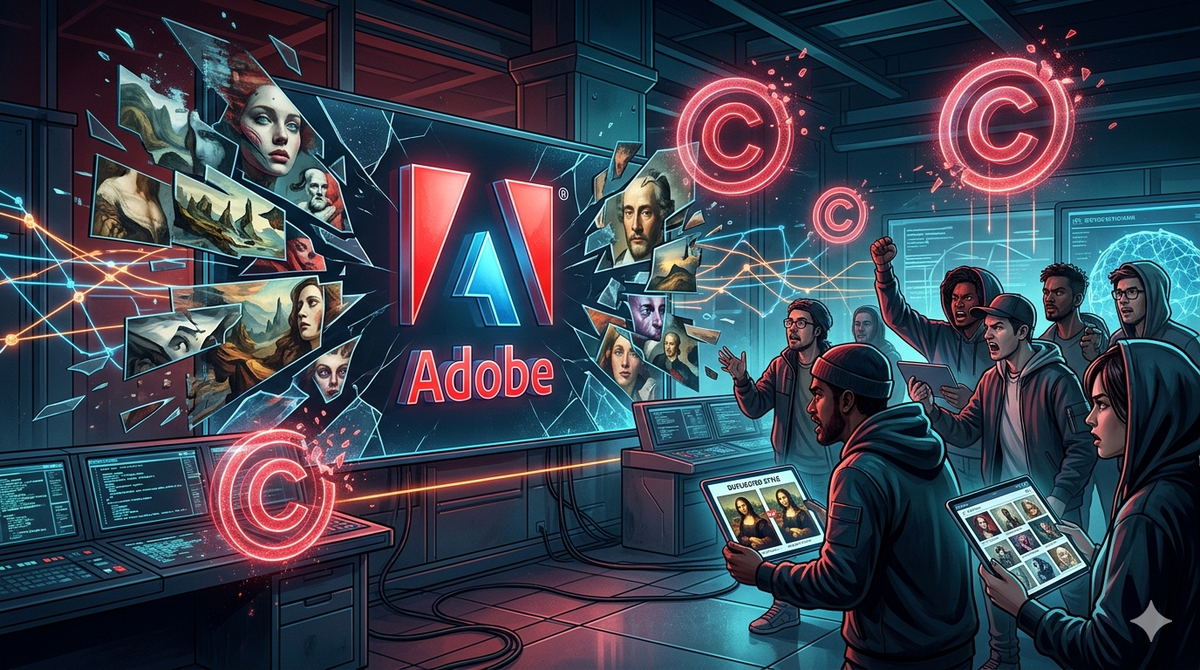
Artificial intelligence was supposed to make creativity faster. Instead, it has pulled another major tech company into a growing ethical fight. Adobe is facing criticism after artists accused its latest AI tools of copying artistic styles without consent, reigniting debates around copyright, ownership, and the future of digital creativity.
The backlash centers on Adobe Firefly and AI-powered features integrated into Photoshop and other Creative Cloud products. Artists across social media platforms have claimed some AI-generated outputs closely resemble their personal styles, compositions, and visual identities.
Artists Question How Adobe’s AI Models Were Trained
Adobe has promoted Firefly as a commercially safe generative AI system trained on licensed and public domain content. The company has repeatedly stated that it respects creators’ rights and wants to build ethical AI tools for professionals.
However, many artists remain unconvinced.
Several creators shared side-by-side comparisons online showing AI-generated images that appeared visually similar to their artwork. Critics argue that while AI may not directly copy a single image, it can still imitate recognizable artistic signatures without permission.
That concern sits at the center of a larger legal gray area. Copyright laws in many countries protect finished works, but artistic style itself is often harder to defend legally.
Creative Communities Push Back Against Generative AI
The controversy spread quickly across digital art communities, with many artists accusing technology companies of benefiting from years of human creativity without proper compensation. Some creators also criticized the lack of transparency around how AI datasets are collected and used.
Adobe responded by emphasizing that contributors to Adobe Stock may receive compensation tied to Firefly training datasets. The company also highlighted content credentials and AI labeling initiatives designed to improve transparency.
Still, critics argue those measures do not fully address concerns around consent.
For many artists, the issue is not just financial. It is personal. A unique visual style can take years to develop, making AI imitation feel less like inspiration and more like exploitation.
The AI Copyright Debate Is Expanding Across the Industry
Adobe is not the only company facing scrutiny.
Multiple AI firms developing image generators, music tools, and language models are dealing with lawsuits and public criticism over training practices. Regulators in the United States and Europe are also examining whether AI companies should disclose training data sources more clearly.
The debate has exposed a major tension inside the creative economy.
Supporters of generative AI argue the technology helps users brainstorm ideas, speed up workflows, and lower production costs. Critics warn that unchecked AI systems could devalue original creative work while concentrating power inside large technology platforms.
What This Means for Designers and Digital Artists
The backlash against Adobe highlights how rapidly AI tools are becoming embedded in professional creative software. Designers, photographers, and illustrators are now being forced to decide whether AI will become part of their workflow or something they actively resist.
Some professionals are experimenting with AI for editing and concept generation. Others fear that widespread adoption could reduce demand for original commissioned work.
The long-term outcome may depend on whether companies can create systems that balance innovation with meaningful protections for creators. Clearer licensing rules, stronger opt-out controls, and transparent compensation models are becoming central demands from artists worldwide.
Conclusion
The controversy surrounding Adobe reflects a much larger industry problem. Generative AI can accelerate creativity and unlock powerful new tools, but it also raises difficult questions about consent, ownership, and artistic identity.
Technology companies continue to push AI deeper into creative industries, while artists continue asking the same question: if machines learn from human creativity, who deserves the credit when those machines start creating too?
Fast Facts: Adobe Faces Backlash After Artists Accuse New AI Tools of Copying Styles Without Consent Explained
Why are artists criticizing Adobe’s AI tools?
Artists claim some AI-generated outputs resemble their unique visual styles, raising concerns about consent, copyright, and whether creative identities are being replicated without permission.
How has Adobe responded to the backlash?
Adobe says Firefly was trained on licensed and public domain material and states that Adobe Stock contributors may receive compensation connected to AI training datasets.
Why does this debate matter for the future of AI?
The controversy could influence future AI regulations, copyright laws, and how technology companies build generative tools for creative industries worldwide.