AI Deepfakes in India Are Entering Funerals and Weddings
How AI deepfakes in India are reshaping funerals and weddings, raising emotional, cultural, and ethical questions.
What if your late grandfather could “speak” at your wedding? Or a deceased parent could deliver one last message at their own funeral?
Across India, families are using AI deepfakes in India to recreate the voices and faces of loved ones during moments of grief and celebration. What began as viral entertainment is now moving into deeply personal rituals, forcing society to confront new emotional and ethical territory.
The Rise of AI Deepfakes in India’s Rituals
AI deepfakes rely on generative AI models that synthesize hyper realistic audio and video. Advances in voice cloning and facial reenactment, powered by tools similar to those discussed by organizations like OpenAI and Google AI, have lowered technical barriers dramatically.
According to a 2023 report by MIT Technology Review, synthetic media tools have become more accessible and affordable, enabling small studios and freelancers to offer customized deepfake services.
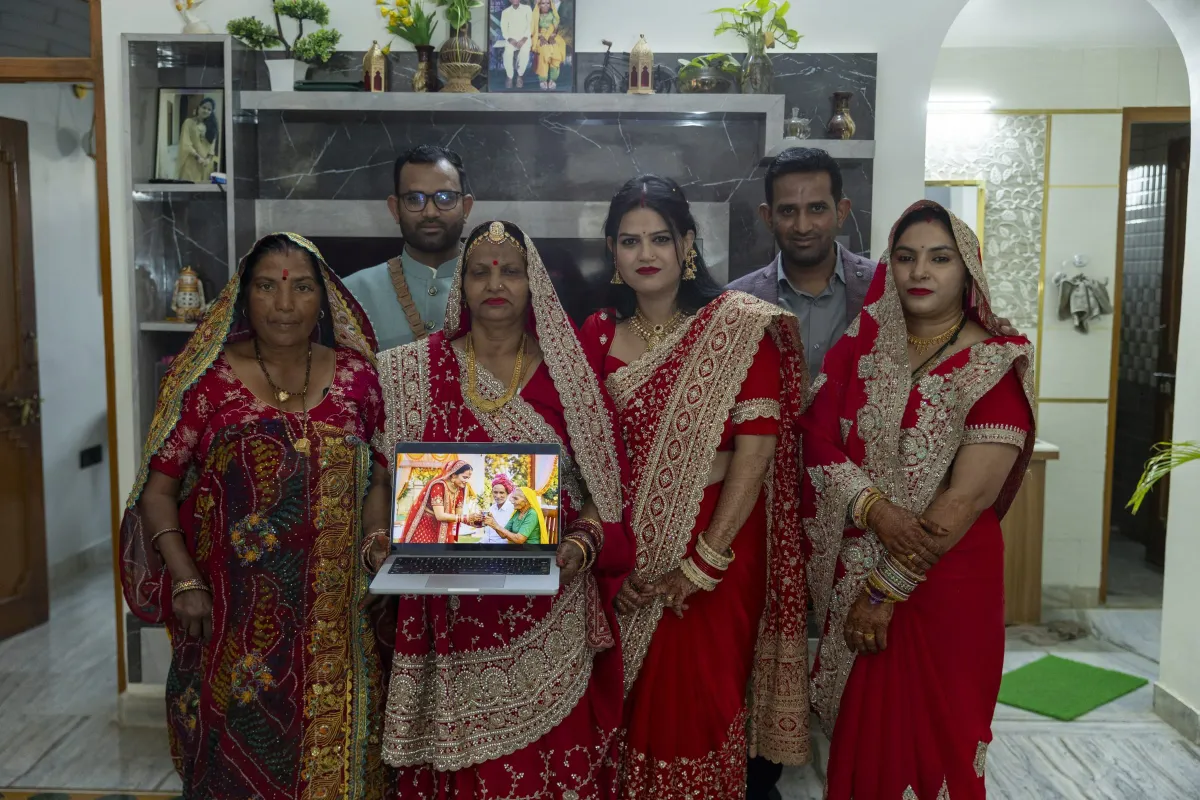
In India, where rituals surrounding death and marriage are emotionally significant and often public, this technology is finding a new market. Families commission AI generated videos in which deceased relatives appear to bless a bride or address mourners. For many, it feels comforting. For others, unsettling.
Why Families Are Turning to AI Deepfakes in India
Grief in India is communal and deeply expressive. Weddings are equally symbolic. AI deepfakes in India promise something powerful, closure.
In interviews reported by Rest of World, families described the experience as cathartic. A recreated video of a father congratulating his daughter can feel like fulfilling an unfinished emotional chapter.
There is also a social dimension. India’s massive digital footprint, combined with widespread smartphone adoption, provides abundant photos and videos to train AI models. This makes realistic recreations easier to produce compared to regions with limited archival material.
The cost is often a few thousand rupees, placing the service within reach of middle class households.
The Ethical Tightrope
However, the emotional appeal masks serious risks.
Experts have long warned about the misuse of deepfakes in politics and misinformation. The World Economic Forum has identified synthetic media as a major emerging risk. In a ritual context, the concern shifts to consent and dignity.
Did the deceased ever agree to be digitally resurrected? Could such recreations distort memory or complicate the grieving process?
Psychologists caution that prolonged exposure to hyper realistic simulations may blur emotional boundaries. While some individuals report comfort, others could struggle to accept finality.
Regulation in India remains limited. The government has signaled concern about harmful deepfakes, but enforcement mechanisms are still evolving. This leaves families and service providers operating in a gray zone.
Technology Meets Tradition
India is not rejecting tradition. It is remixing it.
AI deepfakes in India represent a collision between centuries old rituals and 21st century generative AI. This reflects a broader pattern seen globally where technology integrates into cultural practices rather than replacing them.
The question is not whether the technology will spread. It likely will. The real issue is how society sets norms around consent, transparency, and emotional well being.
What Comes Next
As generative AI continues to advance, synthetic media will only become more convincing. Policymakers, technologists, and communities must collaborate to establish guardrails.
For readers, the takeaway is simple. Before embracing such services, ask practical questions about consent, data security, and emotional impact. Technology can amplify love and remembrance. It can also complicate healing.
AI deepfakes in India are not just a tech trend. They are a cultural shift unfolding in real time.
Fast Facts: AI Deepfakes in India Explained
What are AI deepfakes?
Deepfakes are fake videos, images, or audio clips created using artificial intelligence to make it look like someone said or did something they never actually did. They can seem very real, which is why it’s important to think critically and check sources before believing what you see online.
How are AI deepfakes in India created?
AI deepfakes in India are made using machine learning models trained on photos, videos, and audio clips. The more digital material available, the more realistic the final recreation appears. Families use them at funerals or weddings to simulate messages from loved ones.
Are AI deepfakes in India legal?
AI deepfakes in India exist in a legal gray area. While not always illegal, ethical concerns about consent, misuse, and emotional harm remain significant and largely unresolved.