AI Impact Summit 2026: World Leaders Push for Trust, Balance, and Global Cooperation
As artificial intelligence reshapes economies and geopolitics, the AI Impact Summit 2026 reveals a global push to control the technology before it controls us.
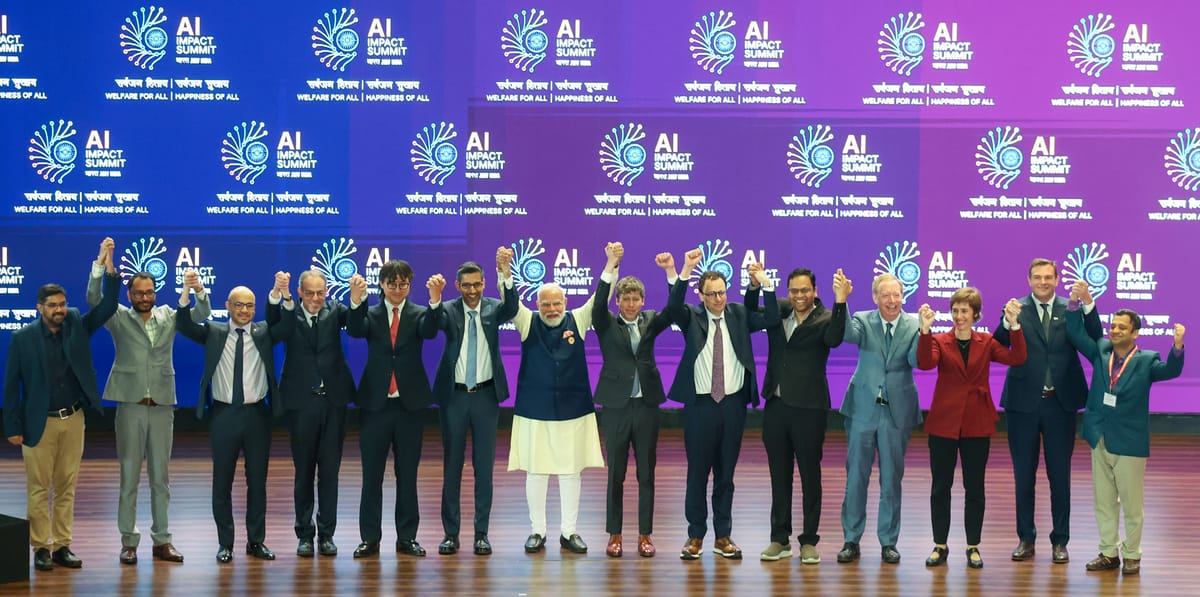
Can the world agree on how artificial intelligence should shape humanity’s future? That was the defining question at the AI Impact Summit 2026 in New Delhi, India, where presidents, prime ministers, and tech executives gathered to debate how to balance innovation with responsibility.
As artificial intelligence rapidly transforms economies, healthcare systems, education, and defense, global leaders made one thing clear: AI governance can no longer be fragmented. The AI Impact Summit 2026 signaled a growing consensus that trust, transparency, and international cooperation must anchor the next phase of AI development.
Why the AI Impact Summit 2026 Matters Now
Artificial intelligence is projected to contribute up to $15.7 trillion to the global economy by 2030, according to PwC. Meanwhile, reports from organizations like the OECD and UNESCO have warned about risks tied to bias, misinformation, surveillance, and job displacement.
Against this backdrop, the AI Impact Summit 2026 brought policymakers and industry leaders together to address three urgent priorities:
- Building public trust in AI systems
- Creating balanced regulatory frameworks
- Strengthening cross-border cooperation
The urgency reflects how AI is increasingly embedded in national infrastructure, financial systems, and public services.
Trust and Transparency Take Center Stage
One of the strongest themes at the AI Impact Summit 2026 was trust. Leaders emphasized the need for explainable AI systems and transparent data usage policies.
Institutions such as OpenAI and Google DeepMind have previously highlighted the importance of alignment and safety research. At the summit, policymakers echoed those concerns, calling for clearer accountability mechanisms when AI systems fail or cause harm.
Trust is not just an ethical issue. It is an economic one. Without public confidence, AI adoption slows, investment hesitates, and innovation stalls.
Balancing Innovation and Regulation
A key debate during the AI Impact Summit 2026 centered on regulation. Too little oversight risks abuse. Too much could stifle innovation.
The European Union’s AI Act, for example, offers a risk-based regulatory model. Other nations are exploring similar frameworks. Leaders at the summit suggested that regulatory alignment across borders could prevent a patchwork of conflicting rules that burden global companies.
However, critics warned that overregulation may limit startups and emerging economies from competing with established tech giants.
The consensus? Smart, adaptive policy is better than rigid control.
Stronger Global Cooperation in the Age of AI
Perhaps the most significant takeaway from the AI Impact Summit 2026 was the push for international coordination.
Artificial intelligence does not respect borders. Data flows globally. So do risks.
Leaders discussed creating shared standards for AI safety testing, ethical guidelines, and cybersecurity resilience. This mirrors calls from the United Nations and G20 forums for cooperative AI governance.
The idea is simple: fragmented AI policies increase instability. Coordinated frameworks strengthen global resilience.
What This Means for Businesses and Individuals
For businesses, the AI Impact Summit 2026 signals stricter compliance expectations but also clearer long-term rules.
For individuals, it means growing emphasis on digital literacy, transparency, and AI accountability.
For governments, the challenge will be execution. Statements are easy. Harmonizing laws across political systems is not.
Still, the summit reflects a broader shift. Artificial intelligence is no longer just a technological breakthrough. It is a geopolitical priority.
Conclusion
The AI Impact Summit 2026 marked a turning point in global AI governance discussions. Leaders acknowledged that innovation without guardrails creates risk, but regulation without flexibility slows progress.
The path forward appears rooted in trust, balanced policy, and stronger international cooperation.
The real test will not be in summit speeches. It will be in the policies that follow.
Fast Facts: AI Impact Summit 2026 Explained
What is the AI Impact Summit 2026?
The AI Impact Summit 2026 is a global artificial intelligence conference held in New Delhi, India (Feb 16–20), bringing together world leaders, tech CEOs, researchers, and policymakers to discuss responsible AI development, governance, real-world impact, and inclusive growth. It’s organised under India’s IndiaAI Mission.
Why is the AI Impact Summit 2026 important?
The AI Impact Summit 2026 is important because it shapes global AI cooperation on inclusive growth, policy, infrastructure, and real-world applications, promotes responsible and equitable AI deployment, and positions India as a key leader in the future of artificial intelligence.
What are the main challenges discussed at the AI Impact Summit 2026?
At the AI Impact Summit 2026, key challenges discussed were responsible AI governance (trust, safety, transparency), ethical use and bias mitigation, equitable access and skill development, balancing innovation with regulation, and translating AI infrastructure into real-world public-interest outcomes.