AI in Drug Discovery Hits New Milestone: Faster Cures or Faster Risks?
AI in drug discovery reaches a major milestone as new breakthroughs slash development time and costs. Here is what it means for medicine, risks, and the future of healthcare.
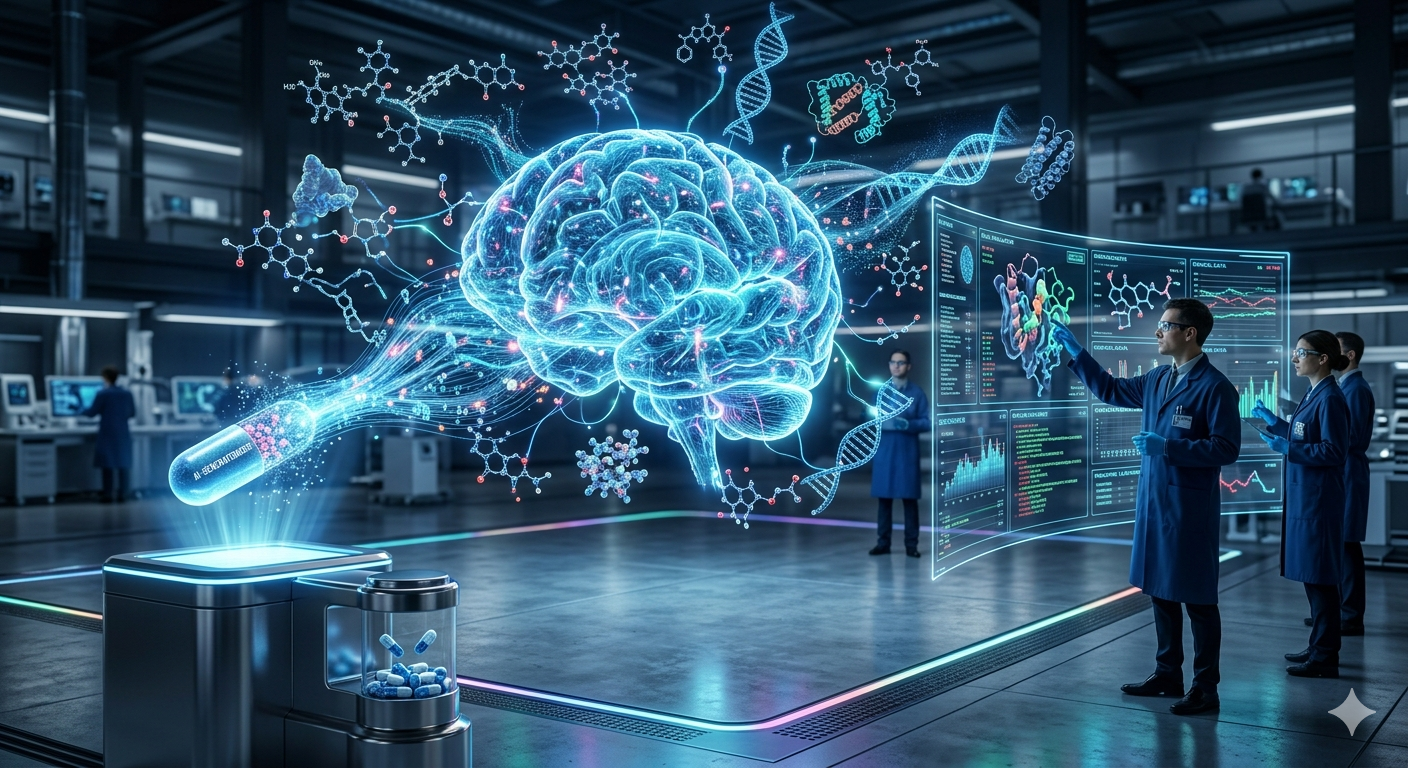
What if the next life-saving drug is discovered not in a lab, but by an algorithm? That shift is already happening. AI in Drug Discovery Hits new milestone as researchers compress years of pharmaceutical research into months, fundamentally changing how new medicines are created.
The Breakthrough Behind AI in Drug Discovery Hits New Milestone
Recent advances in generative AI and protein modeling have pushed drug discovery forward. Systems like DeepMind’s AlphaFold have predicted over 200 million protein structures, according to research published in Nature. This has unlocked biological insights at an unprecedented scale.
Pharmaceutical companies are now designing new drug candidates using AI. In 2024, Insilico Medicine advanced an AI-designed drug into Phase II trials in under 30 months, compared to traditional timelines that often exceed a decade.
This is why AI in Drug Discovery Hits new milestone reflects a structural shift in pharmaceutical innovation.
How AI Is Transforming Drug Development
AI is reshaping each stage of the drug development pipeline:
- Target identification: AI scans large datasets to identify disease targets faster
- Molecule design: Generative models create new chemical compounds
- Clinical predictions: Algorithms estimate trial success rates early
According to Boston Consulting Group, AI could reduce drug discovery costs by up to 30 percent, improving efficiency across the industry.
Real-World Impact on Healthcare
The impact of AI in Drug Discovery Hits new milestone is already visible in real-world applications:
- Cancer treatments with personalized targeting
- Research for rare diseases with limited funding
- Discovery of new antibiotics to combat resistance
MIT researchers used AI to identify a new antibiotic effective against drug-resistant bacteria, highlighting how AI can unlock solutions in critical areas of medicine.
Risks and Challenges Ahead
Despite progress, significant challenges remain:
- Data bias: Models rely on existing datasets that may lack diversity
- Limited transparency: Many AI systems operate as black boxes
- Regulatory gaps: Approval frameworks are still evolving
The World Health Organization has warned that AI in healthcare must be carefully governed to prevent widening global health inequalities.
What This Means for the Future
AI will redefine how scientists work rather than replace them. Faster pipelines, lower costs, and more personalized treatments are expected outcomes.
At the same time, stronger regulatory oversight and ethical frameworks will be required to ensure safe deployment.
AI in Drug Discovery Hits new milestone signals a turning point where technology accelerates medicine at scale. The opportunity is massive, but the responsibility is just as significant.
Fast Facts: AI in Drug Discovery Hits new milestone Explained
What does AI in drug discovery actually mean?
AI in Drug Discovery Hits new milestone refers to using algorithms to identify targets, design molecules, and predict outcomes faster than traditional research methods.
How advanced is AI in drug discovery today?
AI in Drug Discovery Hits new milestone shows drugs can be designed and moved into trials in under three years, compared to over a decade using conventional approaches.
What are the key concerns?
AI in Drug Discovery Hits new milestone also raises concerns around biased data, lack of transparency, and evolving regulations affecting safety and fairness.