AI Is Forcing Out America's Top CEOs
AI is no longer just a tool. It is reshaping leadership itself, quietly pushing out CEOs who fail to adapt to a faster, data-driven, machine-augmented reality.
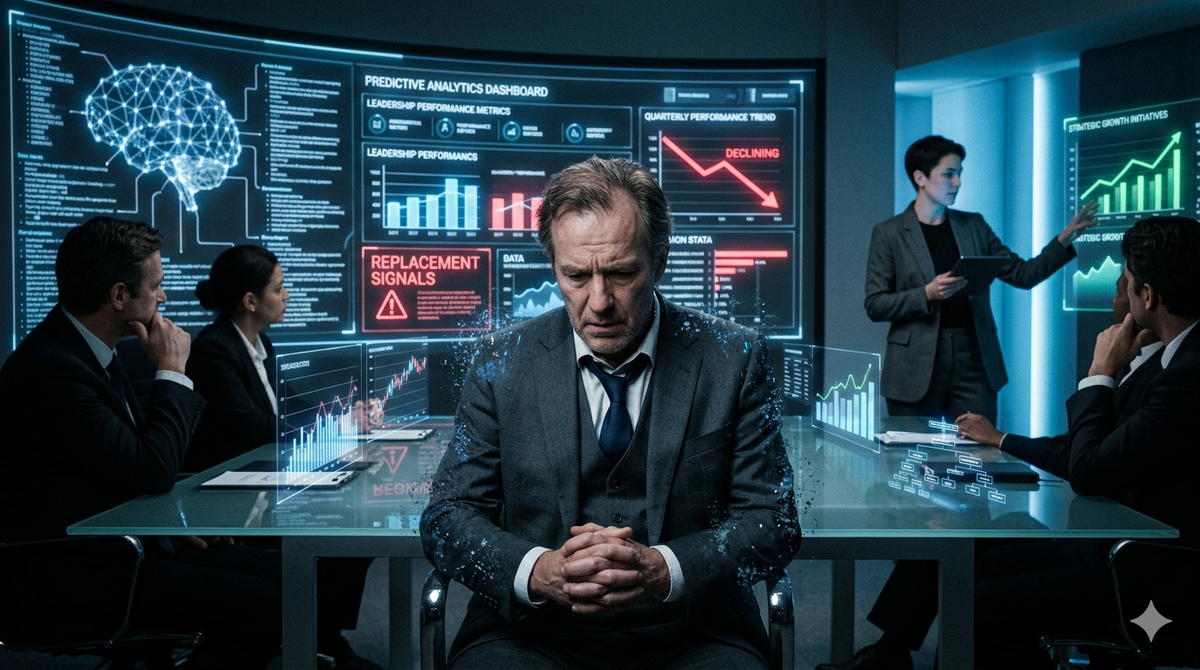
What happens when machines stop assisting leaders and start exposing their limits? Across corporate America, artificial intelligence is no longer a back-end tool. It is reshaping leadership itself, quietly pushing out CEOs who fail to adapt to a faster, data-driven reality.
From boardrooms to quarterly earnings calls, expectations have shifted. Leadership today is being measured not just by vision, but by the ability to understand and deploy AI effectively. And not everyone is keeping up.
The New CEO Skillset Is AI-Driven
The role of a CEO has fundamentally changed. Strategic thinking still matters, but now it must be paired with a working understanding of artificial intelligence.
According to IBM’s CEO Study, more than 75 percent of global CEOs believe competitive advantage depends on advanced AI adoption. Yet nearly half admit they lack the expertise to implement it effectively. That gap is becoming a liability.
Boards are no longer satisfied with surface-level awareness. They are looking for leaders who can translate AI investments into measurable business outcomes. CEOs who cannot do that are increasingly seen as replaceable.
Resistance Is Becoming a Career Risk
A pattern is emerging across industries. Companies facing digital disruption are accelerating leadership changes, often replacing traditional executives with those who have strong technology or AI backgrounds.
This is not about trends or hype. AI is transforming pricing models, supply chains, hiring decisions, and customer engagement. Treating it as a side initiative slows down the entire organization. In a competitive market, that delay can be costly.
For many CEOs, hesitation is no longer neutral. It is a risk.
Data Is Replacing Instinct
For decades, top executives relied heavily on intuition built from years of experience. AI is challenging that approach.
Predictive analytics and real-time data systems are reshaping decision-making. McKinsey reports that companies using AI-driven forecasting have seen operational efficiency improve by up to 20 percent.
This shift creates pressure. Leaders who ignore data insights appear outdated, while those who rely entirely on AI risk losing critical human judgment. Finding balance is difficult, and not every CEO is managing it well.
The Rise of AI-Native Leadership
A new generation of leaders is taking shape. These executives are comfortable working alongside algorithms and making decisions backed by data.
They prioritize experimentation, move quickly, and treat AI as central to business strategy rather than an add-on. They also invest early in talent and infrastructure needed to scale AI across the organization.
This shift is creating a clear divide. Companies led by AI-native leaders are moving faster, while others struggle to keep pace.
Risks, Ethics, and the Human Factor
The transition is not without consequences. AI systems can introduce bias, create compliance challenges, and raise serious ethical concerns.
Leaders who push aggressive AI adoption without proper oversight risk damaging trust and brand reputation. At the same time, increased efficiency often leads to workforce restructuring, adding social and organizational pressure.
CEOs today are expected to balance innovation with responsibility. That expectation is high, and the margin for error is shrinking.
Conclusion
The shift is not dramatic or sudden, but it is real. AI is redefining what effective leadership looks like. CEOs who adapt are shaping the future of their companies. Those who do not are increasingly being replaced by leaders who can navigate a world driven by data, speed, and intelligent systems.
Fast Facts: AI Is Forcing Out America's Top CEOs Explained
What does “AI Is Forcing Out America's Top CEOs” actually mean?
It means companies are replacing leaders who cannot adapt to AI-driven strategies. AI Is Forcing Out America's Top CEOs by raising expectations around data, speed, and innovation.
Why is AI impacting CEOs specifically?
AI changes decision-making at the highest level. AI Is Forcing Out America's Top CEOs because leadership now requires technical understanding alongside traditional business skills.
Is this shift good or risky for companies?
It is both. AI Is Forcing Out America's Top CEOs can drive innovation, but it also creates risks if AI is adopted without proper oversight or ethical safeguards.