AI Kill Chain: How the U.S. Is Using Artificial Intelligence to Bomb Iran
As the U.S. deploys an AI kill chain in its war against Iran, critics warn that algorithm-driven warfare could accelerate conflicts while blurring accountability for life-and-death decisions.
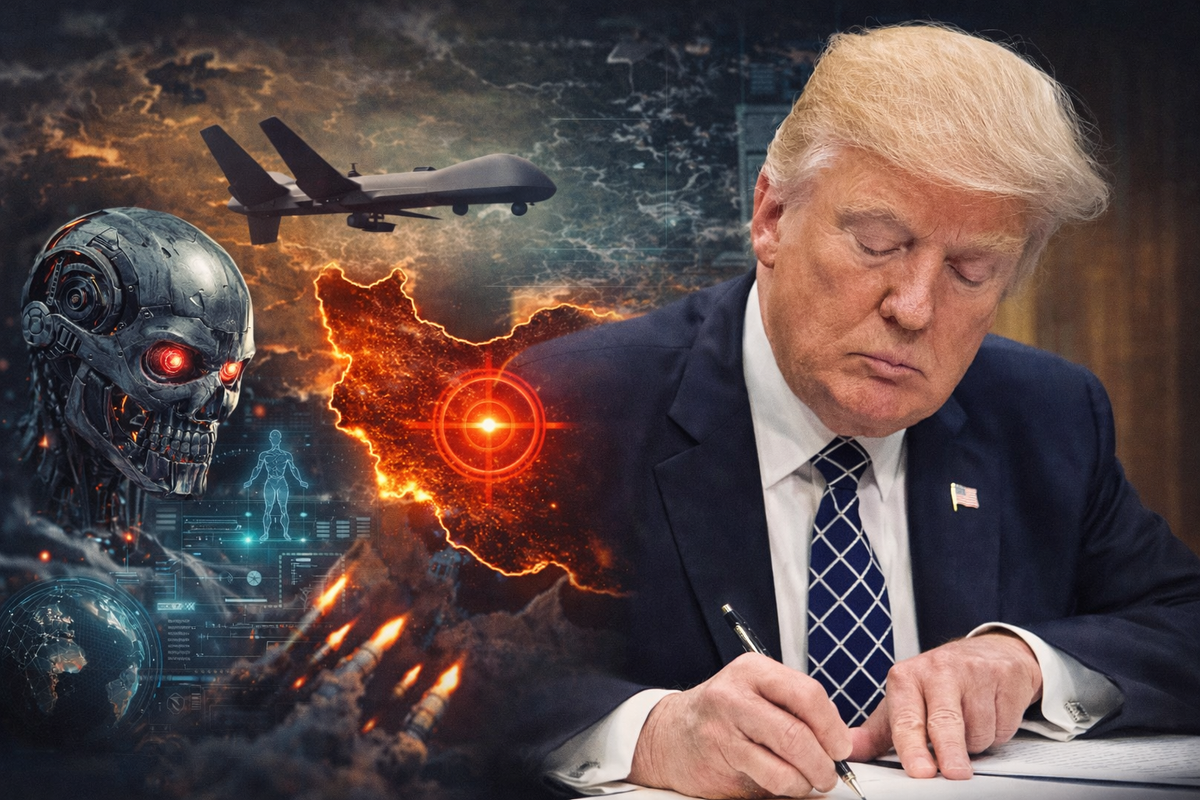
What happens when war moves at the speed of algorithms rather than human judgment?
The latest U.S. strikes on Iran suggest that this future may already be here. Military planners are increasingly relying on what experts call an AI kill chain, a system where artificial intelligence helps identify targets, prioritize attacks, and accelerate military decisions. Supporters argue that the technology makes operations faster and more precise. Critics warn it risks turning warfare into a semi-automated process with profound ethical consequences.
Recent reports indicate that the U.S. military used advanced AI tools, including the Maven Smart System developed with Palantir and the large language model Claude, to assist in intelligence analysis and target selection during operations against Iran.
The debate now extends far beyond military efficiency. It raises urgent questions about accountability, civilian risk, and the growing automation of lethal force.
What Is the AI Kill Chain?
The AI kill chain refers to the sequence of steps that move from identifying a potential target to launching a strike. Traditionally this process could take hours or days. AI systems are dramatically compressing that timeline.
Platforms such as the Maven Smart System analyze data from satellites, drones, intercepted communications, and more than 150 intelligence feeds. The system can identify vehicles, buildings, and military infrastructure while recommending possible targets and matching them with appropriate weapons.
During the opening phase of the Iran conflict, AI reportedly helped the U.S. military generate and prioritize over 1,000 potential targets in just 24 hours.
In practical terms, this means the time between detecting a threat and launching a strike can shrink from hours to minutes or even seconds.
Supporters argue that such speed can reduce battlefield uncertainty. Critics say it risks pushing human oversight to the margins.
How the AI Kill Chain Is Being Used Against Iran
Reports indicate that the U.S. military has integrated the AI kill chain into operations monitoring Iranian-backed militias and strategic assets in the Middle East. AI models analyze drone feeds, satellite imagery, and signals intelligence to flag suspicious activity.
Once a potential target is identified, the system rapidly pushes recommendations to military operators who can approve strikes. This compressed decision cycle allows strikes to occur faster than traditional intelligence pipelines would allow.
The Pentagon has invested heavily in these capabilities through initiatives such as the Joint All-Domain Command and Control (JADC2) network, which aims to connect sensors and weapons across the military.
While the U.S. government claims these systems increase accuracy, independent verification remains limited. Experts caution that AI models trained on incomplete or biased data may misinterpret patterns.
In conflict zones with dense civilian populations, such errors could have devastating consequences.
Silicon Valley’s Growing Role in War
Another controversial element is the involvement of private technology companies.
The AI systems supporting the AI kill chain rely on software and models developed by firms such as Palantir and Anthropic. Their technologies, originally designed for data analysis or conversational AI, are now being integrated into battlefield command systems.
This trend blurs the boundary between civilian technology and military applications. It also exposes tech companies to intense scrutiny over how their tools are used.
Some AI developers have attempted to limit military uses of their models, but defense agencies increasingly see these systems as strategic assets in a global AI arms race.
The Ethical Crossroads of AI Warfare
The Iran conflict may mark a turning point in the evolution of warfare.
Artificial intelligence can undoubtedly improve intelligence analysis and battlefield coordination. But the AI kill chain also raises uncomfortable questions about how much control humans should retain over life-and-death decisions.
If AI systems continue to compress military decision timelines, war could become faster, more automated, and potentially more unpredictable.
For policymakers and technologists alike, the challenge is clear. The world must decide whether AI will remain a tool that assists human judgment or become the system that quietly replaces it.
A Dangerous Precedent for Global Warfare
The normalization of the AI kill chain could reshape modern warfare. If powerful nations deploy algorithm-driven targeting systems, rivals may follow.
China, Russia, and several NATO countries are already investing heavily in military AI. The risk is a technological arms race where speed and automation become strategic advantages.
Yet warfare accelerated by machines leaves less room for deliberation, diplomacy, or error correction.
History shows that military technologies often spread faster than ethical safeguards.
As AI continues to evolve, the debate over its role in warfare is likely to intensify.
Fast Facts: AI Kill Chain Explained
What is an AI kill chain?
An AI kill chain is a military targeting process where artificial intelligence analyzes surveillance data to detect, track, and help neutralize targets faster than traditional intelligence workflows.
How is the AI kill chain used in the war against Iran?
The AI kill chain often relies on platforms like Palantir’s Maven Smart System and AI models such as Claude to analyze satellite images, drone footage, and communications data. The system speeds up target identification and allows operators to approve strikes more quickly.
Why is the AI kill chain controversial?
Critics say the AI kill chain speeds up warfare so much that human oversight may shrink, increasing risks of mistakes, civilian harm, and unclear accountability.