AI Must Serve Public Interest: Key Takeaways from India AI Impact Summit
Experts said catalytic public and philanthropic funding, shared computing infrastructure, and interoperable governance can make AI a global force for public good with equitable access.
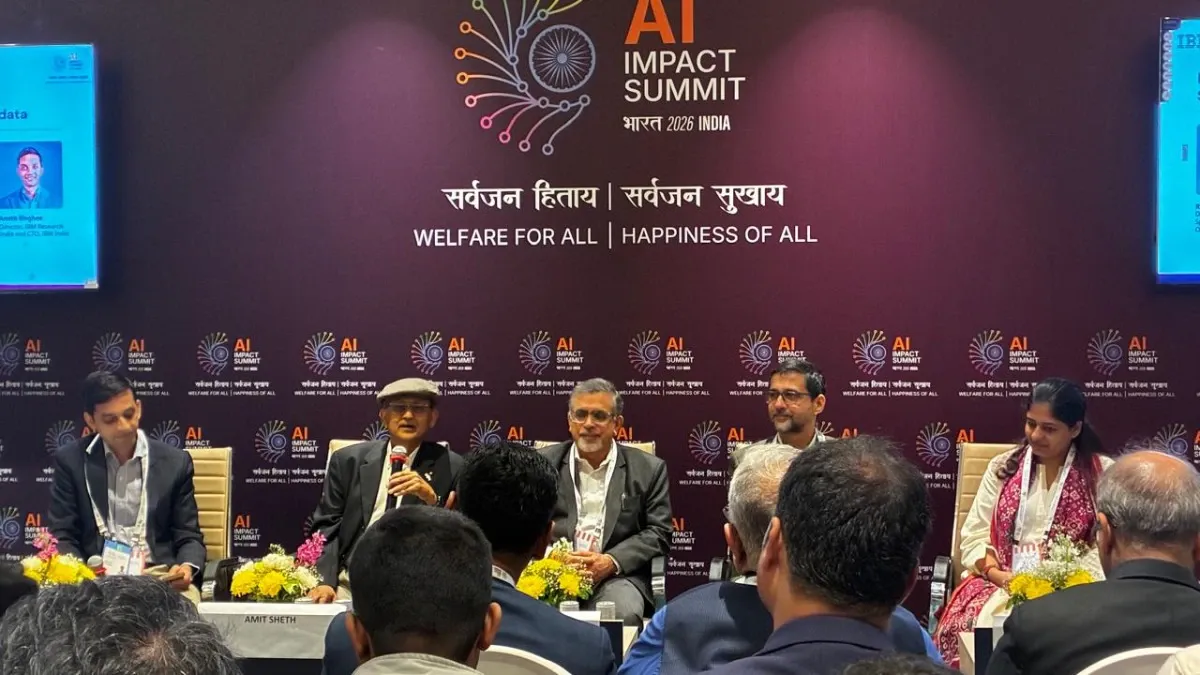
Can artificial intelligence truly transform a nation if it only builds technical capacity but ignores public good? That question set the tone at the recent AI Must Serve Public Interest discussions during the India AI Impact Summit, where policymakers, technologists, and researchers stressed that AI must go beyond innovation metrics and focus on real societal outcomes.
Hosted in India amid the country’s accelerated digital transformation, the summit underscored a crucial shift. The narrative is no longer about how powerful AI models are. It is about who they benefit and how responsibly they are deployed.
Why “AI Must Serve Public Interest” Is More Than a Slogan
At the India AI Impact Summit, experts emphasized that AI development cannot stop at skill-building or infrastructure creation. While capacity building remains important, the broader objective is ensuring that AI applications improve healthcare, agriculture, education, and governance.
India’s digital public infrastructure, including platforms like Aadhaar and UPI, has already demonstrated how technology can scale for social impact. According to the World Bank, India’s digital ID program has enabled billions of secure transactions and expanded financial inclusion. Speakers argued that similar public-interest thinking must guide AI adoption.
The key takeaway was clear: AI must serve public interest by addressing inequality, accessibility, and affordability.
From Capacity Building to Real-World Impact
India has invested heavily in AI research, startup ecosystems, and skilling initiatives. Reports from NASSCOM estimate that India’s AI market is projected to reach billions in value over the next few years. However, experts warned against measuring success only through market size or model capability.
Instead, they advocated outcome-based evaluation. For example:
- AI-powered crop advisory tools for small farmers
- Predictive analytics for public health surveillance
- AI chatbots for citizen grievance redressal
These are practical applications where AI must serve public interest rather than remain confined to research labs.
Balancing Innovation With Ethics and Accountability
Global AI leaders such as OpenAI and Google DeepMind have repeatedly highlighted the need for responsible AI governance. At the summit, speakers echoed similar concerns.
Bias in datasets, surveillance risks, and data privacy were central themes. India’s forthcoming AI regulatory frameworks are expected to align with global standards while reflecting local realities.
Experts cautioned that without ethical guardrails, AI systems can amplify existing social inequities. Public interest requires transparency, explainability, and accountability.
The Road Ahead for India’s AI Ecosystem
India is uniquely positioned. It has a vast digital user base, strong IT services expertise, and growing government backing for AI research.
However, the India AI Impact Summit signaled that progress must be inclusive. Investments should prioritize rural connectivity, regional language AI models, and open datasets that reflect India’s diversity.
The message resonated strongly: AI must serve public interest, not just technological ambition.
Conclusion
The India AI Impact Summit marked a pivotal moment in the country’s AI journey. The conversation is evolving from capability to responsibility. From skilling to societal impact.
If India aligns innovation with public welfare, it could set a global precedent for ethical, inclusive AI deployment.
The real test will not be how advanced its AI models become. It will be how meaningfully they improve everyday lives.
Fast Facts:
What does “AI Must Serve Public Interest” mean?
AI Must Serve Public Interest means AI development should prioritize societal benefit over technical progress alone. It focuses on equitable access, ethical safeguards, and real-world impact across sectors like healthcare, agriculture, and governance.
How can AI serve public interest in India?
AI Must Serve Public Interest through applications like crop advisory systems, public health prediction tools, and citizen service chatbots. These use cases directly improve lives rather than just boosting AI research metrics.
What are the risks if AI ignores public interest?
If AI Must Serve Public Interest principles are ignored, systems may reinforce bias, widen inequality, and threaten privacy. Ethical oversight and inclusive design are essential to prevent harm.