Amazon Facing Seller Protests Over Rising Fees Tied to Fulfillment and Ads
Amazon sellers are pushing back as rising fulfillment and advertising fees squeeze margins and reshape the economics of selling on the world’s largest marketplace.
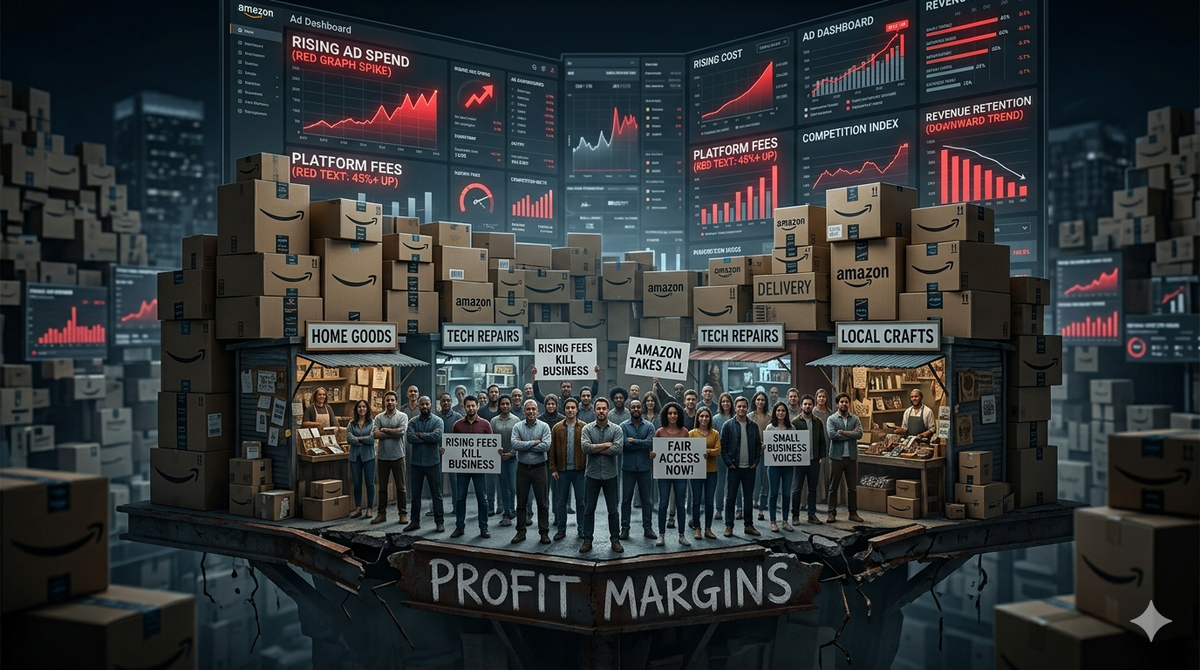
Is selling on Amazon still profitable if the platform keeps increasing its cut? That question is driving a growing wave of frustration as Amazon faces seller protests over rising fees tied to fulfillment and ads.
Across major markets, sellers are raising concerns that higher Fulfillment by Amazon (FBA) costs and rising advertising expenses are squeezing margins and reshaping how businesses operate on the platform.
Why Sellers Are Protesting Now
Recent fee increases have pushed many sellers to a breaking point. Amazon has steadily raised FBA storage and delivery charges, referral fees in key categories, and advertising costs driven by competitive bidding.
Data from marketplace analysts such as Marketplace Pulse suggests that Amazon’s total take from sellers can reach nearly 50 percent of revenue in some cases when logistics and ads are combined.
For smaller businesses, this is not just a margin issue. It is an existential one.
Amazon Facing Seller Protests Over Rising Fees Tied to Fulfillment and Ads
The core concern is dependency. Sellers feel locked into Amazon’s ecosystem to remain competitive.
To succeed, they often need to use FBA for faster delivery and Prime eligibility, while also investing heavily in ads to maintain visibility in crowded search results.
This creates a cycle where rising fees force sellers to spend more just to maintain the same sales levels. Some sellers have responded by pausing listings, increasing prices, or coordinating protests to draw attention to the issue.
The Advertising Cost Problem
Amazon’s advertising business has become a major revenue driver, generating over $46 billion in 2023 based on company disclosures.
For sellers, ads are increasingly unavoidable. Sponsored listings dominate search results, reducing organic reach and pushing sellers toward paid promotion.
Many sellers now spend between 15 and 30 percent of their revenue on ads, significantly impacting profitability and limiting growth.
Amazon’s Justification
Amazon maintains that its fees reflect the value it provides, including a global logistics network, access to hundreds of millions of customers, and advanced advertising tools.
The company also cites rising operational costs such as fuel, labor, and warehousing as reasons for price increases.
However, critics argue that sellers have limited bargaining power and few viable alternatives at scale.
What This Means for E-commerce
The tension highlights a shift in marketplace dynamics. Sellers are exploring other platforms like Shopify and Walmart Marketplace to reduce reliance on Amazon.
Consumers may see higher prices as sellers pass on increased costs. At the same time, regulators are paying closer attention to marketplace practices and competition concerns.
Amazon remains dominant, but growing dissatisfaction among sellers signals potential changes ahead in how digital marketplaces operate.
Conclusion
The issue of Amazon facing seller protests over rising fees tied to fulfillment and ads reflects deeper questions about control, dependency, and sustainability in e-commerce.
Amazon built a powerful ecosystem that millions rely on. Now, sellers are challenging whether that system still works in their favor, and the outcome could reshape the future of online retail.
Fast Facts: Amazon Facing Seller Protests Over Rising Fees Tied to Fulfillment and Ads Explained
What is happening with Amazon seller protests?
Amazon facing seller protests over rising fees tied to fulfillment and ads refers to growing frustration among sellers over increasing costs that reduce profits and make it harder to compete.
Why are fees such a big issue?
Amazon facing seller protests over rising fees tied to fulfillment and ads shows how sellers must pay more for logistics and ads, creating dependency while shrinking already tight margins.
What are the risks going forward?
Amazon facing seller protests over rising fees tied to fulfillment and ads could lead to higher prices, fewer sellers, and increased regulatory scrutiny if concerns continue to escalate.