Amazon increasing seller fees in select categories, triggering backlash from small businesses
Amazon’s latest seller fee hikes are sparking frustration among small businesses, raising concerns over profitability, platform dependence, and the future of independent sellers in e-commerce.
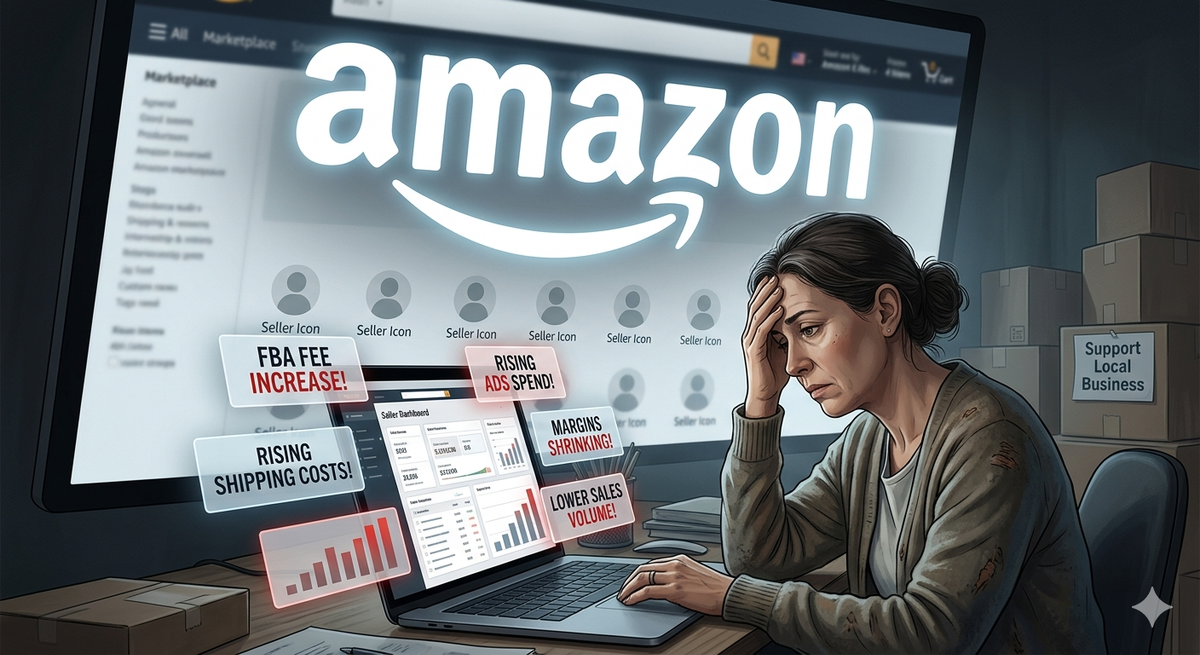
What happens when the world’s largest online marketplace quietly raises the cost of doing business? You get backlash, and plenty of it.
Amazon increasing seller fees in select categories, triggering backlash from small businesses is quickly becoming a defining moment in e-commerce. Fee hikes are affecting categories like apparel, beauty, and household goods, where profit margins are already tight.
A Growing Cost Burden for Sellers
Amazon’s fee structure has always included referral fees, fulfillment costs, and storage charges. These typically range from 8% to 15% depending on the category. Recent updates, including higher fulfillment fees and new inventory surcharges, are pushing overall costs higher.
For small businesses, even a slight increase in fees can significantly impact profitability. Sellers operating on modest margins are finding it harder to sustain their operations on the platform.
Why Amazon Is Raising Fees
Amazon points to rising operational costs as the main driver. Inflation, logistics expansion, and faster delivery expectations have increased expenses across its fulfillment network.
The company has invested heavily in automation and AI-driven logistics to support same-day and next-day delivery. These improvements come at a cost, and sellers are now absorbing part of that burden.
While Amazon positions these changes as necessary for maintaining service quality, many sellers see them as excessive and poorly timed.
Amazon Increasing Seller Fees in Select Categories, Triggering Backlash from Small Businesses
The response from sellers has been immediate. Online communities and seller forums are filled with concerns about shrinking margins and lack of transparency.
Small businesses argue they have limited control over pricing due to intense competition and Amazon’s own private-label products. Passing increased costs to customers risks losing visibility and sales.
As a result, some sellers are exploring alternatives such as Shopify, Walmart Marketplace, and direct-to-consumer models. However, leaving Amazon entirely remains difficult due to its massive reach.
Real-World Impact on Small Businesses
For many sellers, the math no longer works. A business with a 20% margin could see profits significantly reduced after fee adjustments.
This is not just a financial issue. It is also changing how sellers view Amazon. What was once seen as a growth partner is increasingly viewed as a costly intermediary.
This shift could influence long-term seller behavior, encouraging diversification across multiple platforms.
The Bigger Picture: Platform Dependency
Amazon increasing seller fees in select categories, triggering backlash from small businesses highlights the risks of relying on a single platform.
Amazon offers unmatched scale and logistics, but it also controls pricing structures and visibility. This imbalance raises concerns about fairness and sustainability for small businesses.
Regulators in the United States and Europe have already begun examining marketplace practices. Fee structures and competitive dynamics may face increased scrutiny in the future.
Conclusion
Amazon’s fee increases signal a shift in the e-commerce landscape. Small businesses are being forced to reassess their strategies, diversify revenue channels, and reduce dependence on a single platform.
The long-term impact will depend on how sellers adapt and whether Amazon can maintain trust within its marketplace ecosystem.
Fast Facts: Amazon increasing seller fees in select categories, triggering backlash from small businesses Explained
What does this issue mean for sellers?
Amazon increasing seller fees in select categories, triggering backlash from small businesses means higher costs for listing and fulfillment, reducing profit margins and forcing sellers to rethink pricing and platform dependence.
Why are small businesses reacting strongly?
Amazon increasing seller fees in select categories, triggering backlash from small businesses is causing frustration because many sellers already operate on thin margins and have limited ability to absorb or pass on extra costs.
What are the long-term implications?
Amazon increasing seller fees in select categories, triggering backlash from small businesses could push sellers toward alternative platforms, increase regulatory scrutiny, and reshape how businesses approach online marketplaces.