Amazon Piloting Cashierless Tech in Smaller Retail Formats After Scaling Challenges
Amazon is rethinking its cashierless retail strategy by shifting to smaller stores after facing scaling challenges with its Just Walk Out technology. The move signals a more focused, cost-efficient approach to automated shopping.
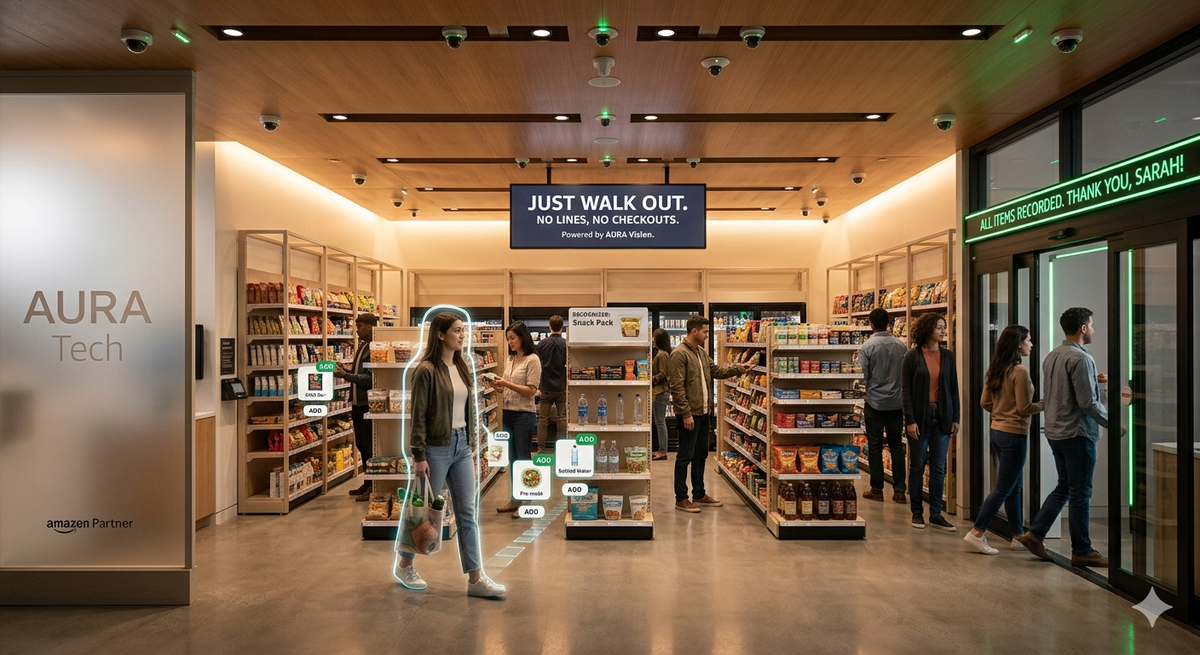
What happens when one of the most hyped retail innovations hits a wall? It gets redesigned. Amazon is piloting cashierless tech in smaller retail formats after scaling challenges exposed the limits of its Just Walk Out system.
The concept was simple and futuristic. Walk in, pick up items, walk out. No billing counters, no queues. But scaling that experience across larger stores proved far more complicated than expected.
Why Amazon Is Rethinking Cashierless Retail
Amazon’s cashierless system uses computer vision, sensors, and machine learning to track purchases in real time. It performed well in smaller Amazon Go stores, but expanding into larger grocery formats introduced higher costs and operational complexity.
Industry analysis, including insights highlighted by MIT Technology Review, indicates that infrastructure and maintenance costs grew significantly at scale. Human oversight was still required to maintain accuracy, reducing the efficiency gains.
Amazon is piloting cashierless tech in smaller retail formats after scaling challenges made large deployments harder to justify economically.
Amazon Piloting Cashierless Tech in Smaller Retail Formats After Scaling Challenges
The shift toward smaller stores is strategic. Compact retail environments reduce the number of variables, making it easier for AI systems to track customer behavior accurately.
Smaller formats also lower hardware requirements and operating costs. This allows Amazon to refine its models in controlled environments while improving reliability and performance.
Instead of scaling fast, the company is focusing on scaling smart.
Real-World Impact on Retail and Consumers
For consumers, the promise of faster, frictionless shopping remains intact. However, widespread adoption may take longer as companies work through cost and accuracy challenges.
Retailers are paying attention. Amazon’s shift highlights a critical lesson. Advanced AI solutions must be both technically impressive and financially sustainable.
Challenges That Still Remain
Even in smaller stores, cashierless systems face issues. Errors in item tracking, high setup costs, and privacy concerns continue to be barriers.
The use of constant in-store monitoring raises questions about data usage and customer consent. As adoption grows, regulatory scrutiny is likely to increase.
What This Means for the Future of AI in Retail
Amazon piloting cashierless tech in smaller retail formats after scaling challenges reflects a broader shift in AI adoption. Companies are moving away from aggressive expansion toward more practical, cost-driven strategies.
Future retail models will likely combine automation with human oversight. The focus will be on efficiency, accuracy, and sustainable implementation rather than rapid deployment.
The vision of checkout-free shopping is still alive, but it is evolving with a more grounded approach.
Conclusion
Amazon’s approach shows that innovation requires adjustment. By focusing on smaller retail formats, the company is working to make cashierless technology viable in the long term.
The path to automated retail is not as fast as predicted, but it is becoming more realistic and sustainable.
Fast Facts: Amazon Piloting Cashierless Tech in Smaller Retail Formats After Scaling Challenges Explained
What is Amazon’s cashierless tech strategy shift?
Amazon piloting cashierless tech in smaller retail formats after scaling challenges means focusing on compact stores where systems are easier to manage and more cost efficient.
Why did Amazon face scaling issues?
Amazon piloting cashierless tech in smaller retail formats after scaling challenges happened due to high infrastructure costs, complex tracking, and continued need for human oversight.
What does this mean for shoppers and retailers?
Amazon piloting cashierless tech in smaller retail formats after scaling challenges signals slower rollout but more reliable experiences and smarter investment decisions.