Amazon Piloting Cashierless Tech in Smaller Retail Formats
Amazon is bringing its cashierless “Just Walk Out” technology into smaller stores, testing whether frictionless retail can scale beyond large formats and finally prove profitable.
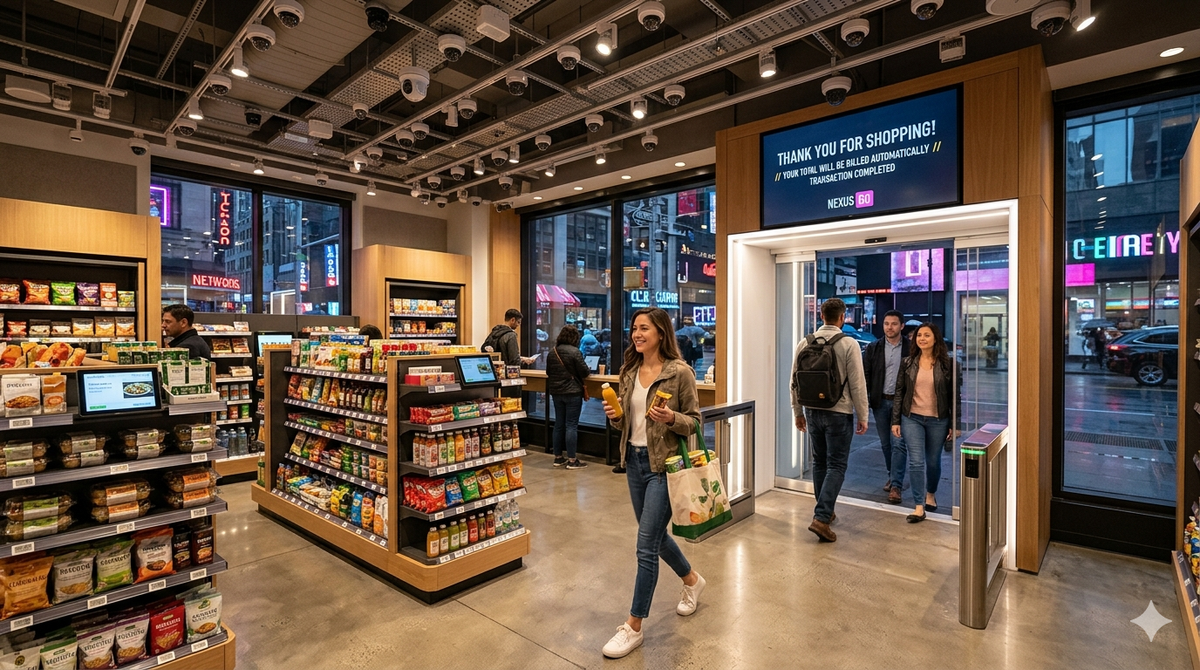
Checkout lines were supposed to disappear years ago. Instead, the real problem turned out to be cost. Amazon is now testing whether smaller stores can finally make cashierless retail work.
Why Amazon Is Rethinking Cashierless Stores
Amazon’s “Just Walk Out” system uses cameras, sensors, and AI to track items and charge customers automatically. The idea is simple. Walk in, pick what you need, and leave.
The challenge has always been scale. Large stores require complex infrastructure and high upfront investment. Early deployments were expensive, limiting widespread adoption.
Smaller formats reduce that burden. Fewer products and tighter layouts mean fewer sensors and lower costs, making the model more practical.
Amazon Piloting Cashierless Tech in Smaller Retail Formats
The pilot focuses on compact convenience stores designed for quick purchases. Snacks, drinks, and essentials dominate the shelves.
This approach matches real behavior. Most shoppers want speed, not a fully automated supermarket experience. Amazon is adapting its strategy to that demand.
The company is also improving system accuracy. Earlier versions required human review to confirm transactions. Reducing that dependency is key to scaling.
Impact on Retail
Smaller cashierless stores could expand rapidly in dense urban areas. Airports, office complexes, and transit hubs are ideal locations.
Competitors are paying attention. Retailers like Walmart and 7-Eleven have tested similar systems but have not scaled them widely.
For consumers, the benefit is speed. For businesses, it is efficiency and lower staffing costs.
Challenges That Remain
Privacy concerns are significant. Continuous tracking through cameras and sensors raises questions about data use and surveillance.
Automation also impacts jobs. Fewer cashiers means fewer entry-level roles in retail.
Accuracy remains critical. Billing errors, even small ones, can quickly reduce trust.
Conclusion
Amazon is shifting from ambition to practicality. Smaller store formats offer a clearer path to making cashierless retail viable.
The outcome depends on cost control, system reliability, and customer acceptance. If those factors align, automated convenience stores could become common in everyday life.
If not, cashierless retail will remain a niche idea that struggled to move beyond early hype.
Fast Facts: Amazon Piloting Cashierless Tech in Smaller Retail Formats Explained
What does Amazon piloting cashierless tech in smaller retail formats mean?
Amazon piloting cashierless tech in smaller retail formats means testing automated checkout systems in compact stores to reduce costs and improve efficiency.
Why is Amazon piloting cashierless tech in smaller retail formats now?
Amazon piloting cashierless tech in smaller retail formats helps lower infrastructure costs and aligns with quick shopping habits.
What are the risks of Amazon piloting cashierless tech in smaller retail formats?
Amazon piloting cashierless tech in smaller retail formats raises concerns about privacy, job loss, and billing accuracy.