Amazon pilots humanoid robots in warehouses to address labor shortages
Amazon is testing humanoid robots inside its warehouses, signaling a major shift in how global supply chains may operate in the near future.
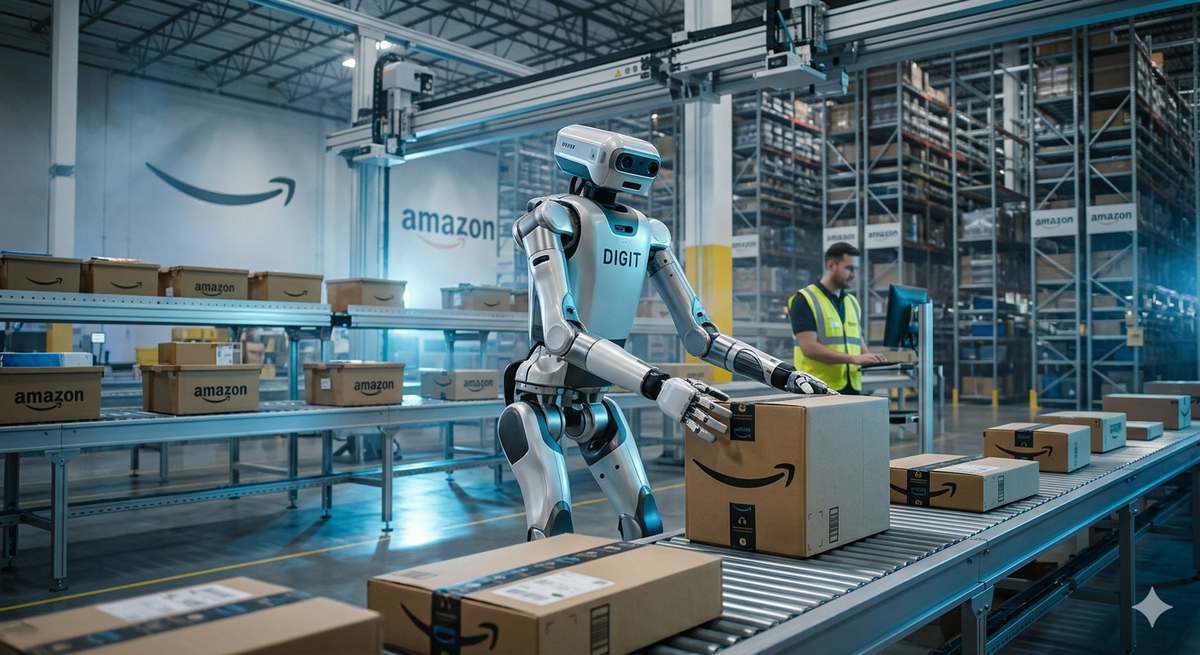
What happens when one of the world’s largest employers starts testing machines that can walk, lift, and think inside its warehouses? That shift is already underway. Amazon is piloting humanoid robots to tackle labor shortages, and the move could redefine how global logistics operates.
Why Amazon Is Betting on Humanoid Robots
Warehouse labor shortages have become a persistent challenge. High turnover rates, physically demanding tasks, and changing workforce expectations have made it difficult to maintain stable staffing. Industry estimates suggest warehouse turnover can exceed 40 percent annually in some regions.
Amazon’s approach is to reduce dependency on roles that are hard to fill. Humanoid robots are being tested to handle repetitive tasks such as picking, sorting, and transporting items. These jobs often see high attrition due to physical strain and monotony.
How the Technology Works in Practice
Unlike traditional automation systems, humanoid robots are designed to operate in environments built for humans. They can navigate aisles, identify products, and interact with existing infrastructure without requiring major redesigns.
These robots rely on AI-powered vision systems and machine learning models to recognize objects and make real-time decisions. Advances in robotics from companies like Boston Dynamics and Agility Robotics have accelerated this progress, making humanoid movement and dexterity more practical.
Efficiency Gains and Workplace Impact
The immediate advantage is consistency. Robots do not fatigue, take breaks, or call in sick. This can lead to faster order processing and more predictable operations across fulfillment centers.
There is also a safety benefit. Warehouse injuries are often linked to repetitive motion and heavy lifting. Shifting these tasks to robots could reduce workplace incidents and improve overall conditions for human workers.
Amazon has already deployed over 750,000 robots across its network. Adding humanoid systems could further scale operations without being limited by local labor supply.
Concerns Around Jobs and Costs
The shift toward humanoid robots raises concerns about job displacement. While Amazon positions the technology as supportive rather than replacement-focused, the long-term impact on employment remains uncertain.
Cost is another barrier. Developing and maintaining humanoid robots requires significant investment. Scaling this technology across global operations will test its economic viability.
There are also ethical considerations, including worker surveillance and the broader implications of automation on society.
What This Means for the Future of Work
This pilot signals a larger transformation in how companies approach labor and productivity. Retail, manufacturing, and logistics sectors are closely watching the results.
If successful, humanoid robots could become a standard part of warehouse operations worldwide. The challenge will be balancing efficiency with responsible deployment, ensuring that innovation does not outpace the systems needed to manage its impact.
Amazon’s experiment is not just about solving a staffing issue. It reflects a broader shift toward human-machine collaboration that could reshape the global workforce in the years ahead.
Fast Facts: Amazon Pilots Humanoid Robots in Warehouses to Address Labor Shortages Explained
What does this robot pilot involve?
Amazon pilots humanoid robots in warehouses to address labor shortages by testing machines that pick, sort, and move items using AI vision and navigation systems.
What can these robots actually do today?
Amazon pilots humanoid robots in warehouses to address labor shortages with robots handling repetitive tasks, though they still struggle with complex decisions and unpredictable environments.
Will these robots replace human workers?
Amazon pilots humanoid robots in warehouses to address labor shortages mainly to assist workers, but long-term job displacement remains a concern as automation advances.