Apple Accelerating Work on On-Device AI After Privacy Criticism of Cloud Models
Apple is doubling down on on-device AI to address privacy concerns tied to cloud-based models, signaling a major shift in how AI features will run on iPhones, iPads, and Macs.
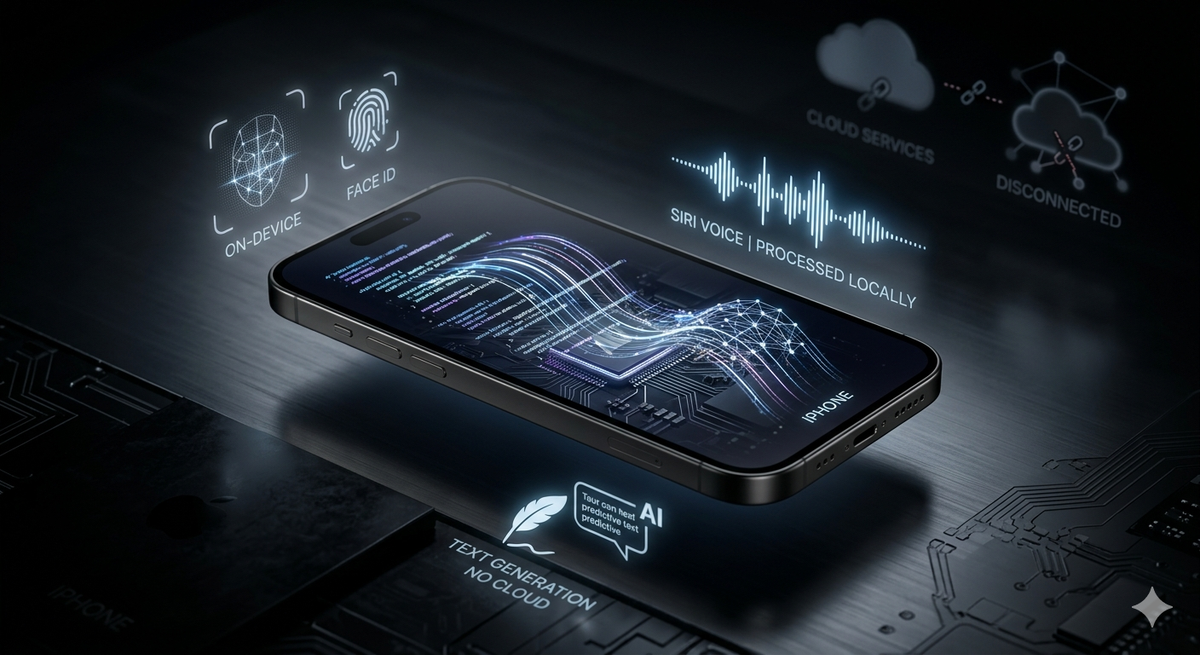
What happens when a company built on privacy faces growing scrutiny over how AI handles user data? It moves quickly to fix the gap. Apple accelerating work on on-device AI after privacy criticism of cloud models is not just a reaction. It signals a deeper shift in how artificial intelligence will be delivered to billions of users.
Why Apple Is Moving Away From Cloud-Heavy AI
Cloud-based AI systems have powered most recent breakthroughs, but they come with trade-offs. Processing data on remote servers means user information must leave the device, raising concerns about storage, misuse, and surveillance.
Industry reports, including insights from MIT Technology Review, highlight growing user discomfort with this model. As AI adoption increases, so does awareness of how personal data is handled.
Apple accelerating work on on-device AI after privacy criticism of cloud models reflects a clear response to these concerns. The company is shifting toward keeping data processing local rather than relying heavily on cloud infrastructure.
How On-Device AI Changes the Game
On-device AI processes information directly on hardware like iPhones, iPads, and Macs. Apple has invested heavily in its Neural Engine, which is designed to handle machine learning tasks efficiently without external servers.
This approach delivers two immediate advantages. First, privacy improves because sensitive data never leaves the device. Second, performance becomes faster due to reduced latency.
Existing features such as Face ID and offline voice recognition already operate this way. Apple is now expanding these capabilities to more advanced AI functions, including generative tools.
Apple Accelerating Work on On-Device AI After Privacy Criticism of Cloud Models
This shift also reflects competitive pressure. Companies like Google and OpenAI rely heavily on cloud-based models that require massive computing infrastructure.
Apple’s strategy is different. By optimizing AI for its custom chips, the company aims to deliver powerful capabilities locally. Its silicon already supports trillions of operations per second, enabling complex tasks without constant internet access.
With over 2 billion active devices globally, Apple has the scale to deploy on-device AI faster than most competitors.
The Trade-Offs Apple Must Manage
On-device AI is not without limitations. Local hardware cannot match the raw power of cloud servers. This restricts model size and complexity.
Some advanced features may still require hybrid solutions where tasks are split between device and cloud. Apple will need to balance performance with privacy while ensuring users do not lose access to cutting-edge capabilities.
What This Means for Users and Developers
For users, the shift offers greater control over personal data. Tasks involving messages, photos, and sensitive information can be processed securely on-device.
For developers, it opens new possibilities. Building applications that leverage local AI processing can become a competitive advantage, especially in sectors like healthcare, finance, and personal productivity.
Conclusion
Apple accelerating work on on-device AI after privacy criticism of cloud models highlights a turning point in the AI industry. Privacy is becoming a core expectation rather than a feature.
If Apple succeeds in delivering powerful AI without compromising user data, it could redefine how trust and technology coexist in the next phase of artificial intelligence.
Fast Facts: Apple Accelerating Work on On-Device AI After Privacy Criticism of Cloud Models Explained
What does Apple’s on-device AI strategy mean?
Apple accelerating work on on-device AI after privacy criticism of cloud models means AI runs locally on devices, keeping user data private and reducing dependence on external servers.
How powerful is on-device AI compared to cloud AI?
Apple accelerating work on on-device AI after privacy criticism of cloud models delivers strong local performance, but cloud AI still handles larger and more complex computations.
Why is privacy driving this shift?
Apple accelerating work on on-device AI after privacy criticism of cloud models is driven by rising concerns about data security and the need to protect sensitive user information.