Apple Pushing Into On-Device AI to Reduce Reliance on Cloud Processing
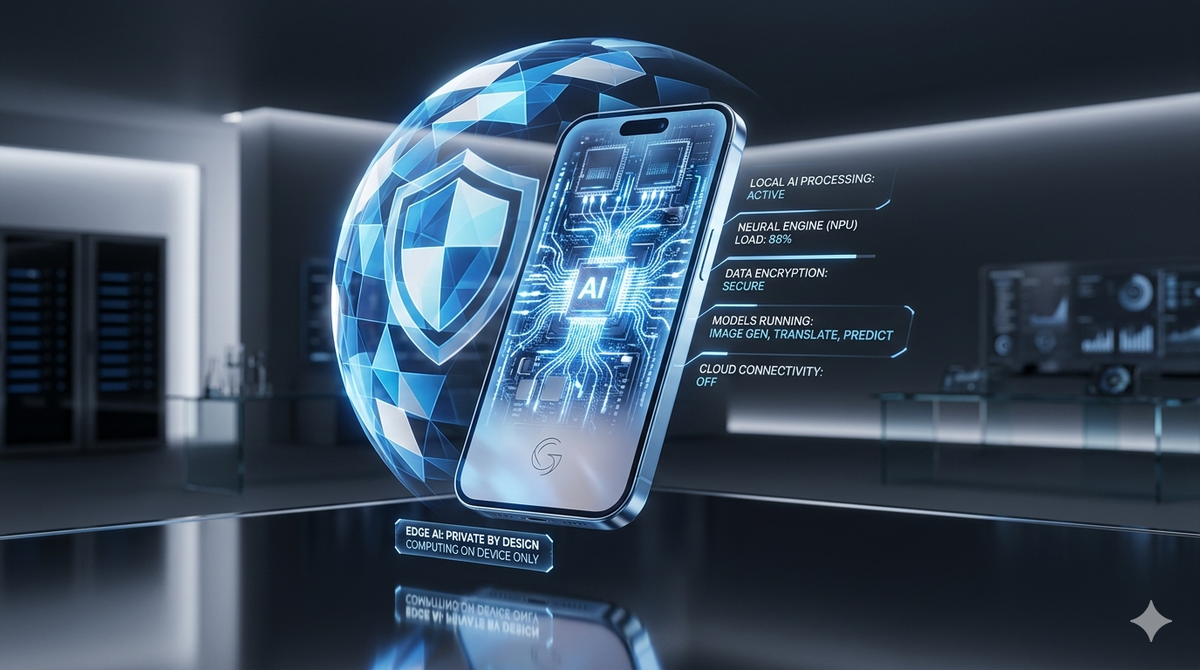
Apple is doubling down on on-device AI, shifting intelligence from the cloud to your iPhone. The move promises faster performance, stronger privacy, and less dependence on remote servers.
Apple Pushing Into On-Device AI to Reduce Reliance on Cloud Processing
Excerpt: Apple is doubling down on on-device AI, shifting intelligence from the cloud to your iPhone. The move promises faster performance, stronger privacy, and less dependence on remote servers.
---
What if your smartphone didn’t need the cloud to feel smart? That’s exactly the direction Apple is heading. With Apple pushing into on-device AI to reduce reliance on cloud processing, the company is quietly reshaping how artificial intelligence works on everyday devices.
Instead of sending your data to distant servers, Apple wants your iPhone, iPad, and Mac to do the heavy lifting locally. It sounds simple. It’s actually a massive shift in how AI systems are built and deployed.
Why Apple Is Moving AI Onto Devices
The core motivation is privacy. Apple has long positioned itself as a privacy-first company, and on-device AI fits that narrative perfectly. When data stays on your device, it reduces exposure to breaches or misuse.
There’s also a performance benefit. According to Apple’s own developer documentation and chip benchmarks, modern Apple Silicon chips like the Neural Engine can process trillions of operations per second. That means faster responses without waiting for cloud servers.
Cost is another factor. Cloud AI is expensive. Every query processed remotely costs money in compute and infrastructure. By shifting workloads locally, Apple reduces long-term operational costs while improving user experience.
Apple Pushing Into On-Device AI to Reduce Reliance on Cloud Processing in Practice
This shift is already visible across Apple’s ecosystem. Features like Live Text, on-device dictation, and photo recognition run directly on your device. Even Siri is evolving to handle more requests offline.
With recent advancements in compact AI models, Apple is optimizing models to run efficiently within limited hardware constraints. Techniques like model compression and quantization allow powerful AI to function without massive data centers.
This is not theoretical. Apple’s A-series and M-series chips are specifically designed to accelerate machine learning tasks. The Neural Engine is no longer a side feature. It’s becoming the backbone of Apple’s AI strategy.
The Trade-Offs of Local AI
Before declaring this the future of everything, there are limits. On-device AI cannot yet match the scale of cloud-based systems trained on massive datasets. Large language models and complex generative AI still rely heavily on cloud infrastructure.
There’s also a hardware dependency. Older devices may struggle to support advanced on-device AI features, creating a divide between users with newer and older hardware.
And let’s be honest. Not every task benefits from local processing. Some applications still need real-time data from the internet, which makes cloud integration unavoidable.
What This Means for Users and Developers
For users, the benefits are clear. Faster responses, better privacy, and reduced reliance on internet connectivity. Your phone becomes smarter even when offline.
For developers, it introduces new challenges. Building efficient AI models that run within tight memory and power limits requires a different approach compared to cloud-first development.
This shift could also redefine app experiences. Imagine apps that personalize themselves in real time without sending your data anywhere. That’s where things get interesting.
The Bigger Picture
Apple pushing into on-device AI to reduce reliance on cloud processing is not just a technical upgrade. It’s a strategic move that could influence the entire industry.
Companies like Google and Microsoft still rely heavily on cloud AI. Apple is betting that users care more about privacy and speed than raw computational scale. Whether that bet pays off depends on how far on-device capabilities can evolve.
Conclusion
Apple’s push toward on-device AI marks a turning point in how artificial intelligence is delivered. It prioritizes privacy, speed, and efficiency, even if it means sacrificing some scale.
The real story is not just about Apple. It’s about where AI is heading. Less centralized, more personal, and deeply embedded in the devices we use every day.
---
Meta Title:
Apple On-Device AI Strategy Explained
Meta Description:
Apple is shifting to on-device AI to boost privacy and speed while reducing cloud reliance. Here’s what it means for users and developers.
---
Recommended Internal Linking Anchor Texts:
“how on-device AI works”
“Apple Neural Engine explained”
“future of AI in smartphones”
“cloud vs edge computing differences”
“AI privacy and data security trends”
---
Fast Facts: Apple pushing into on-device AI to reduce reliance on cloud processing Explained
What does Apple pushing into on-device AI to reduce reliance on cloud processing mean?
It means Apple is running AI tasks directly on devices instead of servers. Apple pushing into on-device AI to reduce reliance on cloud processing improves privacy and speed by keeping data local.
What can on-device AI actually do?
Apple pushing into on-device AI to reduce reliance on cloud processing enables features like voice recognition, image analysis, and predictive text without internet access, making devices faster and more responsive.
What are the limitations of this approach?
Apple pushing into on-device AI to reduce reliance on cloud processing struggles with large-scale models and complex tasks, which still require cloud computing due to hardware and processing constraints.