Apple Suppliers Exploring Production Shifts Outside China to Reduce Dependency
Apple’s global supply chain is quietly undergoing a reset. The question is not if China will lose dominance, but how fast the shift will happen.
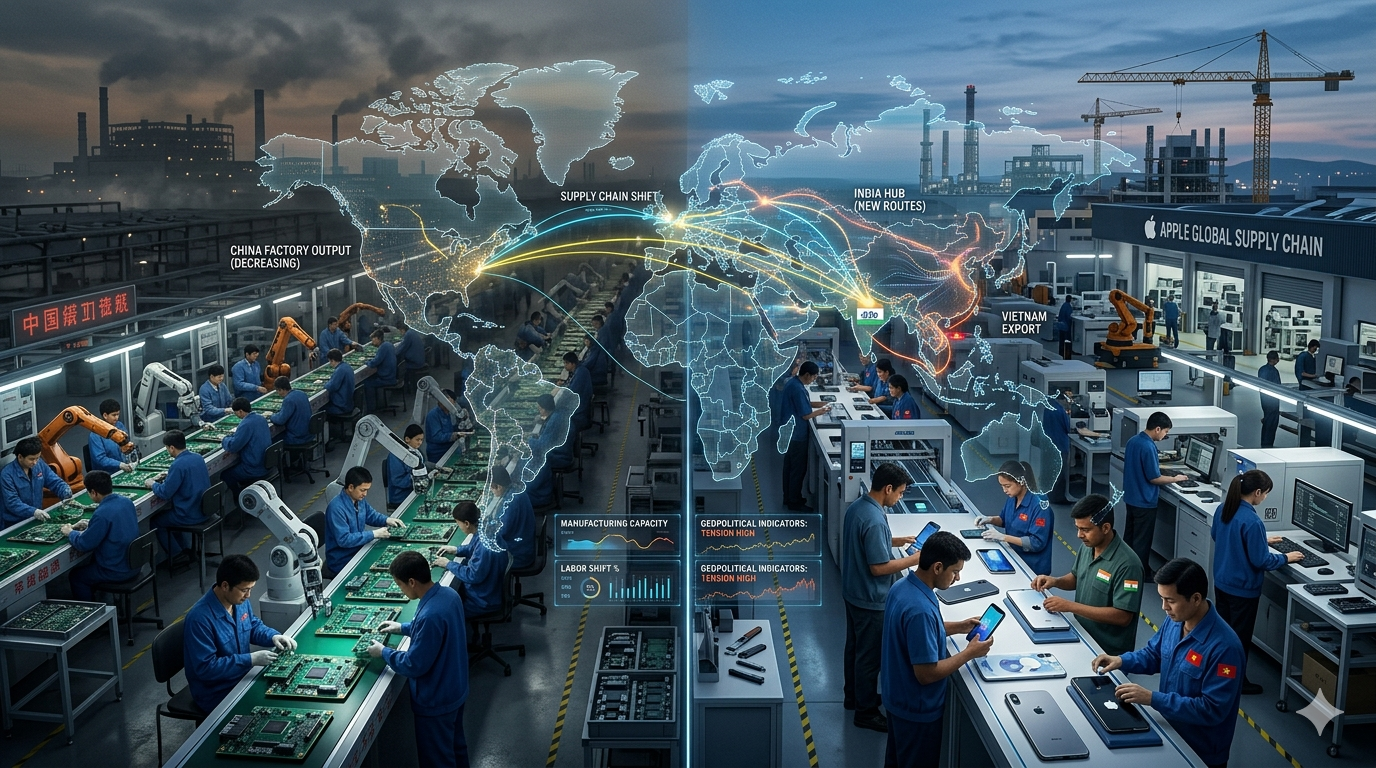
For years, China powered Apple’s manufacturing scale. Now, risk and reality are forcing change.
Apple suppliers exploring production shifts outside China to reduce dependency has moved from strategy to necessity. Disruptions during the pandemic, rising geopolitical tensions, and increasing costs have exposed vulnerabilities that Apple can no longer ignore.
Why Apple Is Rethinking Its China Dependence
China still dominates Apple’s production network. Until recently, over 85 percent of iPhones were assembled there, according to industry estimates. But multiple risks have made this concentration difficult to sustain.
- Trade tensions between the US and China
- COVID-related factory shutdowns
- Rising labor and compliance costs
For a company shipping hundreds of millions of devices annually, even small disruptions create global consequences. Diversification has become a strategic priority.
Apple Suppliers Exploring Production Shifts Outside China to Reduce Dependency
The transition is already visible. Major suppliers such as Foxconn, Pegatron, and Wistron are expanding operations beyond China. Countries like India and Vietnam are emerging as key alternatives.
India has seen rapid growth in Apple manufacturing. Production share has doubled in recent years, supported by government incentives and a growing workforce. Vietnam is becoming a hub for products like AirPods and MacBooks due to stable policies and proximity to existing supply chains.
This shift is not a sudden exit but a calculated redistribution of manufacturing capacity.
Economic and Strategic Impact
The benefits extend beyond Apple. Emerging markets are gaining jobs, investment, and stronger roles in global supply chains.
- Increased foreign investment in manufacturing
- Job creation and infrastructure development
- Stronger integration into global tech ecosystems
For Apple, diversifying production reduces geopolitical exposure and strengthens supply chain resilience. It also gives the company more flexibility in managing suppliers and costs.
Challenges Slowing the Transition
Despite momentum, China remains deeply embedded in Apple’s operations. Its manufacturing ecosystem is difficult to replicate.
- Advanced infrastructure and logistics networks
- Highly skilled labor force at scale
- Established supplier ecosystems
New manufacturing hubs still face challenges in achieving the same efficiency and consistency. Building that capacity takes time and significant investment.
What This Means for Global Manufacturing
The shift reflects a broader trend across the tech industry. Companies are adopting a multi-country strategy to reduce reliance on a single region.
This approach improves resilience but increases complexity. Supply chains are becoming more distributed, requiring better coordination and investment in new markets.
Apple suppliers exploring production shifts outside China to reduce dependency is reshaping how global manufacturing operates. China will remain central, but its dominance is no longer absolute. The balance is changing, and the impact will extend across the entire tech ecosystem.
Conclusion
Apple suppliers exploring production shifts outside China to reduce dependency marks a structural shift in global manufacturing, not a temporary adjustment. The goal is not to replace China overnight but to reduce risk through diversification.
China will remain a critical hub due to its scale and efficiency, but its monopoly on Apple’s supply chain is weakening. Countries like India and Vietnam are stepping in, reshaping how and where devices are built.
For Apple, this is about resilience and control. For the global economy, it signals a move toward distributed manufacturing. The companies that adapt fastest to this new reality will define the next decade of tech production.
Fast Facts: Apple Suppliers Exploring Production Shifts Outside China to Reduce Dependency Explained
What does this shift actually mean?
Apple suppliers exploring production shifts outside China to reduce dependency means relocating manufacturing to countries like India and Vietnam to reduce risks and diversify supply chains.
Why can’t Apple fully leave China?
Apple suppliers exploring production shifts outside China to reduce dependency still rely on China’s scale, infrastructure, and supplier networks, which remain unmatched globally.
How does this affect consumers?
Apple suppliers exploring production shifts outside China to reduce dependency may improve product availability, though costs and timelines could fluctuate during the transition phase.