China Bucks Global ‘AI Scare Trade’ as Investors Bet on Growth
While US investors fear AI disruption, China’s markets are surging with newly listed tech firms posting explosive gains as capital floods into the country’s fastest-rising AI champions.
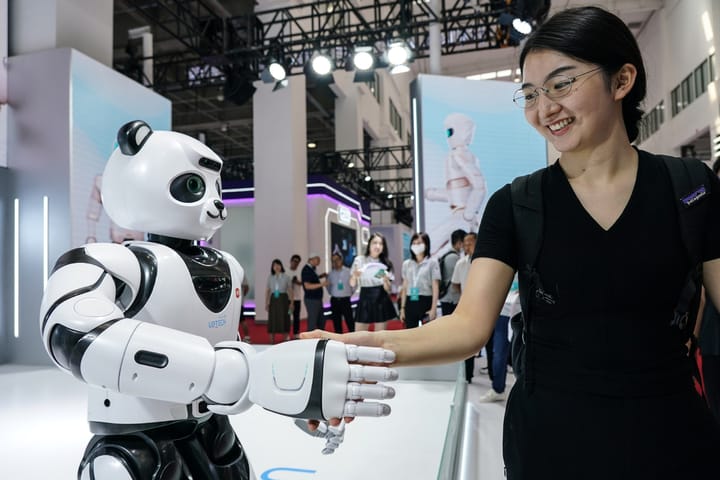
While US markets are unsettled by fears of artificial intelligence disrupting established industries, Chinese investors are leaning into the opportunity aggressively backing companies positioned to benefit from the AI boom.
In the United States, the so-called “AI scare trade” has triggered selling in software firms and wealth managers amid concerns that rapid AI advances could erode long-standing profit models.
In China, however, the narrative is markedly different.
Growth Over Fear: A Different Investor Mindset
Rather than worrying about disruption, Chinese markets are focused on expansion, adoption, and cost savings. Investors are pouring money into companies seen as direct beneficiaries of AI development.
“China has been relatively insulated from the AI scare trade because the market is still focused on what AI can aid rather than what it can take away from incumbents,” said Charu Chanana of Saxo Markets.
The contrast is stark:
- US markets: Anxiety over shrinking profit pools
- China markets: Optimism about AI penetration and scalability
New AI Listings Lead the Rally
Recently listed Chinese AI developers have become market darlings.
Among the standout performers:
- MiniMax Group Inc.
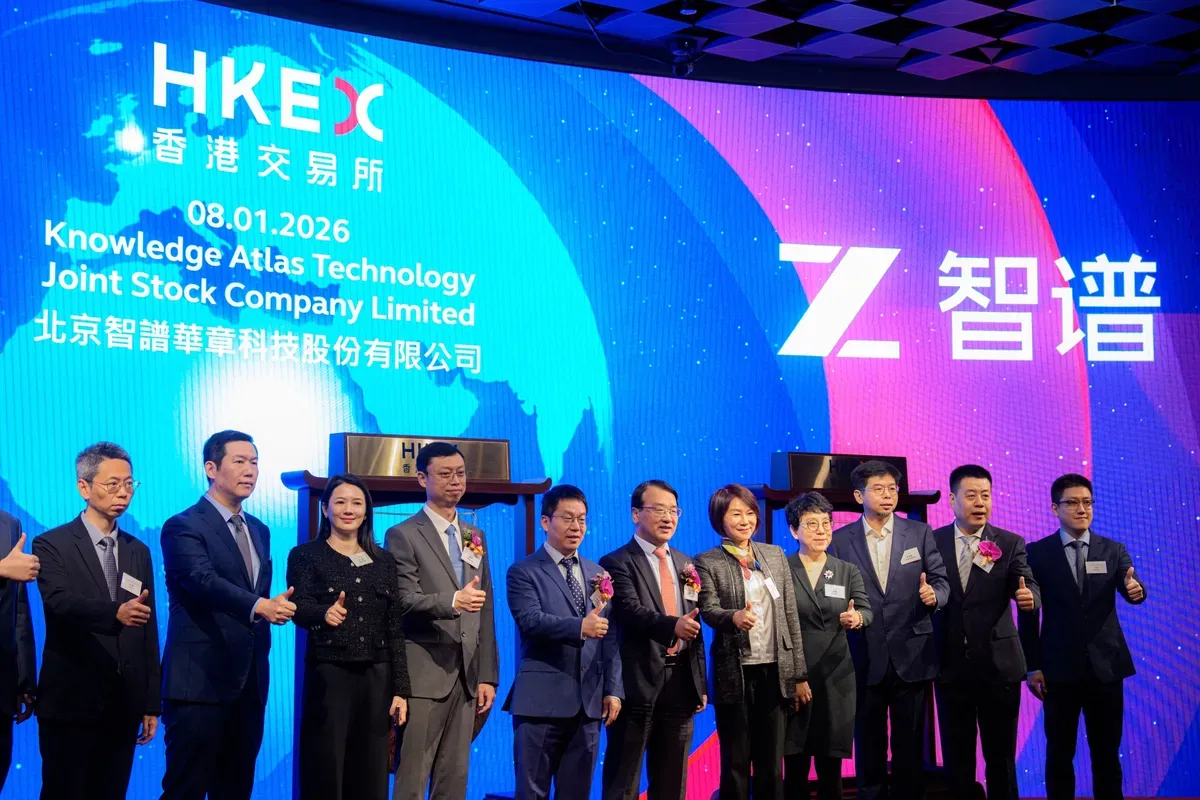
- Zhipu (Knowledge Atlas Technology)
Both companies debuted in Hong Kong in January and saw their shares more than double in February. Since listing, Zhipu has surged over 500%, while MiniMax has climbed nearly 490%.
Strong buy ratings from global banks including Morgan Stanley, Jefferies Financial Group Inc., and UBS Group AG have added fuel to the rally.
With major global AI pioneers such as OpenAI and Anthropic still privately held, publicly traded Chinese firms offer rare pure-play exposure to advanced AI model development.
A Protected Domestic Market Advantage
One reason for China’s distinct investor behavior lies in its relatively insulated competitive landscape.
Regulatory barriers and geopolitical tensions limit foreign AI companies’ access to the domestic market. According to Gary Tan of Allspring Global Investments, overseas large language models have restricted entry — giving local developers a clear runway for growth.
This structural difference has helped separate Chinese AI valuations from the more cautious sentiment seen globally.
The Chipmakers Join the Surge
The rally has extended beyond AI model developers to semiconductor firms tied to the ecosystem.
- Shanghai Biren Technology Co. is up more than 80% since its early January debut.
- Montage Technology Co. has surged nearly 100% since listing in February.
The broader AI supply chain is benefiting from what analysts describe as a sector-wide re-rating.
Private Market Valuations Add Momentum
Chinese AI stocks are also riding a halo effect from eye-popping private market valuations abroad.
- OpenAI is reportedly seeking to raise over $100 billion at a valuation exceeding $850 billion.
- Anthropic recently secured $30 billion at a $380 billion valuation.
According to analysts at Jefferies, these funding milestones, alongside rapid model upgrades, suggest further upside to China AI valuations.
Model Breakthroughs Reignite Enthusiasm
Technological milestones are reinforcing investor confidence.
Zhipu’s latest large language model, GLM-5, recently topped global open-source rankings on benchmarking platform Artificial Analysis, the highest placement ever achieved by a Chinese AI lab.
Meanwhile, DeepSeek, whose breakthroughs previously sparked global attention on China’s AI sector, is expected to release a next-generation model soon, potentially lifting sentiment across the industry.
A video-generation app rollout by ByteDance also sparked gains in film and media stocks, underscoring how each new AI launch is being treated as a catalyst.
Risks Beneath the Optimism
Despite the enthusiasm, some analysts caution that valuations may be difficult to sustain if revenue growth fails to match expectations.
There are also concerns that investors, in focusing heavily on AI champions, may be overlooking broader disruption risks that could weigh on corporate earnings across other sectors.
Still, for now, capital continues rotating into pure AI plays, while diversified internet giants see periodic profit-taking.
A Tale of Two Markets
Morgan Stanley projects MiniMax’s revenue could approach $700 million by 2027 implying potential tenfold growth within two years.
In contrast to the caution dominating US markets, China’s AI narrative remains centered on acceleration, adoption, and market expansion.
Where American investors see disruption risk, Chinese markets see opportunity.
Fast Facts
Why is China less affected by the “AI scare trade”?
China’s market is focused on AI-driven growth and adoption rather than disruption. Regulatory barriers also limit foreign competition, giving domestic firms like MiniMax Group Inc. and Zhipu more room to expand.
Which companies are leading the rally?
Newly listed AI developers including MiniMax and Zhipu have posted triple-digit gains since their Hong Kong debuts. Semiconductor firms such as Shanghai Biren Technology Co. have also surged alongside the AI boom.
What risks could challenge the rally?
Valuations may be hard to sustain if earnings growth fails to match investor optimism. Analysts at Jefferies Financial Group Inc. caution that broader AI-driven disruption could eventually pressure profits across multiple sectors.