Fears That AI Replacing Doctors Are Misplaced, Says the Indian Union Minister
Union Minister Anupriya Patel says fears that AI replacing doctors is misplaced. Here’s what AI in healthcare really means for India.
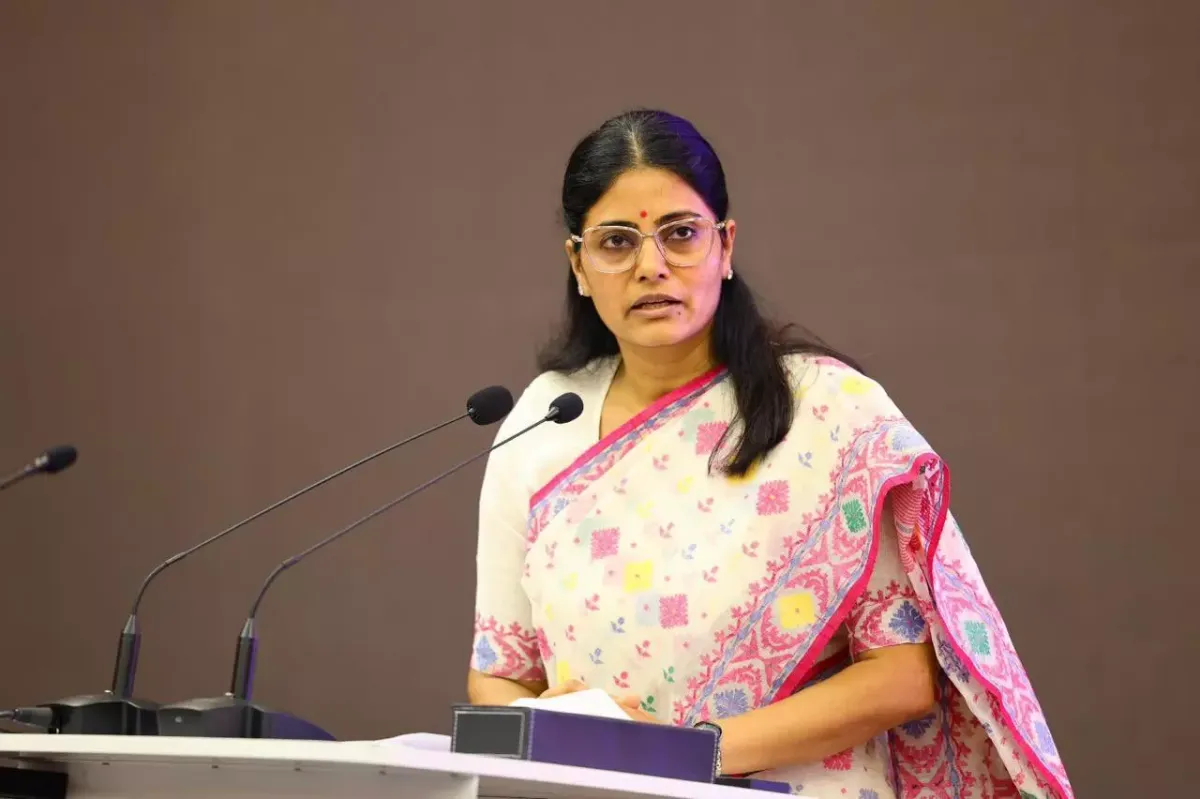
Will artificial intelligence take over hospital wards and make doctors obsolete? According to the Indian Union Minister Anupriya Patel, those fears are largely misplaced.
Speaking on the rapid adoption of AI in healthcare, Patel emphasized that while technology is transforming diagnostics and patient care, it is not a substitute for trained clinicians. Her remarks come at a time when AI tools from global leaders such as OpenAI and Google AI are reshaping how diseases are detected and treated.
The debate around AI replacing doctors has intensified as hospitals integrate AI-powered systems for imaging, predictive analytics, and administrative automation. But policymakers and experts argue that augmentation, not replacement, is the real story.
AI Replacing Doctors: Why the Concern Is Growing
The fear of AI replacing doctors stems from visible breakthroughs. AI models can now analyze medical images with impressive accuracy. A 2020 study published in Nature found that deep learning systems matched or exceeded radiologists in detecting breast cancer in mammograms.
Similarly, AI-driven diagnostic systems are being used in pathology, ophthalmology, and cardiology. Tools developed by companies such as Google Health have demonstrated high accuracy in detecting diabetic retinopathy.
When machines perform tasks once reserved for specialists, the question naturally arises: what happens to the human workforce?
However, most experts agree that these tools function as decision-support systems. They enhance precision and speed but do not independently manage patient care.
AI in Healthcare Is Augmenting, Not Replacing
Union Minister Anupriya Patel highlighted that AI is designed to assist clinicians rather than replace them. That distinction matters.
Healthcare is not just data interpretation. It involves clinical judgment, ethical reasoning, emotional intelligence, and patient trust. An AI system can flag anomalies in scans, but it cannot explain a life-altering diagnosis with empathy or weigh nuanced factors in complex cases.
The World Health Organization has also stressed that AI in healthcare must be human-centered and ethically governed. Clinical accountability remains with licensed professionals.
In practical terms, AI reduces workload by automating repetitive tasks such as documentation, appointment scheduling, and initial triage. This allows doctors to spend more time with patients.
Opportunities and Risks of AI in Healthcare
The economic and operational upside is clear. AI can help address doctor shortages, especially in rural India. It can assist in early detection of diseases, reduce diagnostic errors, and improve resource allocation.
Yet risks remain.
Bias in training data can lead to inaccurate diagnoses for underrepresented populations. Data privacy concerns are significant, especially as healthcare records move to digital platforms. Overreliance on automated recommendations could also weaken clinical skills over time.
This is why regulatory oversight and ethical frameworks are essential. Policymakers must ensure transparency, accountability, and equitable access.
What This Means for India’s Healthcare Future
For a country with one of the world’s largest populations and uneven healthcare access, AI offers a powerful support system. But it is not a magic replacement.
The narrative around AI replacing doctors oversimplifies a complex transformation. The more realistic outcome is a hybrid model where clinicians and AI systems work side by side.
For medical students and professionals, the message is clear: adapt. Learn digital health tools. Understand AI fundamentals. Embrace technology as a collaborator.
For patients, the takeaway is reassuring. Your doctor is not going anywhere.
Conclusion
The fears that AI replacing doctors will disrupt healthcare entirely are largely misplaced. AI is a tool that enhances speed, accuracy, and efficiency, but it does not replace human expertise, empathy, or accountability.
The future of healthcare is not man versus machine. It is man with machine.
Fast Facts: AI Replacing Doctors Explained
Is AI replacing doctors in hospitals?
No. AI replacing doctors is a misconception. AI supports diagnosis and workflow, but final decisions and patient care remain with trained clinicians.
What can AI actually do in healthcare?
AI replacing doctors is not the goal. AI analyzes scans, predicts risks, automates paperwork, and supports early detection, helping doctors work faster and more accurately.
What are the risks of AI replacing doctors?
The main risks include bias, privacy concerns, and overreliance. AI replacing doctors entirely is unrealistic, but poor oversight could create ethical and clinical challenges.