Google quietly launched an AI dictation app that works offline
Google has introduced a low-profile AI dictation app that works entirely offline, signaling a shift toward privacy-first AI tools and on-device intelligence.
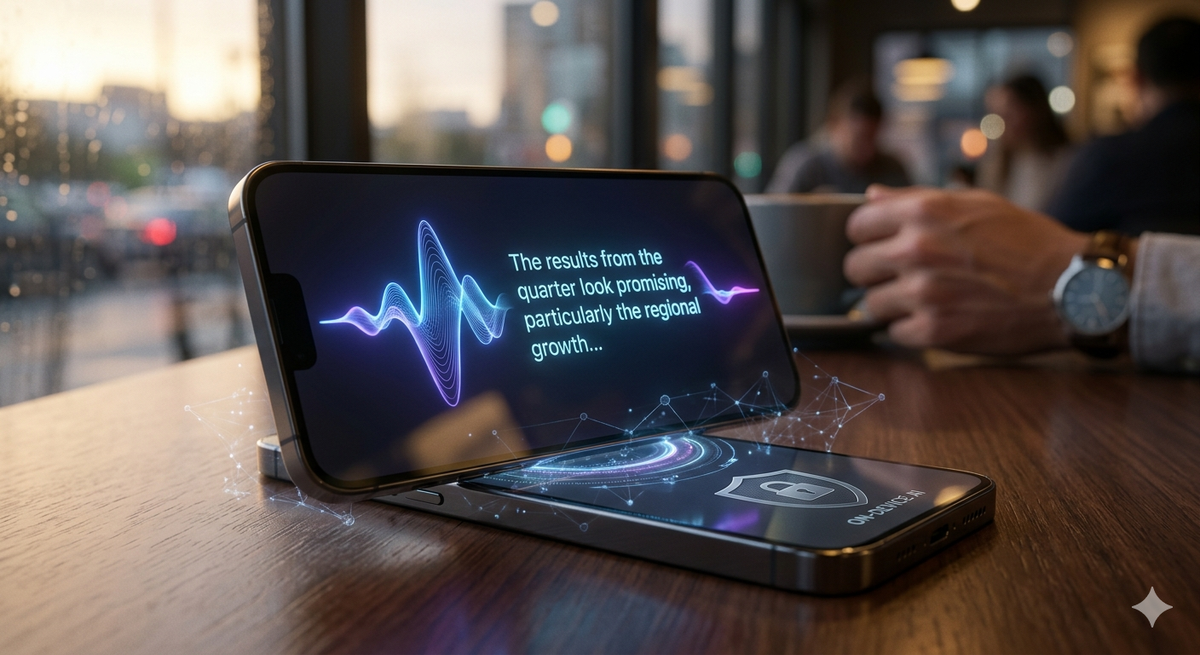
What if your phone could transcribe everything you say without ever sending a single word to the cloud? That is now a reality as Google quietly launched an AI dictation app that works offline, signaling a major shift in how voice technology is built and used.
This is not just another voice typing feature. It reflects a broader transformation in artificial intelligence, where privacy, speed, and accessibility are becoming just as important as raw performance.
A Privacy-First Shift in AI Design
For years, voice recognition systems relied on cloud processing. Audio data was sent to remote servers, analyzed, and returned as text. While effective, this approach raised concerns about data privacy and security.
Now that Google quietly launched an AI dictation app that works offline, all speech processing happens directly on the device. No internet connection is required, and no voice data needs to leave the user’s phone.
This shift aligns with a growing industry focus on on-device AI. Advances in model efficiency have made it possible to deliver high-quality speech recognition without relying on large-scale cloud infrastructure.
How the Offline Dictation App Works
The app uses compact speech recognition models optimized to run locally on smartphones. These models are trained on extensive datasets and then compressed to function efficiently without consuming excessive power or storage.
- Real-time voice-to-text transcription
- Support for multiple languages
- Faster response times due to zero network latency
- Reliable performance in low or no connectivity environments
This makes the tool especially valuable for users in areas with limited internet access or for situations where connectivity is unreliable.
Why This Matters for Everyday Use
The practical impact is significant. Students can take notes anywhere. Journalists can record interviews without worrying about data leaks. Professionals can dictate emails while traveling or working remotely.
More importantly, as Google quietly launched an AI dictation app that works offline, it reduces the risk of sensitive information being transmitted or stored externally. This is particularly relevant as concerns about digital privacy continue to grow.
Limitations and Trade-Offs
Offline AI systems still come with limitations. Because the models are smaller, they may not match the accuracy of cloud-based systems in complex scenarios. Accents, background noise, and specialized terminology can affect performance.
Additionally, offline models require updates to improve over time, unlike cloud systems that evolve continuously in the background.
So while Google quietly launched an AI dictation app that works offline, users may notice occasional differences in accuracy compared to always-connected alternatives.
The Bigger Picture for AI
This development points to a larger trend in artificial intelligence. Instead of relying entirely on centralized data centers, companies are moving toward distributing intelligence across personal devices.
This approach reduces latency, enhances privacy, and lowers infrastructure costs. It also opens new possibilities for AI applications in environments where connectivity is limited.
The quiet release of this tool suggests a strategic shift. It is less about a single feature and more about redefining how AI integrates into everyday life.
Conclusion
The fact that Google quietly launched an AI dictation app that works offline may seem subtle, but its implications are far-reaching. It represents a move toward AI systems that are faster, more private, and more accessible.
As on-device intelligence continues to improve, this approach could become the standard for future AI tools, changing how users interact with technology on a fundamental level.
Fast Facts: Google quietly launched an AI dictation app that works offline Explained
What is this offline dictation app?
Google quietly launched an AI dictation app that works offline, allowing users to convert speech to text directly on their device without needing internet or cloud processing.
What makes it different from other voice tools?
Google quietly launched an AI dictation app that works offline, offering faster response times and improved privacy since no data is sent to external servers.
Are there any downsides to using it?
Google quietly launched an AI dictation app that works offline, but it may struggle with complex accents or noisy environments compared to larger cloud-based systems.