Google Testing Ad Placements Inside AI-Generated Search Summaries, Sparking Publisher Backlash
Google is experimenting with ads inside AI-generated search summaries, raising concerns among publishers about traffic loss, revenue decline, and the future of open web content.
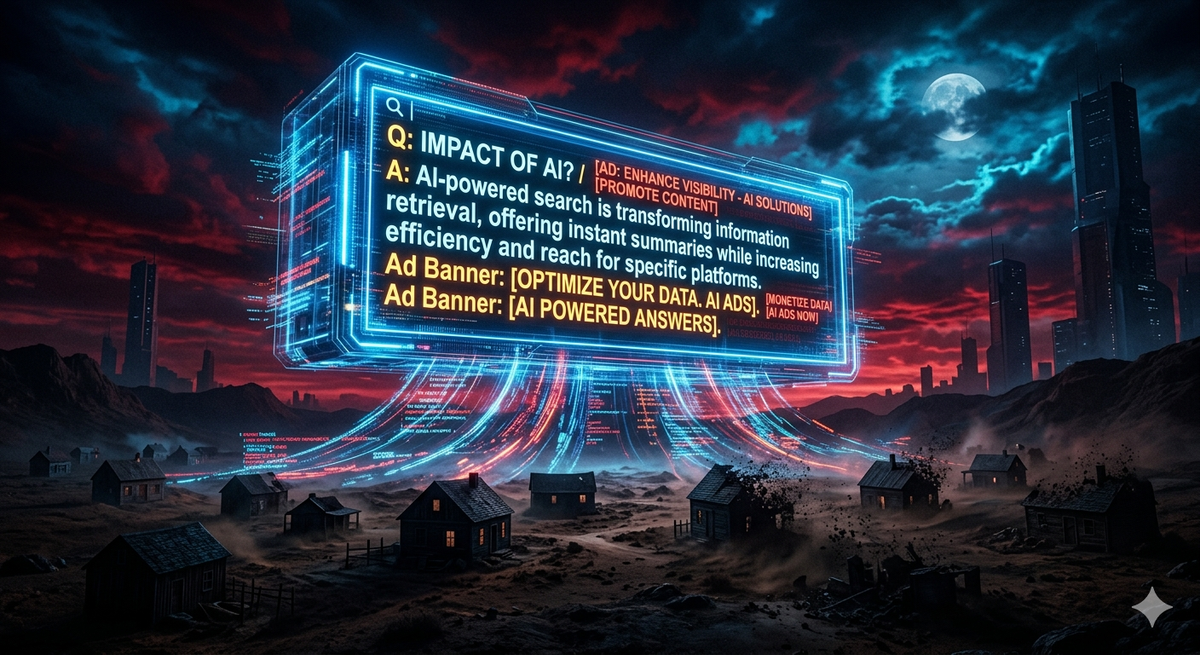
What happens when the answer comes before the click and now includes ads? That is the question rattling publishers as Google experiments with placing advertisements directly inside its AI-generated search summaries. The move could redefine how users interact with search and how websites survive it.
Why Google Is Embedding Ads in AI Summaries
Google has been expanding its AI-powered search experience, which delivers summarized answers at the top of search results. Early tests now show sponsored content appearing within these summaries.
The logic is straightforward. If users spend more time reading AI answers and less time clicking links, Google needs to monetize that space. Google Search remains the backbone of Alphabet’s advertising business, generating over $175 billion in revenue in 2023. Losing visibility in AI responses could disrupt that model.
By placing ads inside summaries, Google aims to protect its revenue while adapting to changing user behavior.
Publisher Backlash Gains Momentum
Google testing ad placements inside AI-generated search summaries, sparking publisher backlash is being viewed as more than a product update. Publishers see it as a direct threat to their survival.
Search traffic drives visibility and income for most digital media platforms. If AI summaries answer user queries without requiring clicks, and ads take up that space, publishers risk losing both traffic and revenue.
Media groups argue that their content is being used to train and inform AI outputs without fair compensation. Some have raised concerns with regulators, warning that this shift could weaken independent journalism.
Changing User Behavior and Trust
For users, the experience may feel faster and more convenient. AI summaries reduce the need to visit multiple websites, offering quick answers in one place.
But this convenience comes with trade-offs. AI-generated responses can oversimplify complex topics or miss nuance. When ads are inserted into these summaries, it becomes harder to distinguish between objective information and paid promotion.
This shift could affect how users evaluate credibility and trust online content.
Ethical and Regulatory Concerns
The introduction of ads into AI-generated answers raises serious ethical questions. Transparency is a key concern. If users cannot clearly identify sponsored content, trust in search results may decline.
Regulators in the United States and Europe are already examining how AI is reshaping digital markets. Critics argue that integrating ads into AI summaries could concentrate even more power in the hands of a single platform.
This creates concerns about fairness, competition, and the long-term health of the open web.
What This Means for the Future of Search
Search is evolving from a list of links into an AI-driven interface where answers, recommendations, and ads are combined. This marks a fundamental shift in how information is delivered and consumed.
Publishers may need to rethink their strategies, focusing on direct audience relationships, subscriptions, and alternative distribution channels.
For users, awareness becomes critical. Understanding how information is generated and influenced will be essential in navigating this new search landscape.
Conclusion
Google’s experiment signals a turning point in the evolution of search. While it offers efficiency and new monetization opportunities, it also raises concerns about transparency, fairness, and the sustainability of independent content.
The outcome will shape how information is accessed, trusted, and monetized in the AI era.
Fast Facts: Google Testing Ad Placements Inside AI-Generated Search Summaries, Sparking Publisher Backlash Explained
What is Google testing with AI search ads?
Google testing ad placements inside AI-generated search summaries, sparking publisher backlash involves inserting sponsored content directly into AI-generated answers instead of traditional search listings.
Why are publishers concerned about this change?
Google testing ad placements inside AI-generated search summaries, sparking publisher backlash threatens traffic, reduces revenue opportunities, and limits visibility for content creators relying on search engines.
What are the main ethical concerns?
Google testing ad placements inside AI-generated search summaries, sparking publisher backlash raises issues around transparency, bias in AI responses, and the difficulty of separating ads from organic information.