Google testing AI-generated video summaries directly inside search results
Google is experimenting with AI-powered video summaries in search results, aiming to help users skip full videos and get key insights instantly. This shift could reshape content discovery, SEO, and creator economics.
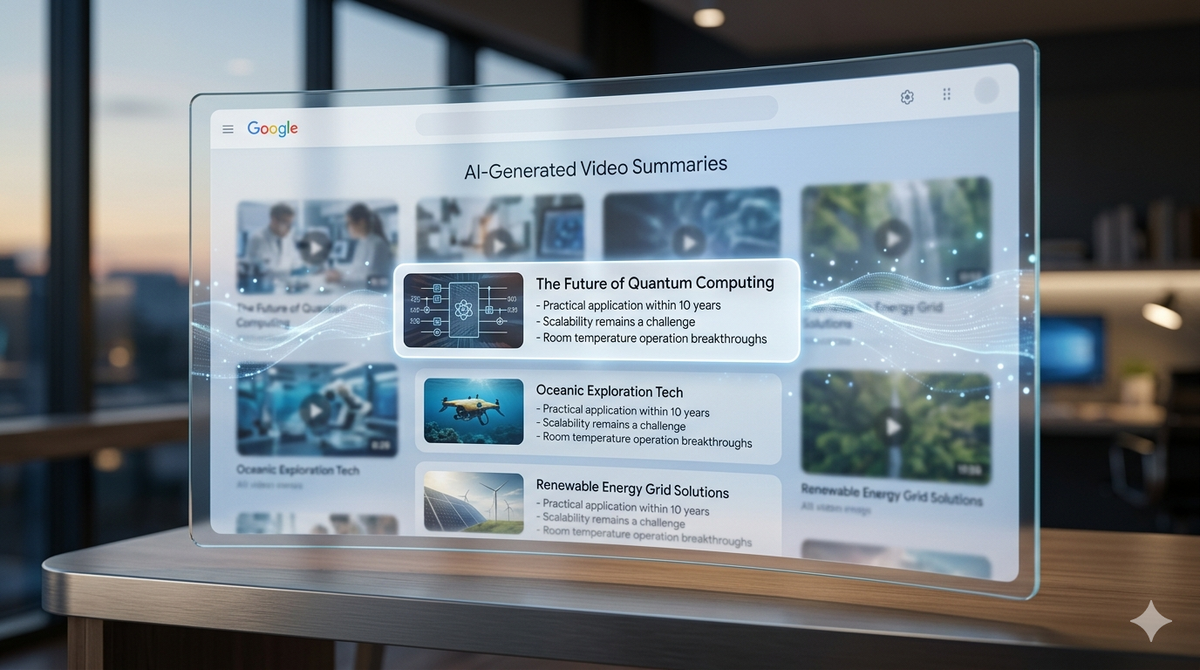
What happens when even watching a video feels like too much effort? Google is betting that users would rather skim than sit through minutes of content. The company is now testing AI-generated video summaries directly inside search results, a move that could quietly redefine how people consume information online.
A New Layer in Search Experience
Google is experimenting with AI-powered summaries that appear alongside video results. Instead of clicking and watching, users can read a concise breakdown of the video’s key points within the search interface itself.
This builds on Google’s broader push into generative AI. The goal is simple: reduce friction and deliver answers faster. But the implications stretch far beyond convenience.
How the Technology Works
The system uses multimodal AI to analyze video content. It processes transcripts, visuals, and contextual signals to generate structured summaries. These summaries highlight key moments and core ideas without requiring full playback.
Advances in AI from organizations like OpenAI and Google DeepMind have made it possible for machines to understand both spoken language and visual elements at scale. That capability now sits at the center of search innovation.
Why Google testing AI-generated video summaries directly inside search results matters
This shift reflects a deeper change in how users interact with content. Search is evolving from a gateway to websites into a destination for answers.
- Users get faster access to information
- Video consumption may decline as summaries replace views
- Search engines gain more control over content distribution
The trend aligns with growing demand for short-form, digestible content. Attention spans are shrinking, and platforms are adapting accordingly.
Impact on Creators and Platforms
The feature raises concerns for content creators, especially those relying on platforms like YouTube. If users stop watching full videos, engagement metrics such as watch time and ad revenue could drop.
There is also the issue of attribution. Creators invest time and resources into producing content, but AI summaries may capture the value without driving traffic back to the source.
Accuracy and Ethical Concerns
AI-generated summaries are not flawless. They can miss nuance, oversimplify complex topics, or misinterpret context. Inaccurate summaries could mislead users, particularly in areas like health, finance, or news.
There are also broader ethical questions about ownership and fair use. If AI extracts and repackages content, it challenges existing norms around intellectual property and compensation.
What Comes Next
Google testing AI-generated video summaries directly inside search results signals a future where information is compressed into instant insights. For users, it offers speed and convenience. For creators, it demands adaptation.
Success in this new environment will depend on creating content that is both AI-friendly and deeply engaging. Surface-level information may be summarized, but depth and originality will still matter.
The shift is subtle but significant. Search is no longer just about finding content. It is about replacing parts of it.