Google Testing AI-Powered Video Summaries Directly Inside Search Results
Google is experimenting with AI-generated video summaries in search results, aiming to save users time while raising new questions about accuracy, creator impact, and the future of content discovery.
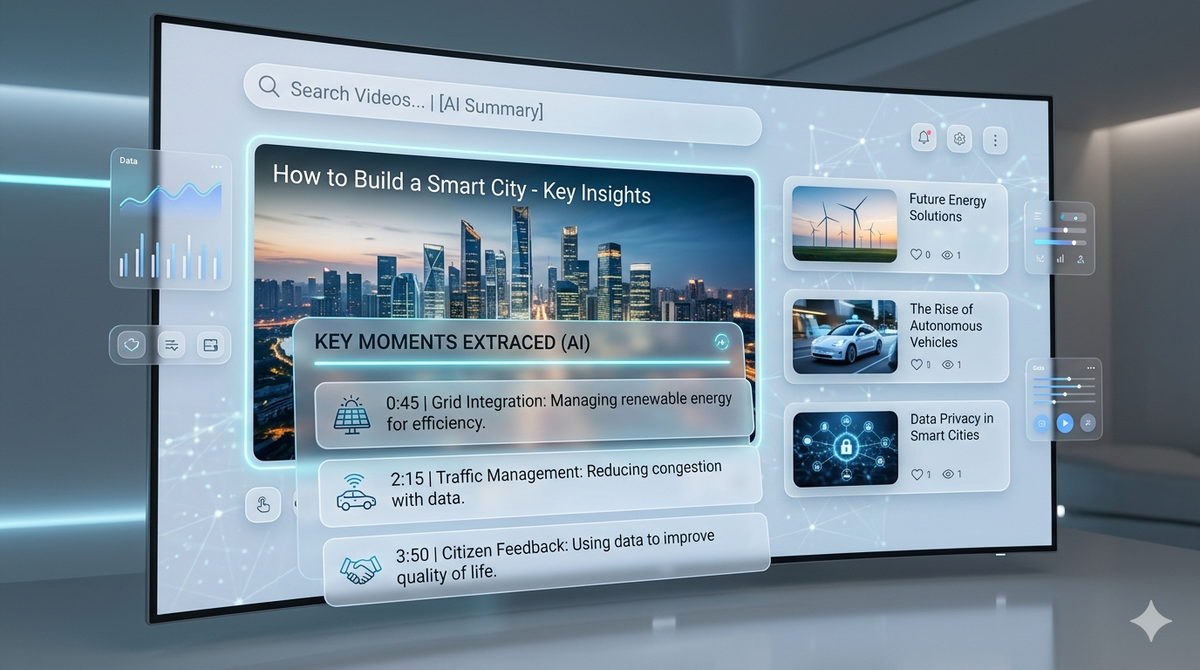
What if you never had to scrub through a 12-minute video just to find a 20-second answer? Google is testing exactly that. The company is experimenting with AI-powered video summaries directly inside search results, aiming to deliver instant insights without requiring users to click and watch full videos.
What Google Is Testing with AI Video Summaries
Google is piloting a feature that uses generative AI to analyze videos and display concise summaries within search results. These summaries highlight key moments, extract important information, and provide quick context before a user decides to watch the full content.
This builds on Google’s broader push into AI-driven search experiences, where the goal is to reduce friction and deliver answers faster. Instead of acting as a gateway, search is increasingly becoming the destination.
How AI Understands and Summarizes Video Content
The technology behind this feature relies on multimodal AI models that can process both audio and visual inputs. These systems transcribe spoken words, detect scene changes, and identify key segments of a video.
Google has already introduced similar capabilities through auto-generated captions and chaptering on YouTube. This new approach integrates those capabilities directly into search, creating a compressed version of video content that users can scan in seconds.
Impact on User Experience and Content Discovery
For users, the benefits are immediate. Faster access to information, less time spent navigating long videos, and improved decision-making when selecting content.
Search behavior could shift significantly. Users may rely more on AI-generated summaries instead of clicking through multiple videos. This could streamline research, especially for tutorials, product reviews, and educational content.
Challenges for Creators and Platform Economics
The feature introduces uncertainty for content creators. If users get the information they need from summaries, fewer viewers may watch full videos. This can reduce watch time, engagement, and ad revenue.
There is also the issue of attribution. AI extracts value from original content, but the extent to which creators benefit from this extraction remains unclear. Platforms like YouTube depend heavily on user engagement, and any disruption to that model could have ripple effects.
Accuracy and Context Risks
AI-generated summaries can miss nuance. Complex ideas, tone, and context may be oversimplified when condensed into short summaries. This creates risks, especially in sensitive areas like health, finance, or news.
Errors in interpretation can lead to misleading conclusions. While Google continues to improve its models, ensuring reliability at scale remains a challenge.
Conclusion
Google’s experiment with AI-powered video summaries directly inside search results signals a major shift in how information is delivered. It prioritizes speed and convenience but raises important questions about accuracy, fairness, and the future of content creation.
The outcome will depend on how well Google balances user needs with the sustainability of the creator ecosystem. Search is evolving, and video consumption is changing with it.
Fast Facts: Google Testing AI-Powered Video Summaries Directly Inside Search Results Explained
What is Google testing with AI video summaries?
Google testing AI-powered video summaries directly inside search results means AI scans videos and shows key points instantly, so users can understand content without watching the full video.
How useful are these AI summaries for users?
Google testing AI-powered video summaries directly inside search results helps users save time by quickly summarizing long videos, especially for tutorials, reviews, and informational content.
What are the main concerns with this feature?
Google testing AI-powered video summaries directly inside search results raises concerns about accuracy, missing context, and reduced traffic for creators who depend on full video views.