Government of India Considering Stricter Rules for Deepfake Content Distribution
India is moving toward tighter regulations on deepfake content as concerns around misinformation, fraud, and digital harm grow. Here’s what it means for platforms, creators, and everyday users.
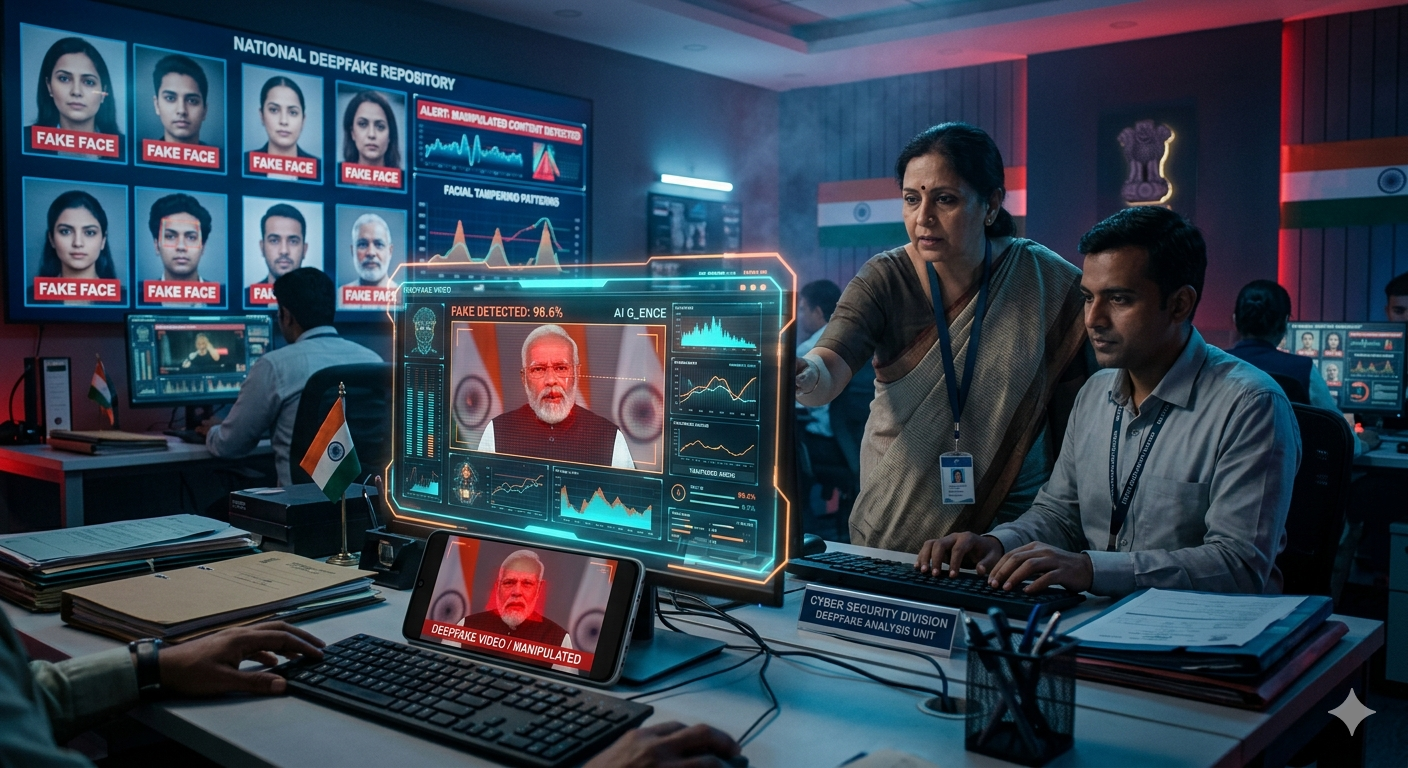
What happens when you can no longer trust what you see online? That question is becoming real as AI-generated deepfakes grow more convincing and more dangerous. India is now moving toward stricter rules to control how such content is created and shared, signaling a major shift in digital governance.
Why Deepfakes Are Triggering Policy Action
Deepfakes use artificial intelligence to manipulate videos, audio, and images, making people appear to say or do things they never did. While the technology has valid uses in entertainment and accessibility, its misuse is accelerating.
India has already seen cases involving fake political speeches, celebrity impersonations, and financial scams. Cybersecurity reports indicate that deepfake-related fraud has been rising sharply worldwide, highlighting the urgency for regulation.
Government of India Considering Stricter Rules for Deepfake Content Distribution
The government is exploring measures to increase accountability across platforms and creators. The focus is on limiting harm without completely restricting innovation.
- Mandatory labeling of AI-generated content
- Faster removal of harmful deepfakes
- Legal consequences for non-compliant platforms
- Stronger identity verification for content uploads
The Ministry of Electronics and Information Technology is expected to update existing IT rules to reflect these changes.
Impact on Social Media and Tech Platforms
Platforms may need to significantly upgrade their content moderation systems. Detecting deepfakes in real time requires advanced tools and human oversight, which increases operational costs.
Larger companies may adapt faster, but smaller platforms could struggle with the financial and technical burden of compliance.
The Balance Between Safety and Innovation
Regulation introduces a complex trade-off. While stricter rules can reduce harm, they may also affect legitimate uses of AI such as satire, filmmaking, and education.
Defining what qualifies as harmful deepfake content remains a challenge. Not all manipulated media is malicious, making enforcement difficult.
What This Means for Users
Users may begin to see labels on AI-generated content and warnings before sharing potentially misleading media. These changes aim to improve transparency and reduce the spread of misinformation.
However, regulation alone is not enough. Users will need to develop better digital awareness to identify and question suspicious content.
Conclusion
The move toward stricter oversight reflects growing concern about the societal impact of deepfakes. The challenge lies in protecting users while allowing innovation to continue. The future of digital content will depend not only on what technology can create, but on what people can trust.
Fast Facts: Government of India Considering Stricter Rules for Deepfake Content Distribution Explained
What is deepfake regulation in India?
Government of India considering stricter rules for deepfake content distribution focuses on labeling, takedowns, and accountability to reduce misuse of AI-generated media.
Why is the government taking action now?
Government of India considering stricter rules for deepfake content distribution responds to rising scams and misinformation that threaten public trust and digital safety.
What are the biggest challenges with these rules?
Government of India considering stricter rules for deepfake content distribution must balance innovation and control while defining what qualifies as harmful content.