Hollywood’s Quiet AI Revolution Post-Strike
What happens when one of the world’s most creative industries hits pause and then quietly rewires itself with artificial intelligence?
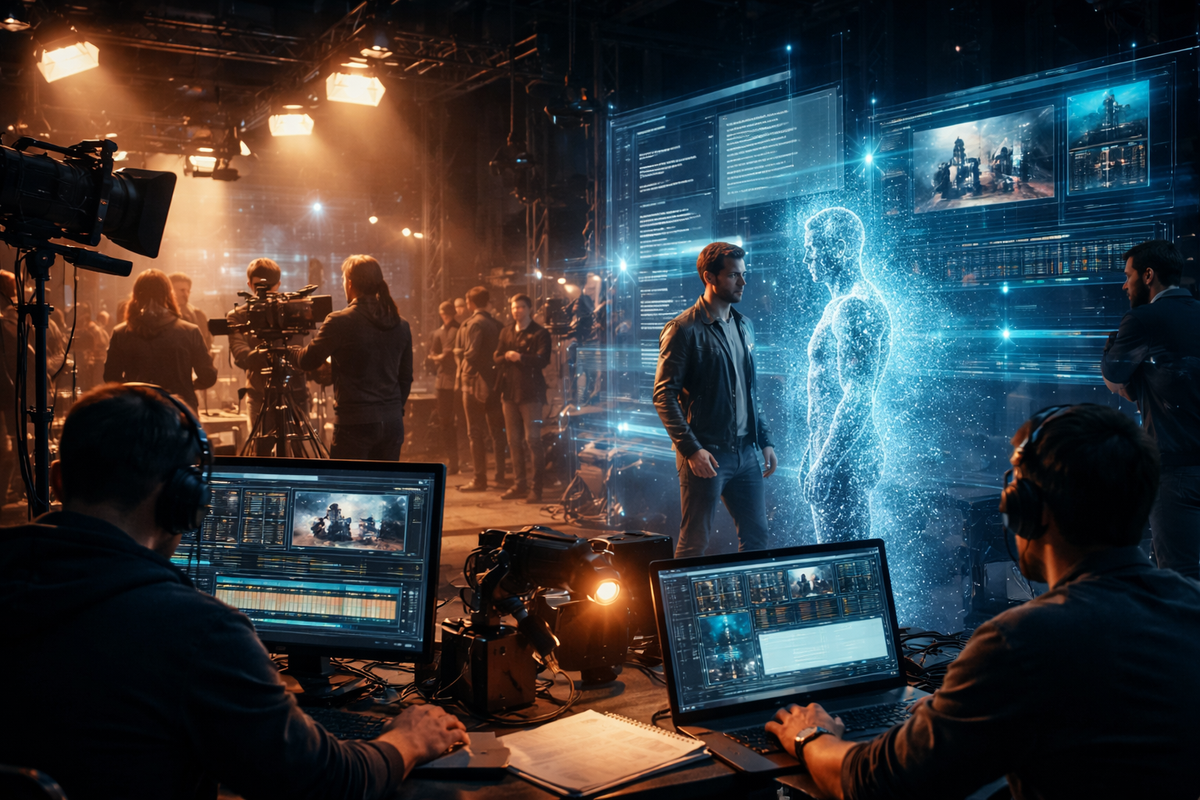
What happens when one of the world’s most creative industries hits pause and then quietly rewires itself with artificial intelligence? Hollywood is doing exactly that. After the 2023 writers’ and actors’ strikes, AI has shifted from a background tool to a core part of how films and shows are made.
The Industry Reset After the Strikes
The Writers Guild of America and SAG-AFTRA strikes were not just about compensation. They were about protecting creative ownership in an AI-driven future. The agreements introduced limits on how studios can use AI, especially in scriptwriting and digital likeness.
AI was not banned. It was redirected. Studios are now focusing on AI as a support system, driving what many call 5. Hollywood’s Quiet AI Revolution Post-Strike.
AI in Scriptwriting and Pre-Production
AI tools are now used to analyze scripts, improve pacing, and identify weak dialogue. These systems are trained on large datasets of past films and audience responses.
- Script summaries and coverage
- Budget predictions based on script demands
- Casting insights using audience data
Industry estimates suggest AI-assisted pre-production can cut development time by up to 30 percent, reducing costs and speeding up decisions.
Visual Effects and Post-Production Efficiency
5. Hollywood’s Quiet AI Revolution Post-Strike is most visible in post-production. AI is automating time-consuming tasks that once required large teams.
- Automated rotoscoping and background removal
- AI-generated environments and scene enhancements
- Editing tools that suggest cuts and transitions
These tools improve efficiency but also shift the skill set required. Creative professionals now need to work alongside AI systems.
The Ethical Tightrope
Concerns around AI remain unresolved. The use of digital likeness raises questions about consent and long-term control. Actors want clarity on how their image can be used across projects and over time.
There are also concerns about originality. AI models trained on existing scripts risk blending inspiration with imitation. Studios must balance innovation with creative integrity.
Impact on Creators and Audiences
AI is becoming a collaborator. Writers use it for brainstorming. Editors use it to speed up workflows. Smaller studios gain access to advanced production tools.
Audiences may see faster releases, improved visuals, and more tailored content. The creative core remains human, shaped by real experiences and perspectives.
Conclusion
Hollywood’s Quiet AI Revolution Post-Strike is unfolding behind the scenes. It is changing how content is created without replacing the people who create it. The future of Hollywood will depend on how well human creativity and artificial intelligence work together.
Fast Facts: Hollywood’s Quiet AI Revolution Post-Strike Explained
What is Hollywood’s Quiet AI Revolution Post-Strike?
It describes how studios are integrating AI into filmmaking workflows after labor agreements, focusing on assistance rather than replacement in Hollywood’s Quiet AI Revolution Post-Strike.
How is AI being used in Hollywood today?
AI supports script analysis, visual effects, and editing, improving speed and efficiency across production stages in Hollywood’s Quiet AI Revolution Post-Strike.
What are the biggest concerns around AI in Hollywood?
Concerns include job impact, digital likeness rights, and originality risks tied to AI-generated content in Hollywood’s Quiet AI Revolution Post-Strike.