Humanity’s Last Exam: The AI Test Even GPT-4 Fails
A brutal new benchmark called Humanity’s Last Exam reveals a hard truth: today’s smartest AI systems still cannot think like humans when it matters most.
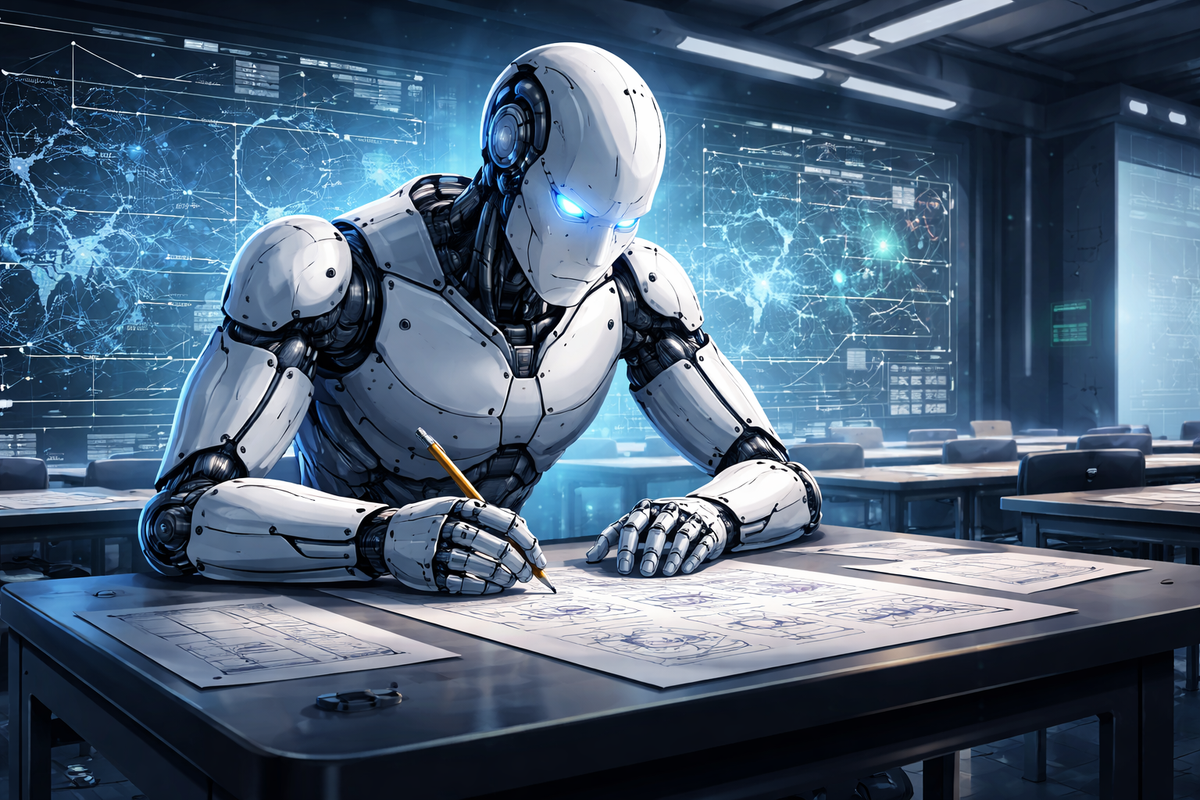
What if we’ve already built the smartest AI models in history, yet they still cannot pass a single test designed to measure true reasoning?
That is the premise behind Humanity’s Last Exam, a newly unveiled benchmark reported by The Economic Times. Researchers describe it as an ultra-difficult evaluation designed to expose the limits of modern artificial intelligence. The result is sobering: today’s most advanced systems consistently fail.
As AI systems from companies like OpenAI and Google DeepMind become more capable, the question is no longer whether they can write essays or generate images. The real question is whether they can reason deeply across disciplines. Humanity’s Last Exam attempts to answer that.
What Is Humanity’s Last Exam?
Humanity’s Last Exam is a comprehensive benchmark built to test advanced reasoning, cross-domain knowledge, and problem-solving at the highest intellectual level. Unlike standard AI benchmarks that focus on math problems or language comprehension, this exam pulls from complex, graduate-level concepts across science, philosophy, and mathematics.
The test is intentionally designed to push beyond pattern recognition. It evaluates whether AI can integrate knowledge, reason abstractly, and handle ambiguity.
Researchers argue that many current benchmarks have become saturated. Models train on publicly available data, including previous tests. That can inflate performance scores without reflecting genuine understanding.
Humanity’s Last Exam attempts to correct that by using novel, high-difficulty questions that AI systems have not encountered before.
Why Today’s AI Systems Fail
Despite impressive performance on benchmarks like MMLU and GSM8K, leading models struggle with Humanity’s Last Exam.
The reason is structural. Large language models excel at pattern prediction. They analyze probabilities based on massive datasets. But deep reasoning, especially across unfamiliar domains, remains inconsistent.
In early evaluations cited in the report, today’s AI systems consistently failed to produce reliable answers on the benchmark. Even models known for strong reasoning showed sharp performance drops.
This exposes a critical limitation: fluency does not equal understanding.
Why Humanity’s Last Exam Matters for AI Safety
The implications extend beyond academic curiosity.
As AI systems move into healthcare, finance, and national security, reliability becomes essential. A system that appears intelligent but fails under pressure could create serious risks.
Humanity’s Last Exam acts as a stress test. It highlights the gap between impressive demos and dependable reasoning.
This is especially relevant as companies race toward Artificial General Intelligence. Without rigorous testing standards, progress may appear faster than it truly is.
At the same time, critics caution that no single benchmark can fully measure intelligence. Over-optimizing for one exam risks creating another narrow metric.
A Turning Point for AI Evaluation
Humanity’s Last Exam represents a shift in how researchers evaluate AI progress. Instead of asking whether models can perform well on known datasets, it asks whether they can truly generalize.
The benchmark also raises ethical questions. If AI systems fail complex reasoning tasks today, should they be deployed in high-stakes environments tomorrow?
For businesses and policymakers, the takeaway is practical. Look beyond headline performance claims. Ask how systems perform under novel, high-complexity conditions.
Conclusion
Humanity’s Last Exam is not just another AI benchmark. It is a reality check.
While today’s AI systems are extraordinary tools, they remain limited in deep, cross-domain reasoning. That gap matters.
The future of AI will not be defined by how well models generate text. It will be defined by how reliably they reason when the answers are not obvious.
For now, Humanity’s Last Exam reminds us that intelligence is harder to measure than it looks.
Fast Facts: Humanity’s Last Exam Explained
What is Humanity’s Last Exam?
Humanity’s Last Exam is a high-difficulty AI benchmark designed to test deep reasoning across multiple disciplines. It goes beyond standard tests by focusing on novel, complex questions that expose limitations in current AI systems.
Why do AI systems fail Humanity’s Last Exam?
Today’s models struggle with Humanity’s Last Exam because they rely on pattern recognition rather than true understanding. When faced with unfamiliar, cross-domain problems, their reasoning becomes inconsistent.
Does Humanity’s Last Exam mean AI progress is slowing?
Not necessarily. Humanity’s Last Exam highlights gaps in reasoning, but AI continues improving. It simply shows that advanced language models are not yet capable of consistent, human-level generalization.