India's AI startup Boom : Who's Building the Next Global Model ?
India is no longer just a back office for global tech. It is trying to build the brain. The real question now is not whether India can compete in AI, but who will build the country’s first globally competitive foundation model.
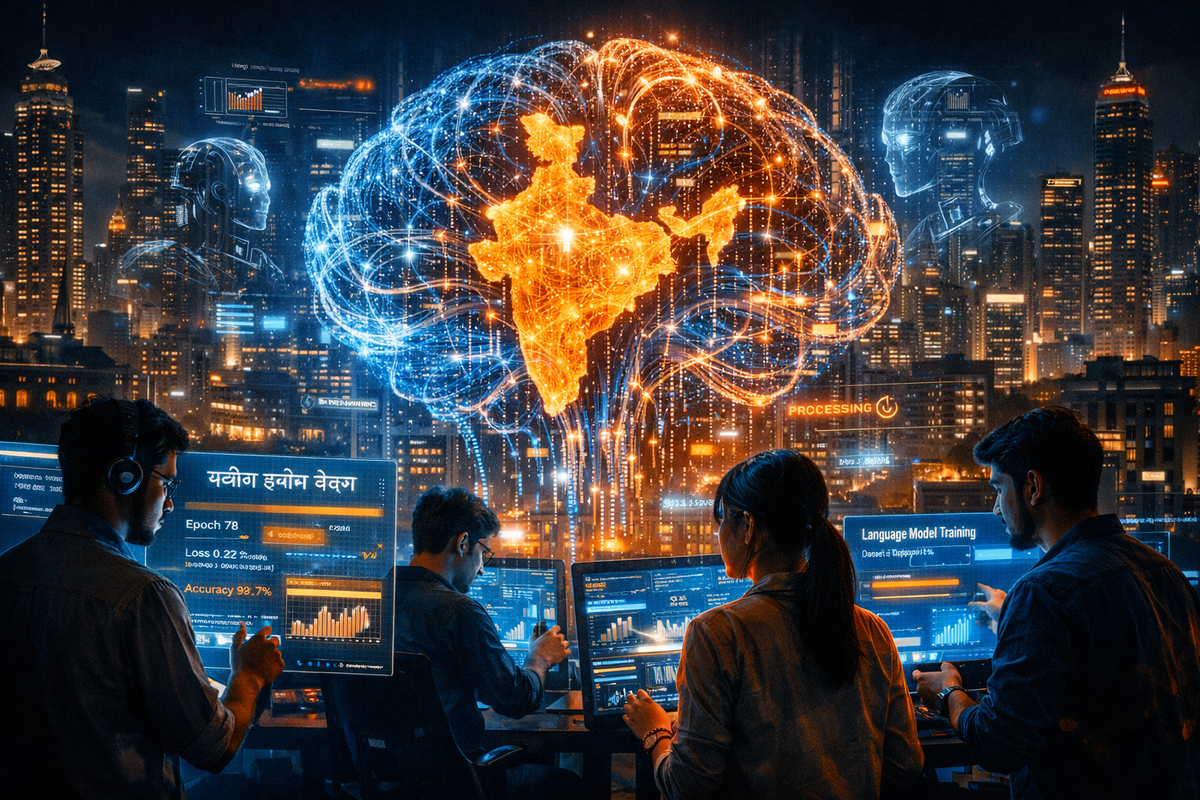
The surge in funding, talent, and policy support signals momentum. But building a world-class AI model takes more than ambition. It takes execution, infrastructure, and time.
The Forces Driving India’s AI Startup Boom
India’s AI ecosystem is expanding rapidly due to talent, data, and policy push.
NASSCOM estimates India has over 1.25 million AI professionals either working or in training. Combined with one of the largest digital populations generating multilingual data, this creates a strong base for AI development.
The IndiaAI Mission is accelerating progress with planned investments in compute infrastructure and datasets. Still, building a global model requires sustained research and capital.
The Race to Build India’s Global AI Model
Several startups are emerging as serious contenders.
Sarvam AI is building generative AI systems focused on Indian languages and enterprise use cases.
Krutrim, founded by Bhavish Aggarwal, is developing an indigenous AI model with emphasis on voice and regional language interfaces.
CoRover.ai is scaling conversational AI solutions across enterprises and government systems, focusing on deployment over pure research.
AI4Bharat, from IIT Madras, is building open datasets and language models that support the broader ecosystem.
Each is solving a different layer of the stack. None has yet built a globally dominant model.
The Real Challenge: Compute and Capital
Training large AI models requires massive compute resources and funding.
Global leaders invest tens to hundreds of millions of dollars into model training. India’s GPU infrastructure is improving but still limited compared to the US and China.
Research depth is another gap. While India produces strong engineering talent, cutting-edge AI research remains concentrated in a few institutions.
Global competition is also intensifying, with established models rapidly expanding into Indian markets.
India’s Strategic Advantage
Indian startups are not chasing identical global models. They are focusing on localized intelligence.
This includes multilingual capabilities across languages like Hindi, Tamil, and Bengali, along with voice-first interfaces suited for mobile users.
This approach targets a massive user base that remains underserved by existing global AI systems.
If successful, India could lead in building AI for the next billion users.
What Comes Next
The next phase will depend on execution.
Key developments to watch include progress in multilingual models, expansion of compute infrastructure, and collaborations between startups and global tech companies.
Open-source contributions from Indian research groups will also play a critical role.
Conclusion
India’s AI ambitions are entering a decisive phase. The ecosystem has talent, data, and growing support. What it needs now is sustained investment and breakthrough innovation.
The next global AI model may not come from traditional tech hubs. If India’s startups align research, product, and scale, they have a real shot at building it.
Fast Facts: India's AI startup Boom : Who's Building the Next Global Model ? Explained
What is India’s AI startup boom about?
India's AI startup Boom : Who's Building the Next Global Model ? refers to the rapid growth of startups building AI systems, especially for multilingual and real-world applications.
Can India build a global AI model?
India's AI startup Boom : Who's Building the Next Global Model ? shows strong potential, but limited compute infrastructure and funding remain key challenges.
Why focus on multilingual AI in India?
India's AI startup Boom : Who's Building the Next Global Model ? emphasizes multilingual AI to serve diverse language users and expand access to AI technologies.