Japan’s Startup Party Wants AI Factored Into Immigration Policy
As AI threatens to reshape white-collar jobs, Japan’s rising “startup party” argues immigration policy must evolve before automation rewrites the labor market.
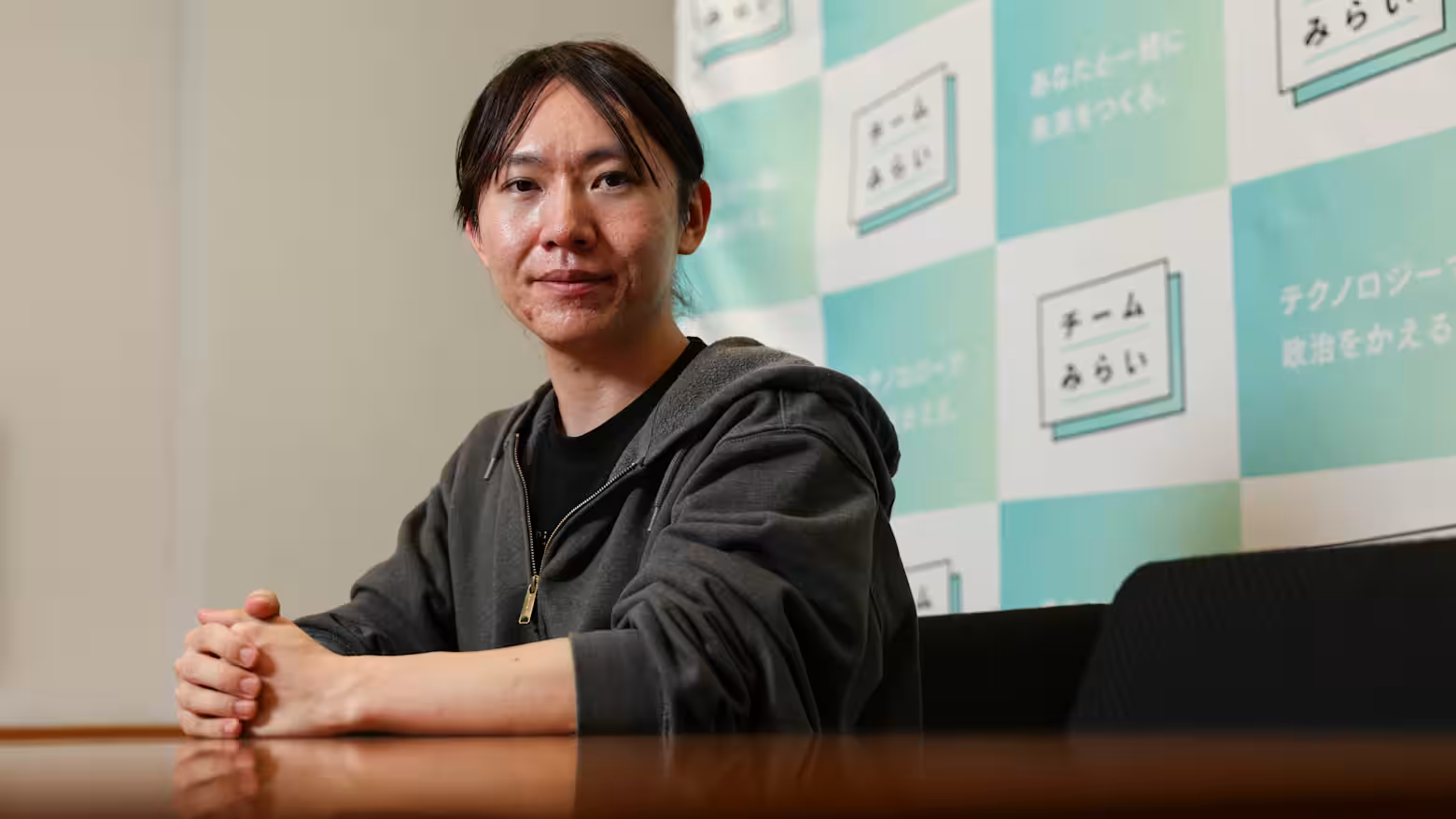
Can artificial intelligence predict the future of jobs before governments can? In Japan, a new political movement believes the answer could reshape immigration policy itself.
A rising political group called Team Mirai is urging policymakers to incorporate artificial intelligence into national workforce planning. The party argues that traditional immigration forecasts ignore a growing disruption: automation driven by AI.
As Japan confronts a shrinking population and one of the world’s fastest aging societies, the debate around migration policy is quickly becoming central to the country’s economic future.
Why Japan Is Rethinking Migration Policy in the Age of AI
Japan faces a severe demographic challenge. According to government estimates, the country’s workforce is projected to shrink significantly in the coming decades as birth rates remain low and the population ages.
In response, Prime Minister Fumio Kishida announced plans to accept about 426,000 foreign workers over two years through expanded visa programs. Combined with the Specified Skilled Worker visa pathway, Japan could admit around 1.23 million foreign workers by March 2029.
However, Team Mirai leader Takahiro Anno argues that immigration planning rarely considers how rapidly artificial intelligence might transform employment.
According to Anno, policymakers risk overestimating future labor shortages if automation replaces large segments of knowledge work.
“Eventually it will spread to all occupations that process information,” Anno warned in an interview with Nikkei Asia.
Fields like programming, consulting, and research could experience major productivity shifts as AI systems improve.
How AI Factored Into Migration Policy Could Change Workforce Planning
The idea behind AI factored into migration policy is relatively straightforward: use predictive analytics to estimate how automation will affect labor demand before setting immigration targets.
Traditional labor forecasting relies heavily on demographic models. These models project worker shortages based on aging populations, economic growth, and industrial demand.
AI-driven models could add another layer by estimating:
- Jobs likely to be automated
- Productivity gains from AI tools
- New job categories created by emerging technologies
- Skill gaps that automation cannot fill
If automation replaces millions of tasks, governments might reconsider how many foreign workers are needed in certain sectors.
Anno argues that migration targets should incorporate this technological uncertainty.
The Political Rise of Japan’s Startup Party
Team Mirai, founded in 2024, positions itself as a “startup party” focused on technological governance.
The party gained unexpected traction during Japan’s recent lower house election, securing 11 seats after previously having none. It also earned more than 3.8 million votes in proportional representation, roughly 7 percent of the total vote.
Support was particularly strong among urban voters in their 40s and 50s who believe Japan’s political establishment has been slow to adapt to digital change.
Team Mirai advocates broader reforms including:
- AI-driven policymaking tools
- Investment in robotics and autonomous technologies
- Digitization of government processes
- Reskilling programs to prepare workers for AI disruption
The party has also proposed using AI to modernize legislative procedures.
For example, Anno suggested that tools similar to conversational AI systems could help citizens test policy ideas and assess their impact.
Risks and Limitations of AI-Based Policy Forecasting
While the proposal is ambitious, critics caution that AI forecasting is far from perfect.
Economic systems are complex, and automation does not always eliminate jobs. In many cases, technology shifts tasks rather than removing entire occupations.
There are also ethical concerns. Relying too heavily on algorithmic projections could risk shaping immigration policies around uncertain technological predictions.
Labor economists often emphasize that migration policy should balance multiple factors including economic growth, social integration, and humanitarian commitments.
Even Anno acknowledges that foreign workers will remain essential in many sectors, especially healthcare, construction, and elder care.
What This Debate Means for the Future of Work
The conversation around AI in migration policy reflects a broader global challenge.
Artificial intelligence is changing labor markets faster than traditional policy cycles can respond. Governments worldwide are now grappling with how to forecast the future of work in a world where algorithms can perform increasingly complex tasks.
Japan’s experiment could serve as an early test of whether AI can help governments plan smarter labor policies or whether the technology introduces new uncertainties into policymaking.
Either way, the intersection of AI and migration policy is likely to become a defining policy debate of the next decade.