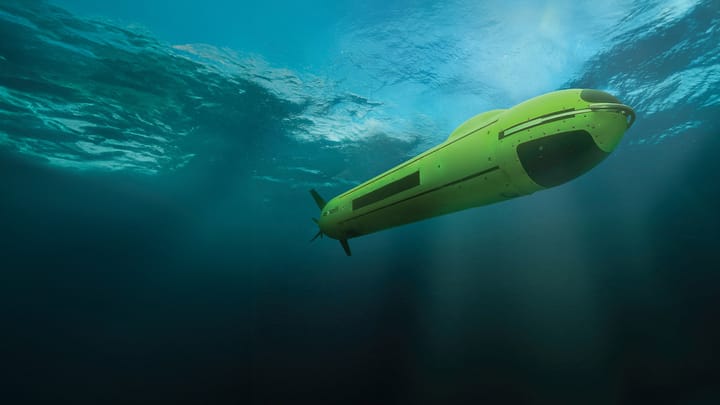
Machines Making Life-or-Death Decisions: The Kill Switch Dilemma in Autonomous Warfare
Can a kill switch stop autonomous weapons? Explore the lethal tech reshaping warfare, the UN's urgent 2026 deadline, and why meaningful human control may be an illusion."

In May 2025, 96 countries gathered at UN headquarters to confront a question that seemed purely fictional just years ago: Should we allow machines to select and kill targets without human approval?
The Turkish Kargu-2 loitering munition already hunted enemies autonomously in Libya without a human pulling the trigger. Russia is mass-producing armed ground robots. Ukraine's "drone wall" uses autonomous defensive systems. The future of autonomous weapons is not coming; it has already arrived on the battlefield.
Yet military powers remain deadlocked on the fundamental question that must be answered before these systems proliferate further: Can a kill switch ever truly work when decisions happen at machine speed?
The Technology That Outpaced Law
Autonomous weapons systems (AWS) represent a fundamental shift in warfare. Unlike conventional drones piloted by humans in real time, truly autonomous systems can independently identify, track, and engage targets based on sensor data alone.
This sounds abstract until you consider the stakes: machines determining who lives and who dies based on algorithms, sensor patterns, and target profiles, with humans relegated to choosing where and when to deploy them.
The technology is deliberately outpacing international legal frameworks. A military advantage of seconds can shift entire combat outcomes. The faster a system can identify and neutralize threats, the greater the incentive to remove human review from the decision loop.
This creates a paradoxical pressure: as autonomous weapons become more sophisticated, removing meaningful human control becomes tactically tempting even as it becomes ethically catastrophic.
In December 2024, the UN General Assembly voted 166 to 3 in favor of addressing autonomous weapons regulation. Russia, North Korea, and Belarus opposed. Yet this overwhelming mandate masks a harder truth: despite two years of formal negotiations, the international community has not agreed on binding restrictions. Consensus requires everyone, including nations investing heavily in autonomous military systems.
The Illusion of Meaningful Human Control
Policymakers and military leaders increasingly invoke "meaningful human control" (MHC) as the solution. Humans will remain "in the loop," they assure us. But MHC proves far more elusive in practice than in theory. What does it actually mean for a human to maintain meaningful control over a system operating at machine speed?
Consider the operator problem. A truly autonomous targeting system might present a human supervisor with a decision that must be made in 200 milliseconds. Can a human realistically review, understand, and override a complex algorithmic determination in that window?
Research shows that when systems operate at superhuman speed, humans default to "automation bias," trusting the machine's decision rather than scrutinizing it. The override becomes theoretical while control becomes illusory.
There's also the accountability paradox. If an autonomous system commits a war crime, who is responsible? The programmer who wrote the algorithm? The commander who deployed it? The operator who failed to override? The manufacturer?
International law requires clear individual accountability for violations of humanitarian law. Autonomous systems deliberately diffuse responsibility across so many actors and layers that prosecution becomes nearly impossible. This accountability gap is not a technical problem to solve with better engineering, it is a fundamental feature of autonomous decision-making.
The Kill Switch Reality
The idea of a kill switch sounds straightforward: override autonomy in seconds if something goes wrong. In practice, kill switches reveal the deeper problem with autonomous weapons altogether.
Real-world kill switch mechanisms face multiple constraints. A system operating in jamming environments might lose communication with command. A system protecting a military position during active attack might default to autonomous engagement if override signals fail.
A swarm of drones, a key technological frontier cannot be individually controlled in real time. If one drone in a 100-drone swarm receives an override signal while others don't, what happens? The architecture of modern autonomous systems often makes graceful shutdown technically impossible when the system matters most operationally.
The rolling text from UN negotiations in November 2024 proposes incorporating "self-destruct, self-deactivation, or self-neutralization mechanisms." These sound better in diplomatic language than they work in military reality. A weapon system cannot selectively disable itself once activated in combat without creating enormous vulnerabilities. An enemy could jam deactivation signals while the system remains lethal. A self-destructing drone is a liability to your own forces if captured or if it malfunctions over populated areas.
The Irreducible Ethical Problem
Some argue that autonomous systems might actually reduce war crimes by eliminating human emotion, anger, and self-preservation fear from combat decisions. Theoretically, a perfectly programmed robot could comply with international humanitarian law better than frightened soldiers. This logic has attracted serious military strategists.
But this optimism misses something fundamental: machines cannot comprehend morality. An algorithm can be programmed to recognize when targeting violates the laws of war. It can check geographic coordinates against civilian databases. But it cannot understand why civilians deserve protection, only that the code says avoid this location.
It cannot recognize the mother shielding her children in a building that technically houses military equipment. It cannot weigh whether an expected military advantage truly justifies incidental civilian harm. These decisions require moral judgment, not computational optimization.
Moreover, autonomous systems trained on military data inherit the biases embedded in that training. If historical targeting data reflects discrimination against certain populations, the system will learn to replicate and automate that bias at scale. Yet unlike human operators who might recognize bias and override it, an autonomous system offers no such correction mechanism.
When Nations Refuse Limits
The deepest challenge is political. The US Department of Defense rejects the idea of a ban, opting instead for a governance framework rooted in its 2020 Ethical Principles for Artificial Intelligence.
India, Israel, Russia, and the United States all abstained from or blocked proposals for stronger international restrictions. These nations collectively represent enormous military and economic power. They have calculated that autonomous weapons provide strategic advantage, and they are unwilling to forgo that advantage through international treaty.
More than 120 countries support calls to negotiate a treaty that prohibits and regulates autonomous weapons systems, yet this majority cannot force consensus when major military powers refuse. The blockade persists because autonomous weapons represent the future of military power, and no nation wants to unilaterally restrict its own capabilities.
What Comes Next
UN Secretary-General António Guterres called on Member States to agree to a legally binding agreement to regulate and ban autonomous weapons by 2026. This deadline represents genuine urgency, yet it offers no guarantee of success. The 2025 negotiations may produce a treaty, or they may produce compromised language that permits what it claims to restrict.
The kill switch question ultimately reflects a deeper truth: some technologies cannot be made safe through oversight mechanisms alone. They require restraint at the point of design and development. A truly autonomous lethal weapon, once deployed, removes human judgment from the moment that matters most. No kill switch retroactively restores that judgment.
For nations still uncommitted on autonomous weapons policy, the time to decide is now, before systems become fully autonomous and embedded in military doctrine. For those already developing these systems, the question is whether short-term tactical advantage justifies opening a door to something neither we nor our descendants can control.
Fast Facts: Autonomous Weapons AI Explained
What's the difference between an autonomous weapon and a regular drone?
A regular drone requires a human operator to identify and authorize each target in real time. An autonomous weapon system can independently identify and attack targets based on sensor data alone once deployed. This removes the human from the moment of decision, making accountability and meaningful human control fundamentally different challenges.
Why do military leaders resist kill switches if they're just safety features?
Kill switches sound simple but create operational vulnerabilities in actual combat. A system that can be remotely shut down can be disrupted by enemy jamming. Swarms of autonomous systems cannot be individually overridden in real time. And graceful shutdown during active engagement contradicts survival. Meaningful kill switches often conflict with military effectiveness.
Can't we just program robots to follow international law better than humans?
Algorithms can recognize legal rules but cannot understand moral reasoning. A system cannot weigh whether civilian casualties are truly justified or comprehend human dignity. Autonomous systems also inherit biases from their training data, and unlike humans, they offer no mechanism for recognizing and overriding inappropriate bias.