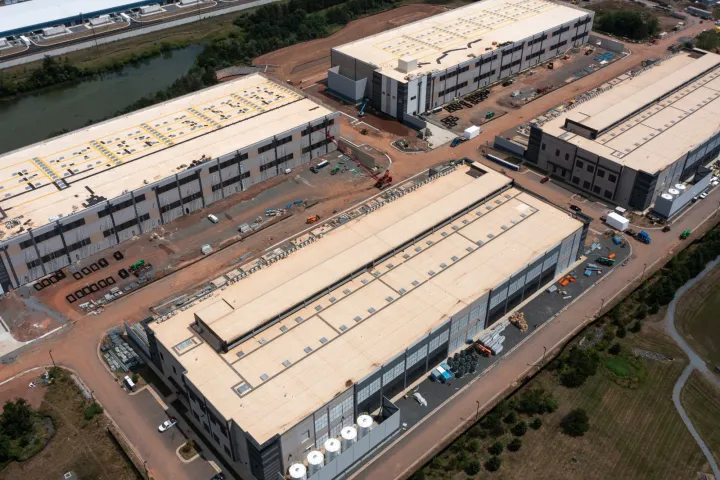
Macron Touts Nuclear Energy to Attract AI Data Centres to France
France is betting its powerful nuclear energy grid to fuel the exploding demand for AI data centres, aiming to turn clean electricity into a strategic edge in the global AI race.

Artificial intelligence is hungry for power. Training large AI models and running massive cloud systems require enormous amounts of electricity. Now, France believes it has a competitive advantage. Its nuclear energy.
French President Emmanuel Macron announced that the country plans to leverage its nuclear power infrastructure to support AI data centres, positioning France as a major player in the global AI race. The strategy hinges on a simple idea: use abundant, low-carbon nuclear electricity to power the next generation of computing infrastructure.
With global demand for AI computing skyrocketing, France’s nuclear power AI data centres strategy could become a blueprint for how nations build sustainable AI infrastructure.
France’s Nuclear Advantage in the AI Era
France already produces a large share of its electricity from nuclear energy, making it one of the most decarbonized power systems in the world. According to Macron, France exported about 90 terawatt-hours of decarbonized electricity last year, a surplus that could now support new AI data centres.
Speaking at the World Nuclear Energy Summit in Paris, Macron emphasized that nuclear power provides the energy stability required for large-scale AI computing.
The country’s nuclear fleet gives France the ability to expand computing capacity without compromising domestic energy supply. This advantage could attract global tech companies looking for reliable and clean electricity for their AI infrastructure.
Why AI Data Centres Need Massive Power
AI systems, especially large language models and generative AI platforms, require enormous computing clusters packed with high-performance GPUs.
These facilities consume vast amounts of electricity for both computing and cooling. Some large AI data centres can use as much electricity as a small city.
That energy demand is pushing governments and companies to rethink infrastructure. Stable baseload power is critical, and nuclear energy offers two key benefits:
- Constant electricity generation
- Very low carbon emissions
For countries trying to expand AI capacity while meeting climate goals, nuclear power becomes a strategic asset.
France Nuclear Power AI Data Centres Strategy
The France nuclear power AI data centres plan is about more than just energy. It is also about technological sovereignty.
Europe has grown increasingly concerned about relying on foreign cloud providers and AI infrastructure. Building large computing hubs powered by domestic energy could strengthen Europe’s control over critical technology systems.
France’s energy surplus and nuclear capacity could allow the country to host new data centre clusters while keeping energy costs predictable.
This makes France an attractive destination for AI infrastructure investment from both European and international companies.
The Challenges and Risks
Despite its advantages, nuclear-powered AI infrastructure is not without controversy.
Critics point to several concerns:
- High costs and long timelines for nuclear projects
- Nuclear waste management challenges
- Public concerns about safety
There are also questions about whether existing nuclear capacity can scale fast enough to meet the explosive growth of AI computing demand.
At the same time, renewable energy and battery storage are competing alternatives for powering data centres.
Still, supporters argue that nuclear power remains one of the few energy sources capable of delivering stable, large-scale clean electricity.
What This Means for the Future of AI Infrastructure
The rise of France nuclear power AI data centres reflects a broader shift in how nations think about AI competitiveness.
Energy is quickly becoming as important as algorithms.
Countries with reliable, low-carbon electricity may gain an edge in hosting AI infrastructure, attracting data centre investment, and supporting domestic AI innovation.
If France successfully combines nuclear power with AI infrastructure expansion, it could emerge as one of Europe’s most important hubs for artificial intelligence.
Conclusion
AI’s growth is reshaping global energy priorities. France believes its nuclear power fleet provides a unique advantage in powering the next wave of AI computing.
By linking nuclear energy with AI data centres, the country is positioning itself at the intersection of clean energy and advanced technology. The success of this strategy could influence how nations around the world power the AI revolution.
Fast Facts: France Nuclear Power AI Data Centres Explained
Why does France want to use nuclear power for AI data centres?
France plans to power AI data centres with nuclear energy because its nuclear plants generate large amounts of low-carbon electricity, enabling the country to expand computing capacity for artificial intelligence.
What advantage does France have for hosting AI data centres?
France exports significant amounts of decarbonised electricity (about 90 terawatt-hours in the past year) mainly from nuclear power, giving it surplus energy to support new AI data centres.
Are France nuclear power AI data centres controversial?
Yes. Critics argue France nuclear power AI data centres raise concerns about nuclear costs, waste management, and infrastructure timelines, though supporters say nuclear energy is essential for sustainable AI growth.