Medicine Rewritten: Five AI-Driven Healthcare Scenarios That Will Define Standard Care by 2030
Five AI-driven healthcare scenarios will define standard medical practice by 2030. Explore how AI is reshaping diagnostics, monitoring, and care delivery.

Healthcare is on the brink of its most consequential operational shift in a century.
Artificial intelligence is no longer confined to pilot programs or experimental trials. Across hospitals, diagnostics labs, and insurance systems, AI tools are already influencing decisions once made exclusively by clinicians. By 2030, several AI-driven practices will not be innovations at all. They will be standard operating procedure.
This transformation is not about replacing doctors. It is about redesigning healthcare workflows to handle scale, complexity, and rising demand in ways human systems alone cannot.
Continuous AI Monitoring as the New Vital Sign
By 2030, passive AI monitoring will be as routine as measuring blood pressure.
Wearables and ambient sensors already collect heart rate, sleep patterns, glucose levels, and mobility data. AI systems are increasingly able to analyze these streams continuously, detecting early warning signs of deterioration days or weeks before symptoms appear.
Health systems are moving from episodic care to continuous care. Instead of reacting to emergencies, clinicians will receive predictive alerts that prompt early intervention. This approach is already reducing hospital readmissions in cardiac and chronic disease management.
The challenge lies in data overload. AI will be essential to filter noise and surface clinically meaningful insights.
AI-First Medical Imaging and Diagnostics
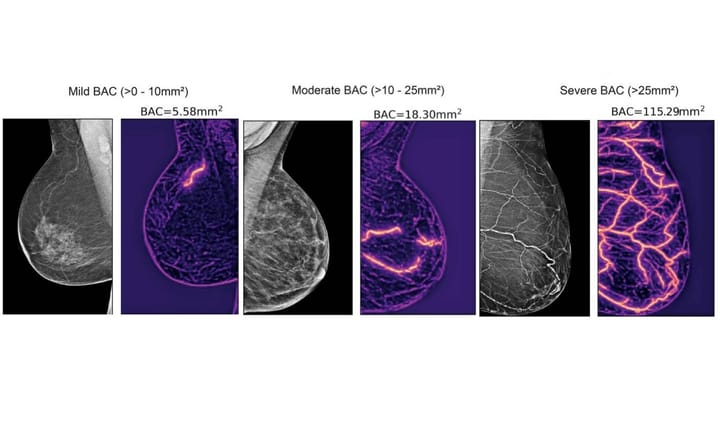
Radiology and pathology are undergoing rapid automation, and by 2030, AI-assisted diagnostics will be the default entry point for imaging workflows.
AI systems now match or exceed average clinician performance in tasks such as tumor detection, fracture identification, and retinal disease screening. In standard practice, AI will perform the first read, flag anomalies, and prioritize urgent cases.
Human specialists will focus on complex interpretations, second opinions, and patient communication. This hybrid model improves speed and accuracy while addressing workforce shortages.
Regulatory bodies are increasingly comfortable with this approach, provided models remain explainable and audited.
Personalized Treatment Plans Powered by Predictive Models
Medicine is shifting from population averages to individualized care.
By 2030, AI-driven predictive models will routinely inform treatment selection for cancer, autoimmune disorders, and mental health conditions. These systems analyze genetic data, medical history, lifestyle factors, and real-world outcomes to recommend therapies with the highest likelihood of success.
In oncology, AI already helps match patients to targeted therapies and clinical trials. Similar approaches are expanding across chronic and rare diseases.
This does not eliminate clinician judgment. It augments it with probabilistic insight grounded in large-scale data.
Administrative Automation as a Clinical Necessity
Administrative burden is one of healthcare’s biggest inefficiencies. AI is poised to eliminate much of it.
By the end of the decade, AI systems will handle documentation, billing, coding, and prior authorization as routine infrastructure. Clinical notes will be generated automatically from conversations, reviewed by clinicians, and finalized in minutes rather than hours.
Hospitals adopting these systems report reduced burnout and increased patient-facing time. For patients, this translates into faster approvals and fewer bureaucratic delays.
Operational AI will become as essential as electronic health records once were.
AI-Guided Public Health and Outbreak Response
Public health decision-making is becoming increasingly data-driven.
By 2030, AI systems will continuously analyze epidemiological data, mobility patterns, climate signals, and healthcare utilization to forecast outbreaks and resource needs. During health crises, AI-guided models will inform policy decisions such as vaccine distribution and hospital capacity planning.
These tools proved their value during recent global health emergencies, despite early limitations. With better data integration and governance, they will become standard public health infrastructure.
The ethical imperative will be transparency. Public trust depends on understanding how decisions are made.
The Risks That Must Be Managed
AI-driven healthcare is not without serious concerns.
Bias in training data can lead to unequal outcomes. Poorly designed systems can undermine clinician trust or patient autonomy. Cybersecurity risks grow as systems become more interconnected.
By 2030, robust governance frameworks will be as important as technical performance. Regulatory oversight, clinical validation, and human accountability must remain central.
The goal is not automation for its own sake, but safer and more equitable care.
Conclusion: From Innovation to Infrastructure
The five AI-driven healthcare scenarios emerging today point to a clear future.
AI will become embedded in how care is delivered, monitored, and managed. Not as a novelty, but as invisible infrastructure supporting human expertise.
By 2030, the question will not be whether AI belongs in healthcare. It will be how well systems were designed to serve patients, clinicians, and society together.
Fast Facts: AI-Driven Healthcare Scenarios Explained
What are AI-driven healthcare scenarios?
Five AI-Driven Healthcare Scenarios refer to standardized clinical and operational practices where AI supports monitoring, diagnostics, treatment planning, administration, and public health decision-making.
What benefits will these scenarios deliver by 2030?
Five AI-Driven Healthcare Scenarios will improve early detection, diagnostic accuracy, personalized treatment, clinician efficiency, and system-wide preparedness across healthcare ecosystems.
What limits widespread adoption of AI in healthcare?
Five AI-Driven Healthcare Scenarios face challenges including data bias, regulatory complexity, privacy risks, and the need for clinician oversight and patient trust.