Meta Facing Internal Pushback Over Increased Focus on AI Over Metaverse Investments
Meta’s aggressive pivot toward AI is triggering internal resistance, raising questions about the future of its metaverse ambitions and long-term strategy.
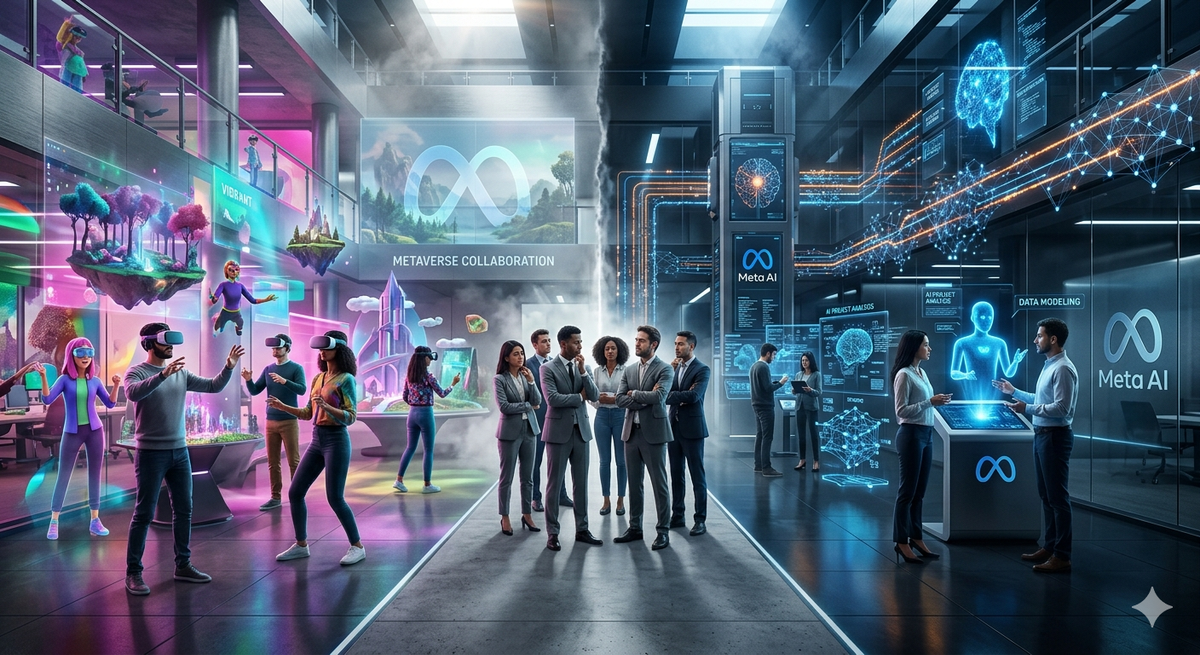
Is Meta quietly rewriting its future? Inside the company, a growing number of employees are questioning why artificial intelligence is suddenly taking center stage while the metaverse, once the core vision, appears to be losing momentum.
Meta Platforms has invested tens of billions of dollars into building immersive virtual worlds through its Reality Labs division. The ambition was clear: define the next computing platform. Now, the company is aggressively shifting resources toward AI, aligning itself with a fast-moving industry trend led by players like OpenAI and Google.
AI Becomes the Immediate Priority
Meta’s leadership sees AI as a faster path to revenue and relevance. From personalized recommendations to ad targeting and AI assistants integrated into apps like Instagram and WhatsApp, the company is embedding AI across its ecosystem.
Recent spending patterns reinforce this shift. Billions are being allocated toward AI infrastructure, including data centers and advanced chips, to compete in the generative AI race. Compared to the metaverse, AI offers quicker returns and easier adoption since it builds on existing platforms rather than requiring new hardware behavior from users.
Internal Friction Over Strategic Direction
Not everyone inside Meta is convinced. Teams working on virtual reality and metaverse products are reportedly concerned about reduced focus and uncertainty around long-term goals. Years of development in immersive technology risk being sidelined as leadership attention pivots.
Some employees argue that frequent strategic shifts weaken confidence and create confusion. Others believe Meta is drifting away from its original ambition of shaping the future of digital interaction.
Financial Reality Driving the Shift
The numbers are hard to ignore. Reality Labs has posted losses exceeding $40 billion since 2020, according to company disclosures. In contrast, AI-driven features are already improving engagement and boosting advertising efficiency across Meta’s core platforms.
AI scales faster and demands less behavioral change from users. The metaverse, while promising, depends on widespread adoption of VR hardware and new forms of interaction, which remain limited.
Risks of Leaning Too Heavily Into AI
Doubling down on AI introduces its own challenges. Competition is intense, and differentiation is difficult as more companies develop similar capabilities. Ethical concerns around bias, misinformation, and data privacy continue to attract scrutiny.
At the same time, stepping back from the metaverse could create opportunities for competitors like Apple and Microsoft to lead in spatial computing and immersive platforms.
Balancing Short-Term Gains With Long-Term Vision
The tension within Meta reflects a larger industry dilemma. Companies must decide whether to prioritize immediate returns or invest patiently in long-term innovation. AI delivers tangible benefits today, while the metaverse remains a high-risk, high-reward bet.
Meta’s challenge is maintaining momentum in both areas without diluting its strategic clarity. The outcome will shape not only its future but also the direction of the broader tech ecosystem.
What is unfolding inside Meta is not just a corporate disagreement. It is a reflection of how quickly priorities shift in technology. The companies that succeed will be the ones that manage to build for today without abandoning tomorrow.
Fast Facts: Meta Facing Internal Pushback Over Increased Focus on AI Over Metaverse Investments Explained
What is happening at Meta right now?
Meta facing internal pushback over increased focus on AI over metaverse investments reflects employee concerns about shifting priorities from virtual reality projects to AI-driven products.
Why is Meta prioritizing AI over the metaverse?
Meta facing internal pushback over increased focus on AI over metaverse investments is driven by AI’s faster revenue potential and rising competition in generative AI.
What are the risks of this shift?
Meta facing internal pushback over increased focus on AI over metaverse investments could weaken long-term innovation and create internal uncertainty if metaverse efforts lose support.