Microsoft Deepens Investment in AI Infrastructure as Competition with OpenAI Rivals Heats Up
Microsoft is doubling down on AI infrastructure with massive data center expansion, custom chips, and cloud scaling as competition intensifies with Google, Amazon, and emerging AI players.
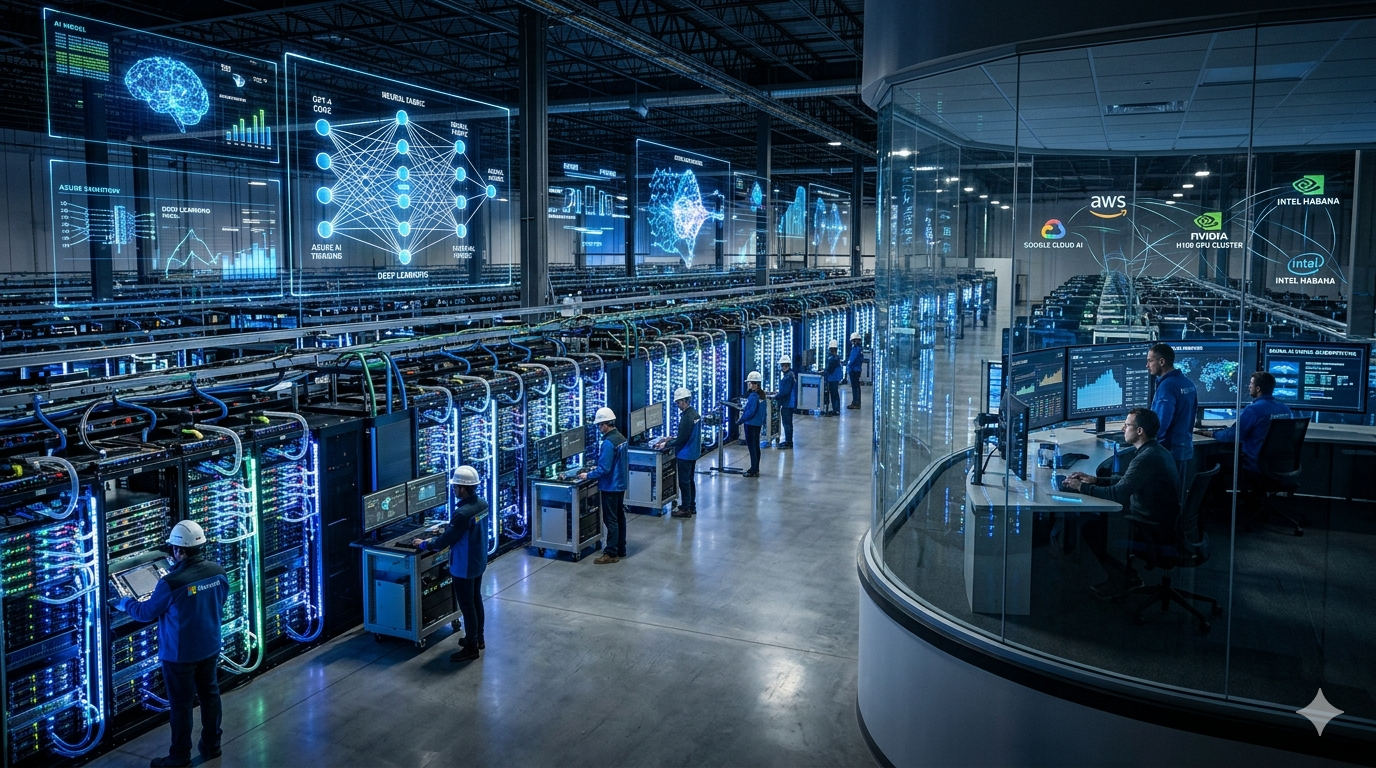
What if the real AI war is not about smarter models, but about who controls the machines running them? That question is driving one of the most aggressive investment cycles in tech history.
Microsoft is pouring tens of billions into AI infrastructure as competition intensifies with rivals building their own ecosystems. The company’s capital expenditure has crossed $50 billion in recent fiscal periods, with a large share tied directly to AI workloads. This is not experimentation. It is a calculated move to dominate the backbone of artificial intelligence.
A High-Stakes Race for AI Dominance
The global AI race has shifted from software to infrastructure. Microsoft is scaling its Azure cloud, building advanced data centers, and investing in custom silicon to support the growing demand for AI services.
Generative AI adoption across industries is accelerating, from enterprise automation to consumer applications. This surge is pushing companies to secure compute capacity at an unprecedented scale.
Why Infrastructure Is the Real Battleground
Behind every AI model is an enormous infrastructure stack. Microsoft’s approach focuses on three core areas:
- Large GPU clusters for training advanced models
- Custom chips like Azure Maia and Cobalt for efficiency
- Global data center expansion to reduce latency and costs
Training a single frontier model can cost hundreds of millions of dollars. Running those models at scale requires continuous optimization. Control over infrastructure now defines long-term advantage.
Partnerships and Rising Competition
Microsoft’s partnership with OpenAI has provided early access to cutting-edge models, strengthening its position in the market. However, competitors are closing the gap.
Google, Amazon, and emerging AI firms are building vertically integrated systems that combine models, infrastructure, and platforms. This reduces reliance on external providers and intensifies competition.
The result is a shifting landscape where alliances and rivalries coexist.
The Cost of Scaling AI
AI infrastructure comes with significant financial and environmental costs. Data centers require vast amounts of energy, cooling systems, and specialized hardware.
The International Energy Agency estimates that data center electricity consumption could approach 1,000 terawatt-hours annually by 2026, driven largely by AI demand.
Microsoft is investing in renewable energy and efficiency improvements, but sustainability remains a major challenge.
Implications for Businesses and Developers
The infrastructure race is reshaping how businesses access and deploy AI:
- Faster and more scalable AI services through cloud platforms
- Deeper integration of AI into enterprise workflows
- Increased dependence on a small number of cloud providers
While accessibility improves, concentration of power raises concerns around pricing, control, and innovation diversity.
Conclusion
The future of artificial intelligence will not be decided solely by algorithms. It will depend on who can build and sustain the infrastructure required to run them at global scale.
Microsoft’s aggressive investment reflects a clear understanding of this shift. The companies that win this race will not just create smarter AI. They will control the systems that make AI usable everywhere.
Fast Facts: Microsoft deepens investment in AI infrastructure as competition with OpenAI rivals heats up Explained
What does Microsoft’s AI infrastructure investment mean?
Microsoft deepens investment in AI infrastructure as competition with OpenAI rivals heats up by expanding data centers, chips, and cloud systems to support large-scale AI deployment globally.
Why is infrastructure so important in AI?
Microsoft deepens investment in AI infrastructure as competition with OpenAI rivals heats up because compute power and scalability determine how efficiently AI models can be trained and used.
What are the risks of this strategy?
Microsoft deepens investment in AI infrastructure as competition with OpenAI rivals heats up, but high costs, environmental impact, and reliance on major cloud providers remain key concerns.