New AI Technology Uses Mammograms to Predict Cardiovascular Risk
A routine mammogram may soon do more than detect breast cancer, with AI now capable of revealing hidden heart disease risks years before symptoms appear.
Can a routine breast cancer screening reveal your risk of heart disease?
Researchers now say the answer may be yes. Advances in artificial intelligence are transforming standard mammograms into powerful predictive tools that can detect early signs of cardiovascular risk.
Heart disease remains the leading cause of death globally, particularly among women, where symptoms are often underdiagnosed or detected late. A growing body of research shows that AI can predict heart disease from mammogram scans by identifying subtle patterns and calcium deposits in breast arteries. This breakthrough could turn a routine imaging test into a dual screening tool for two major health threats.
How AI can Predict Heart Disease From Mammogram Images
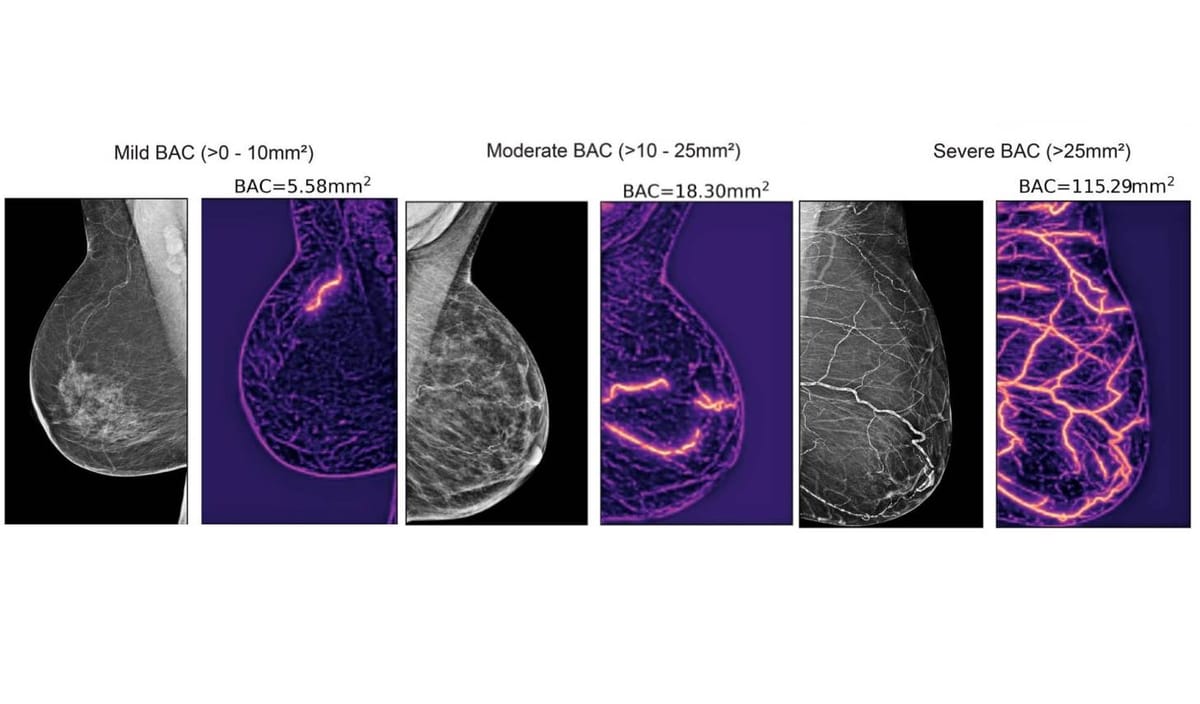
Traditional mammograms are designed to detect breast cancer. However, researchers have discovered that these scans also capture signs of breast arterial calcification (BAC), a buildup of calcium in the arteries that correlates with cardiovascular disease risk.
AI algorithms can analyze these patterns far more precisely than the human eye. By scanning mammogram images, machine learning systems quantify calcium deposits and other tissue characteristics associated with cardiovascular problems.
This approach uses deep learning models trained on thousands of medical images to identify correlations between mammogram features and future heart events.
The result is a predictive model that can flag patients who may benefit from further cardiovascular testing.
The “Two-for-One” Screening Opportunity
One of the most compelling aspects of this technology is efficiency. Mammography is already widely used in routine healthcare, meaning millions of women undergo the test each year.
By integrating AI analysis into existing scans, clinicians can effectively screen for two diseases at once without additional radiation, procedures, or cost.
Researchers from institutions including The George Institute for Global Health found that a deep learning model using only mammographic features and a patient’s age predicted cardiovascular risk with accuracy comparable to traditional risk calculators.
This could dramatically expand early detection efforts, especially among women who might otherwise go untested for cardiovascular risk.
Why Early Detection Matters
Cardiovascular disease is often called a “silent killer” because symptoms can remain hidden for years. Many women receive their first diagnosis only after a serious event such as a heart attack or stroke.
AI-powered mammography could change that.
By identifying vascular calcification early, doctors can recommend preventive strategies such as lifestyle changes, medication, or specialist referrals. Some studies suggest these calcification patterns strongly correlate with future cardiovascular events.
In other words, the same scan used to detect cancer may also reveal the earliest warning signs of heart disease.
Limitations and Ethical Considerations
Despite the promise, experts caution that AI prediction models still require further clinical validation.
Most studies have been retrospective or based on limited datasets. Large-scale trials are needed before AI-driven cardiovascular risk assessments become standard practice.
There are also ethical concerns related to algorithmic bias, medical liability, and data privacy. If AI systems are trained on limited demographics, predictions may not perform equally across populations.
For now, specialists emphasize that AI tools should assist clinicians rather than replace them.
The Future of Preventive Healthcare
The ability for AI to predict heart disease from mammogram scans signals a broader shift toward predictive medicine.
Instead of waiting for symptoms to appear, healthcare systems are increasingly using AI to uncover hidden health risks early. If validated at scale, this technology could transform routine imaging into a powerful platform for preventive care.
For millions of women undergoing annual mammograms, the future may involve more than cancer screening. It may also offer a lifesaving early warning for heart disease.
Fast Facts: AI Heart Disease Prediction Explained
How can AI use mammogram scans to predict heart disease?
AI can predict heart disease from mammogram images by identifying calcium deposits and vascular patterns in breast arteries that correlate with cardiovascular risk. Machine learning models analyze thousands of scans to detect patterns invisible to human radiologists.
What did the study find about heart disease risk levels?
Researchers found that women with mild arterial calcification had about a 30% higher risk of cardiovascular disease, while moderate levels raised the risk by over 70%, and severe calcification increased it two to three times.
Why is AI predicting heart disease from mammograms useful?
AI predict heart disease from mammogram data during routine cancer screening, enabling two conditions to be assessed in a single test. This “two-for-one” screening approach could improve early detection without additional medical procedures.