Nvidia and OpenAI Investment Shift: What It Means for AI’s Future
Nvidia and OpenAI abandon a planned $100B partnership for a $30B investment, reshaping expectations for AI funding and commercialization.
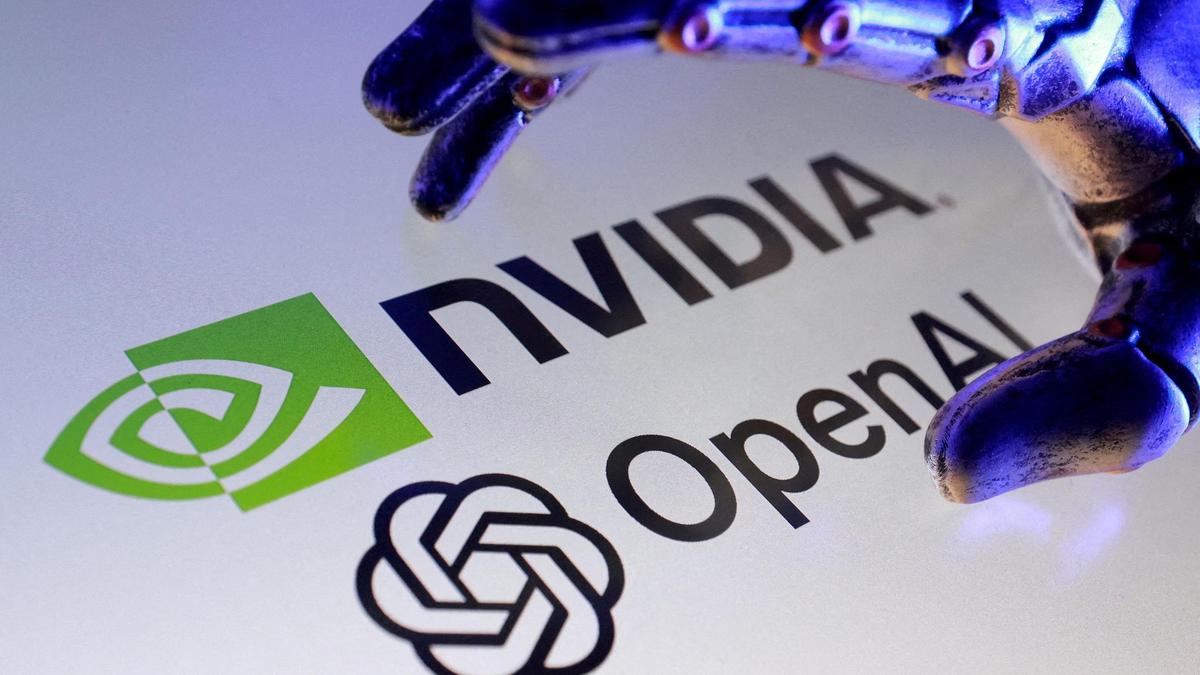
What happens when the most powerful AI chipmaker and the world’s leading AI startup rethink a $100 billion deal? In a dramatic shift in the technology landscape, Nvidia and OpenAI have moved away from an unrealized $100 billion partnership, choosing instead a more concrete $30 billion equity investment. The change signals evolving dynamics in how AI is funded, deployed, and commercialized globally.
This development matters because it shows how major players are recalibrating expectations around AI economics, risk and control as the field matures.
Why Nvidia and OpenAI Scaled Back the $100 Billion Plan
The original framework between Nvidia and OpenAI was widely discussed as a potential $100 billion strategic alliance including long-term commitments to AI infrastructure and co-development. Recent reporting indicates that plan has stalled, and both companies are now settling on a $30 billion direct investment by Nvidia into OpenAI instead.
Insiders suggest the shift came from practical business considerations rather than technological friction. A fixed investment offers Nvidia clear equity and influence, while OpenAI secures significant capital without the binding obligations of an expansive deal. This rebalancing reflects broader industry caution as AI regulation and profitability structures are still evolving.
What This Means for the AI Industry
Realigning Expectations Around AI Monetization
A $100 billion partnership would have set a new bar for capital infusion in AI. Its scaling back signals realism around the pace at which AI can monetize. Companies are tightening capital commitments and focusing on returns rather than headline deals.
Investors and leaders should interpret this as a move toward disciplined growth, where funding is tethered to measurable technology adoption rather than speculative future value.
Nvidia’s Strategic Position Strengthens
Nvidia has steadily become the backbone of modern AI infrastructure. Its GPUs and AI accelerators power training and inference for top models globally. By converting a broad $100 billion pact into a $30 billion investment, Nvidia locks in greater ownership of a key AI innovator while maintaining flexibility in other ventures.
This calculated positioning reinforces Nvidia’s role not just as a supplier of hardware but as a stakeholder in AI software ecosystems.
OpenAI’s Path to Commercial Viability
For OpenAI, the renewed deal represents both opportunity and restraint. The infusion of capital provides runway for growth, but the reduced scale suggests external investors expect sooner returns and clearer business models. In an era where AI startups are under pressure to demonstrate profitable use cases, this adjustment could encourage more pragmatic innovation.
Balancing Opportunity and Risk in AI Funding
The shift away from a sprawling $100 billion agreement reflects a larger trend in the AI sector: investors are increasingly demanding clear revenue pathways, tangible milestones, and risk mitigation strategies. Oversized deals risk inflating valuations without corresponding adoption. This recalibration may benefit the industry by encouraging disciplined spending and realistic deployment timelines.
Bottom line: The Nvidia and OpenAI funding realignment tells the industry that large-scale bets on AI are being reined in by practical commercial considerations. This could lead to healthier, more sustainable growth across AI ecosystems.
Fast Facts: Nvidia and OpenAI Investment Explained
What is the Nvidia and OpenAI investment change?
The original $100 billion strategic deal between Nvidia and OpenAI was scaled back to a direct $30 billion equity investment, reflecting more conservative capital commitments.
Why does this investment shift matter?
It signals industry expectations are shifting toward measurable AI profitability over speculative long-term deals, impacting how AI ventures secure funding.
What are the risks of such a deal?
Large projections like $100 billion can create unrealistic expectations. A defined $30 billion investment prioritizes achievable growth with clearer returns.