Nvidia struggles to meet soaring demand for AI chips as supply chain tightens
Exploding demand for AI computing has pushed Nvidia to its limits, exposing supply chain bottlenecks that could reshape the future of AI infrastructure and global semiconductor competition.
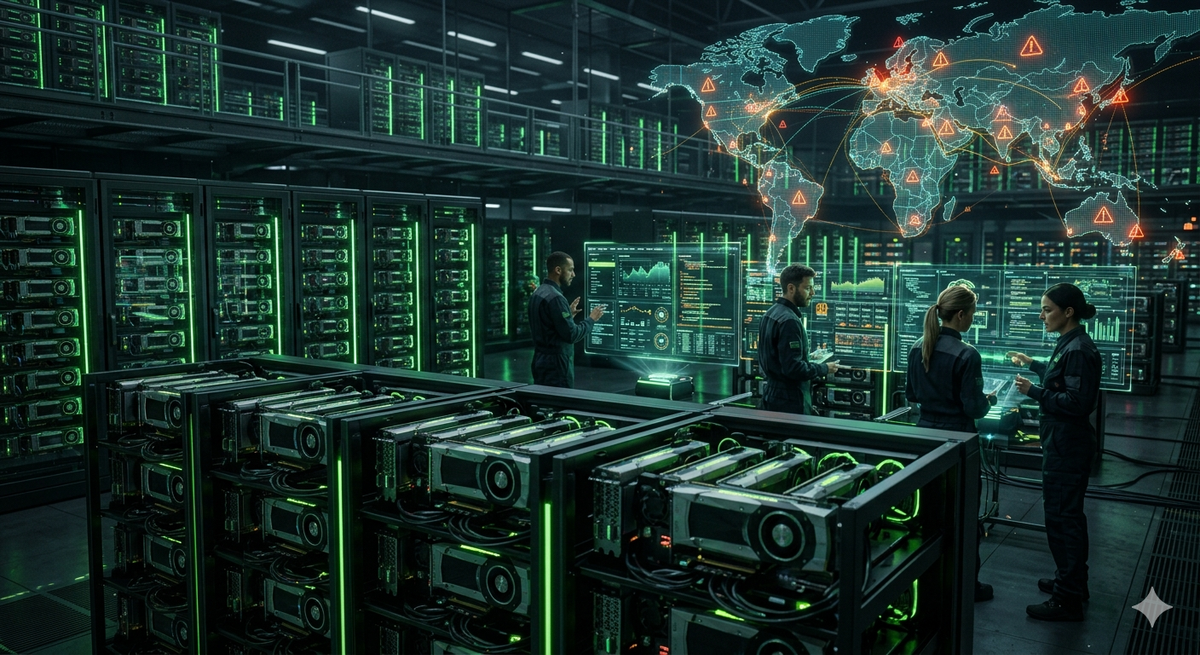
The AI boom is outpacing the systems built to support it. As companies rush to deploy large language models and generative AI tools, one reality is becoming unavoidable: Nvidia struggles to meet soaring demand for AI chips as supply chain tightens, and the effects are spreading across the tech industry.
From cloud giants to early-stage startups, demand for Nvidia’s GPUs has surged. Not everyone is getting access, and that gap is starting to define winners and losers in AI.
The AI Gold Rush Is Straining Supply
Demand for high-performance GPUs such as Nvidia’s H100 and A100 has grown rapidly. Industry estimates suggest AI chip demand has increased two to three times annually, driven by the rise of generative AI and large-scale model training.
Major players like Microsoft, Amazon, and Google are securing massive orders. Startups are left competing for limited supply, often facing delays of several months. Access to compute is becoming a key competitive advantage.
Nvidia Struggles to Meet Soaring Demand for AI Chips as Supply Chain Tightens
The issue is not just demand. It is the complexity of manufacturing.
Nvidia depends on Taiwan Semiconductor Manufacturing Company for advanced chip production. These chips require cutting-edge fabrication, advanced packaging, and components such as high-bandwidth memory.
Each stage has constraints. Advanced packaging capacity has emerged as a major bottleneck. Analysts have highlighted shortages in CoWoS packaging, limiting how many GPUs can be delivered even after production.
Without final assembly, chips cannot reach customers, creating delays across the supply chain.
Who Gains and Who Falls Behind
Large technology firms are securing supply through long-term agreements and heavy upfront investments. Microsoft has committed billions to ensure access to AI infrastructure, giving it a clear advantage.
Smaller companies face limited options. Many rely on cloud providers instead of owning hardware, increasing costs and reducing flexibility.
This shift risks concentrating power among a few dominant players, raising concerns about competition and innovation.
The Impact on AI Development
Limited access to GPUs is slowing progress for companies without resources. Training advanced AI models requires thousands of chips running continuously for extended periods.
In response, some developers are focusing on smaller and more efficient models. Others are exploring alternative hardware from companies like AMD and Google.
Nvidia still leads due to its strong software ecosystem, which creates dependency and limits rapid switching to competitors.
What Comes Next
Nvidia is expanding production and strengthening partnerships across its supply chain. Taiwan Semiconductor Manufacturing Company is also increasing output, but scaling advanced manufacturing takes time.
Short-term shortages are likely to continue. Over time, pressure may drive diversification in AI hardware and reduce reliance on a single supplier.
AI is no longer just about algorithms. It is now a race for infrastructure.
Conclusion
Nvidia struggles to meet soaring demand for AI chips as supply chain tightens, reflecting a deeper shift in the technology landscape.
Access to computing power is becoming as critical as data and talent. Companies that secure it will lead the next phase of AI innovation, while others will be forced to adapt.
Fast Facts: Nvidia struggles to meet soaring demand for AI chips as supply chain tightens Explained
What does the Nvidia AI chip shortage mean?
Nvidia struggles to meet soaring demand for AI chips as supply chain tightens, meaning companies face delays in accessing GPUs needed to build and scale AI systems.
Why is demand so high right now?
Nvidia struggles to meet soaring demand for AI chips as supply chain tightens because generative AI growth requires massive computing power for training and deployment.
What is the biggest limitation?
Nvidia struggles to meet soaring demand for AI chips as supply chain tightens due to manufacturing and packaging bottlenecks that restrict overall chip availability.