Nvidia to Give CEO Jensen Huang a $4 Million Bonus
A $4 million bonus might sound huge, but for Nvidia CEO Jensen Huang, it is just a tiny fraction of his fortune built on powering the global AI revolution.
What does a $4 million bonus mean to a CEO worth more than $160 billion? For Nvidia CEO Jensen Huang, it is less about personal wealth and more about signaling performance at the helm of one of the most influential companies in artificial intelligence.
According to industry reports, Huang is set to receive a $4 million bonus from Nvidia, an amount that represents roughly 0.002 percent of his estimated $164 billion net worth. The figure highlights an unusual contrast between executive compensation and the extraordinary wealth generated by Nvidia’s explosive growth during the AI boom.
The payout reflects Nvidia’s continued dominance in AI hardware and the company’s strong financial performance in recent years.
Nvidia's Bonus Reflects Record AI Growth
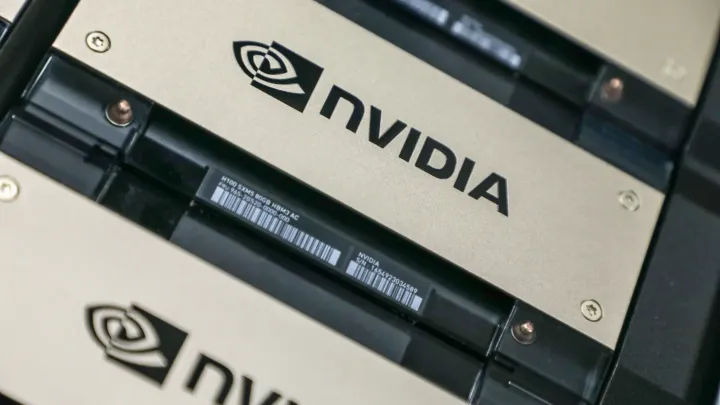
The bonus comes during a historic period for the company. Nvidia has become the backbone of modern artificial intelligence infrastructure, supplying GPUs that power large language models and data centers used by companies such as Microsoft, Amazon, and Google.
In 2024 and 2025, Nvidia’s revenue surged due to overwhelming demand for its AI chips, particularly the H100 and Blackwell architectures used for training generative AI models.
According to Nvidia’s financial filings, the company recorded tens of billions in quarterly revenue during the AI boom. That surge dramatically increased Huang’s personal wealth because he owns a significant stake in Nvidia stock.
The bonus itself is modest compared with the value of Huang’s equity holdings.
Why the $4 Million Bonus Is Mostly Symbolic
For most executives, a multimillion dollar bonus is substantial. In Huang’s case, the bonus is more symbolic than financially meaningful.
Reports indicate that the bonus equals roughly 0.002 percent of Huang’s net worth, which sits around $164 billion, placing him among the richest people in the world.
His wealth largely comes from Nvidia shares accumulated since founding the company in 1993.
This illustrates a broader trend in Silicon Valley. Many tech founders earn relatively small salaries or bonuses while most of their wealth comes from stock ownership tied to company performance.
Nvidia’s Success and the Rise of AI Infrastructure
The bonus also reflects the company’s critical role in the global AI race.
Nvidia GPUs have become essential for training advanced AI models developed by companies like OpenAI, Google DeepMind, and Anthropic. Demand for AI compute has driven massive investments in data centers across the United States, Europe, and Asia.
Industry analysts note that Nvidia controls a dominant share of the AI accelerator market. Some estimates place Nvidia’s share above 70 percent of the AI GPU market, according to research cited by multiple semiconductor analysts.
This dominance has propelled Nvidia to become one of the most valuable companies in the world.
Executive Pay in the Age of AI
Nvidia's bonus to Jensen Huang highlights an interesting dynamic in executive compensation.
Unlike many corporate leaders whose compensation relies heavily on salary and bonuses, Huang’s wealth is overwhelmingly tied to Nvidia’s stock performance.
This structure aligns his incentives with the company’s long term success. When Nvidia grows, Huang’s wealth grows alongside shareholders.
At the same time, critics argue that massive wealth concentration among tech founders raises questions about inequality and corporate governance.
Still, few dispute Huang’s impact on the semiconductor industry. Under his leadership, Nvidia transformed from a gaming graphics company into the backbone of the AI revolution.
Conclusion
The bonus may sound large on paper, but it represents a tiny fraction of the CEO’s fortune. The real story lies in Nvidia’s extraordinary rise as the central infrastructure provider for artificial intelligence.
Huang’s wealth is primarily tied to Nvidia stock, which has surged alongside the global demand for AI computing power. As AI adoption accelerates across industries, Nvidia’s leadership and Huang’s influence will likely remain central to the technology landscape.
Fast Facts: Nvidia Jensen Huang Bonus Explained
Why is Jensen Huang receiving a $4 million bonus?
Jensen Huang is receiving a $4 million target cash bonus as part of Nvidia's new variable compensation plan for fiscal year 2027. This bonus is specifically designed to align executive incentives with the company's aggressive growth trajectory in the artificial intelligence sector.
Why is the bonus considered symbolic?
The $4 million bonus is considered "symbolic" because it is negligible compared to Jensen Huang's estimated $164 billion net worth. Most of Huang’s wealth comes from Nvidia stock ownership rather than salary or bonuses.
What does the bonus reveal about the AI industry?
The bonus highlights Nvidia’s dominance in AI computing infrastructure. Demand for Nvidia GPUs used in training AI models has driven massive company growth and transformed the semiconductor industry.