Ola Electric Dealing With Supply Chain Issues Impacting Delivery Timelines
Ola Electric’s rapid growth is hitting a bottleneck as supply chain disruptions delay deliveries, raising concerns about scalability, customer trust, and India’s EV momentum.
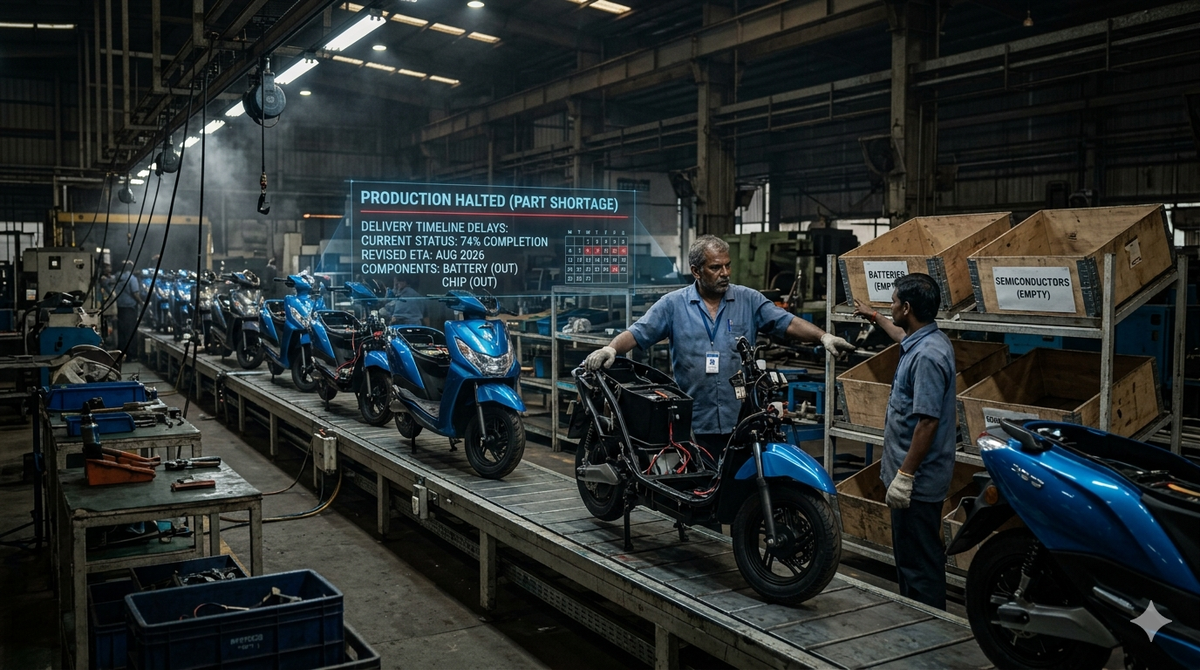
Can India’s fastest-growing EV company keep up with its own success? That question is becoming harder to ignore as Ola Electric dealing with supply chain issues impacting delivery timelines starts to affect customer experience and market confidence.
Backed by aggressive expansion plans and rising demand for electric scooters, Ola Electric is now facing operational friction that highlights a bigger truth about the EV industry: scaling is harder than launching.
What’s Behind Ola Electric’s Delivery Delays?
The phrase Ola Electric dealing with supply chain issues impacting delivery timelines reflects real constraints in sourcing critical components like semiconductors, battery cells, and electronic modules.
Industry-wide shortages, especially in lithium-ion battery supply chains, have been documented by the International Energy Agency. EV demand is rising faster than raw material production capacity, putting pressure on manufacturers globally.
For Ola Electric, which relies on a mix of domestic and international suppliers, even small disruptions cascade into large-scale delivery delays.
Demand Surge Meets Operational Reality
Ola Electric’s flagship scooters gained traction due to competitive pricing and strong marketing. However, rapid order inflow has exposed gaps in production readiness.
Customers are experiencing extended waiting periods beyond initial timelines. This mirrors early scaling challenges faced by companies like Tesla, where demand outpaced supply capabilities.
In India’s price-sensitive market, delayed deliveries quickly impact buying decisions and brand loyalty.
Impact on Customer Trust and Brand Perception
Repeated delays linked to Ola Electric dealing with supply chain issues impacting delivery timelines risk eroding customer trust. Online discussions show increasing frustration among buyers.
Competition is intensifying, with alternatives from Ather Energy and TVS Motor Company gaining traction.
Reliability is becoming a key differentiator in the EV space. Delays shift attention toward brands that can deliver consistently.
Can Ola Fix Its Supply Chain Bottlenecks?
The company has invested in local manufacturing, including its Futurefactory, to reduce dependence on imports. Localization is a long-term solution but does not immediately resolve delivery gaps.
Industry experts suggest diversifying suppliers, improving inventory planning, and maintaining buffer stock for critical components.
Ola Electric dealing with supply chain issues impacting delivery timelines highlights a broader lesson: rapid growth without operational resilience creates vulnerability.
Conclusion
Ola Electric’s challenges reflect a wider issue across the EV industry. Demand is accelerating faster than infrastructure and supply chains can support.
If the company stabilizes its supply chain, it remains a strong contender in India’s EV market. If delays continue, competitors will capture shifting customer demand.
Execution will define leadership in the next phase of India’s electric mobility transition.
Fast Facts: Ola Electric Dealing With Supply Chain Issues Impacting Delivery Timelines Explained
What is causing Ola Electric delivery delays?
Ola Electric dealing with supply chain issues impacting delivery timelines is driven by shortages in batteries, semiconductors, and imported components, slowing production and dispatch.
How does this affect customers?
Ola Electric dealing with supply chain issues impacting delivery timelines results in longer waiting periods, delayed ownership, and growing dissatisfaction among buyers.
Can Ola Electric solve this problem soon?
Ola Electric dealing with supply chain issues impacting delivery timelines may improve with local manufacturing and better supplier networks, though short-term delays may continue.