Ola Electric Under Pressure After Customers Report Growing Service and Repair Issues
Ola Electric is facing mounting criticism as customers across India report delayed repairs, poor service experiences, and unresolved scooter issues, raising fresh concerns about the EV startup’s long-term reliability and customer trust.
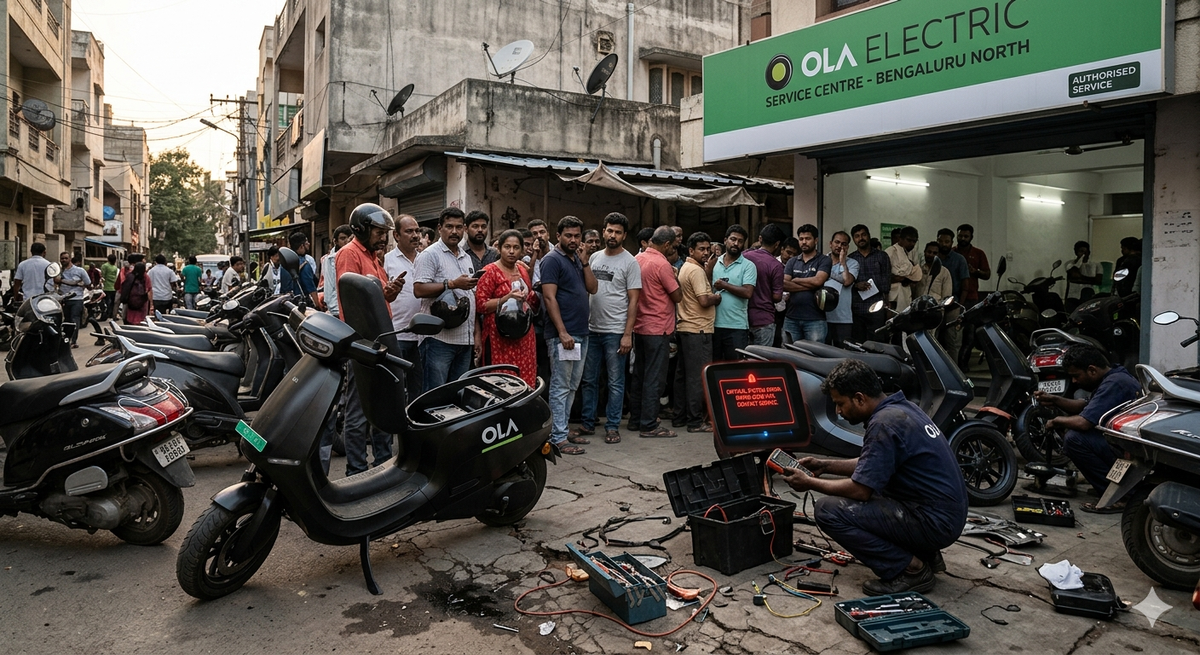
India’s electric vehicle boom was supposed to cement Ola Electric as the undisputed leader of the country’s two wheeler EV market. Instead, the company is facing growing criticism from customers reporting delayed repairs, poor service experiences, software glitches, and difficulty accessing spare parts.
Over the past several months, complaints linked to Ola scooters have spread rapidly across social media, consumer forums, and online review platforms. Many users claim they waited weeks for repairs, struggled to contact service centers, or faced repeated technical problems after servicing. For a company that built its image around innovation and speed, the backlash is becoming increasingly difficult to manage.
Customer Complaints Continue to Grow
The controversy surrounding Ola Electric under pressure after customers report growing service and repair issues is centered largely around after sales support.
Users across several Indian cities have shared experiences involving battery concerns, touchscreen malfunctions, sudden breakdowns, charging issues, and delayed pickup or delivery of scooters from service centers. Some customers also reported that replacement parts were unavailable for extended periods.
Electric vehicles rely heavily on software systems and battery management technology. Unlike traditional scooters, even minor software issues can significantly impact usability. When service systems fail to respond quickly, customer frustration escalates fast.
The visibility of these complaints has also amplified the issue. Videos and posts showing stranded scooters or unresolved repair cases frequently gain traction online, influencing potential buyers.
Rapid Expansion May Have Stretched Service Infrastructure
Ola Electric expanded aggressively after launching its S1 scooter lineup, aiming to dominate India’s fast growing EV market. The company invested heavily in manufacturing, digital sales, and nationwide delivery operations.
According to VAHAN registration data, Ola Electric remained among India’s top selling electric scooter brands through 2024 and early 2025. However, scaling production quickly is very different from building a reliable nationwide service ecosystem.
Industry experts have repeatedly warned that EV companies need strong repair networks, trained technicians, and stable spare part supply chains to support rapid customer growth. Traditional automakers spent decades developing these systems. EV startups are attempting to build them within a few years while simultaneously expanding sales.
Social Media Pressure Is Impacting Brand Trust
One major challenge for Ola Electric is the speed at which customer dissatisfaction spreads online.
Negative experiences shared on platforms like X, Instagram, Reddit, and YouTube are shaping public perception of the brand. For many first time EV buyers, service reliability is already a major concern. Repeated stories about repair delays can discourage potential customers from switching to electric vehicles.
The issue becomes more serious because electric scooters are often daily commuting vehicles. Delayed servicing directly affects work schedules, education, and household routines.
Several customers have also argued that response times from customer support channels remain inconsistent, adding to frustration during breakdown situations.
Ola Electric Says It Is Expanding Service Operations
Ola Electric has acknowledged customer concerns in previous statements and announced plans to strengthen its service network. The company has expanded service centers in multiple cities, increased roadside assistance support, and invested in technician training programs.
Executives have also stated that online complaints represent only a fraction of their overall customer base. The company maintains that millions of rides occur daily without major issues.
Still, rebuilding consumer trust may take time. In India’s increasingly competitive EV market, customer experience is becoming just as important as pricing, battery range, and product design.
India’s EV Industry Faces a Bigger Test
The situation involving Ola Electric under pressure after customers report growing service and repair issues highlights a broader challenge for India’s electric mobility sector.
Selling electric vehicles at scale is only part of the equation. Long term success depends on reliable service, transparent communication, spare part availability, and strong customer support systems.
As competition intensifies from brands like Ather, TVS, Bajaj, and Hero, companies that deliver dependable ownership experiences are likely to gain an advantage.
India’s EV market is entering a more mature phase where consumers are looking beyond marketing promises and focusing on long term reliability. For Ola Electric, the coming months may determine whether it can successfully repair not just scooters, but also customer confidence.
Fast Facts: Ola Electric Under Pressure After Customers Report Growing Service and Repair Issues Explained
What problems are customers reporting with Ola Electric scooters?
Ola Electric under pressure after customers report growing service and repair issues mainly involves complaints about delayed repairs, software glitches, battery concerns, and poor customer support experiences.
Why are service delays a major issue for EV owners?
Ola Electric under pressure after customers report growing service and repair issues matters because electric scooters are daily commuting vehicles, and long repair timelines disrupt work, travel, and routine activities.
Can Ola Electric recover from the current backlash?
Ola Electric under pressure after customers report growing service and repair issues could recover if the company improves service infrastructure, speeds up repairs, and restores consumer trust through consistent support.