Police AI Crime Fighting Tech Faces Bias Reckoning
As UK police admit AI crime fighting tech carries bias, the real battle may be over public trust, transparency, and who gets protected or profiled in the age of algorithms.
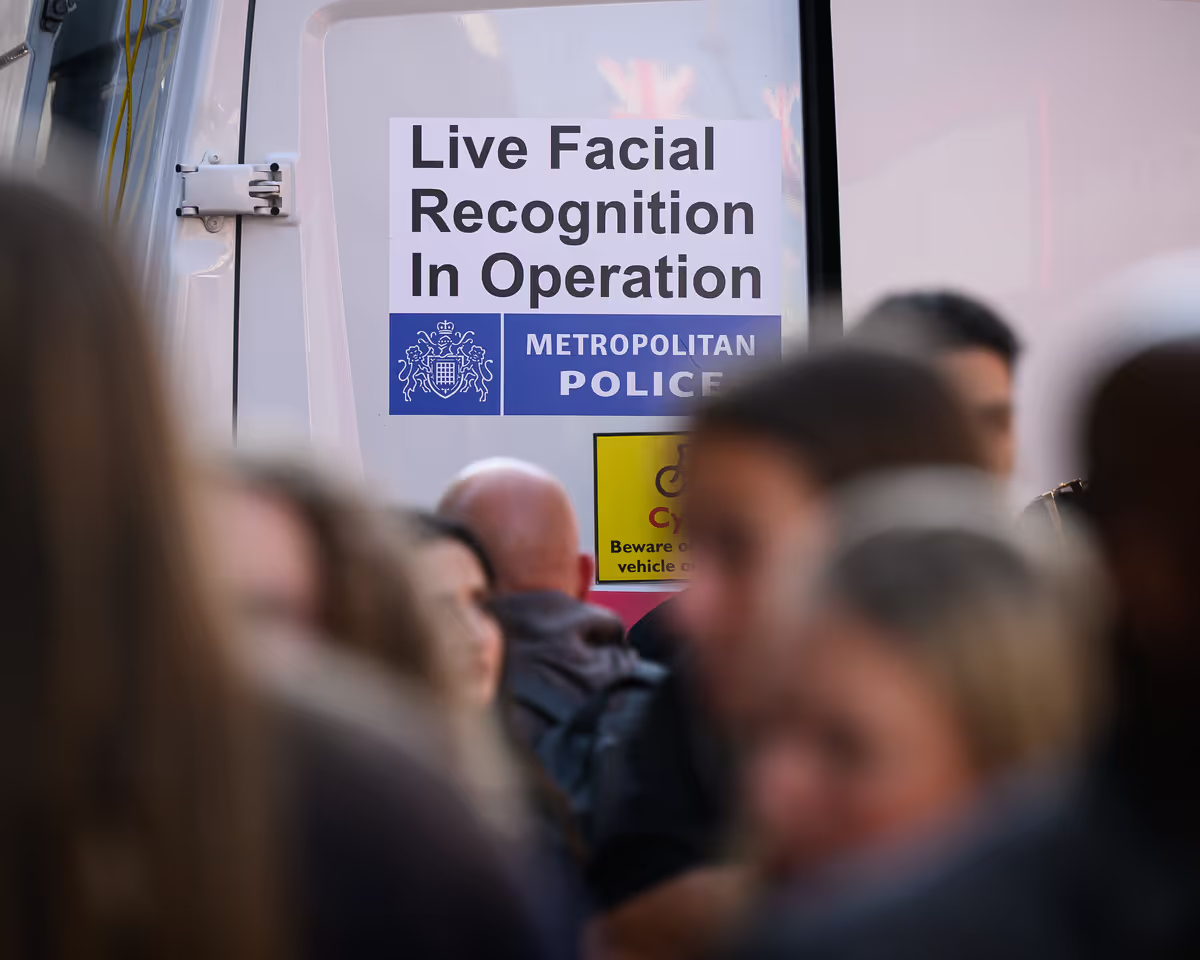
Can artificial intelligence ever police fairly? The UK’s top policing technology official has admitted that police AI crime fighting tech will contain bias, but insists it can be managed, monitored, and reduced.
In comments reported by The Guardian, the National Police Chiefs’ Council’s AI lead acknowledged what many researchers have warned for years. Algorithms reflect the data they are trained on. If that data contains historic inequalities, the system can reproduce them. The difference now is that law enforcement is saying it out loud.
The admission marks a turning point in how police forces discuss artificial intelligence in criminal justice.
Why Police AI Crime Fighting Tech Raises Bias Concerns
Police forces across the UK are increasingly deploying AI tools for predictive policing, facial recognition, and risk assessment. According to reports from the National Police Chiefs’ Council, these tools aim to allocate resources more efficiently and identify crime patterns earlier.
However, academic studies from institutions such as MIT and coverage by MIT Technology Review have consistently shown that AI systems trained on skewed datasets can disproportionately affect minority communities.
Facial recognition systems have previously demonstrated higher error rates for people with darker skin tones. Predictive policing models can over-police neighborhoods already subject to heavy surveillance. When historical bias becomes training data, automation can amplify it.
The policing AI chief’s statement does not deny these realities. Instead, it frames bias as a technical and governance challenge rather than a reason to halt deployment.
How UK Police Plan to Address AI Bias
The leadership argues that transparency, auditing, and human oversight are central safeguards. Police forces are reportedly working on clearer governance frameworks, bias testing protocols, and independent scrutiny.
This aligns with broader regulatory trends. The European Union’s AI Act classifies certain law enforcement AI systems as high risk, requiring strict compliance measures. The UK is taking a more flexible, sector-led approach, but public accountability is increasing.
Importantly, officials stress that police AI crime fighting tech is meant to support officers, not replace human judgment. Final decisions remain with trained personnel.
Critics counter that human oversight is only as good as the institutional culture behind it. If officers trust algorithmic outputs too readily, oversight can become symbolic rather than substantive.
The Real-World Stakes of AI in Policing
The promise of police AI crime fighting tech is efficiency. Faster analysis of large datasets can help identify crime hotspots, fraud networks, or repeat offenders. In theory, this allows limited resources to be deployed more strategically.
The risk is erosion of public trust. Communities already skeptical of policing may view algorithmic tools as opaque and unchallengeable. Without explainability, citizens cannot meaningfully contest decisions influenced by AI.
Trust, once lost, is difficult to rebuild. Transparency reports, independent audits, and community engagement will likely determine whether AI adoption strengthens or weakens legitimacy.
A Necessary but Risky Evolution
The open acknowledgment of bias is significant. For years, debates around AI in law enforcement were polarized between hype and fear. A more pragmatic middle ground is emerging.
Police AI crime fighting tech is neither a magic solution nor an inevitable dystopia. It is a tool shaped by policy choices, training data, and institutional accountability.
The next phase will be defined not by technical capability alone, but by governance. For readers, the takeaway is clear: follow not just the innovation, but the oversight.
Fast Facts: Police AI Crime Fighting Tech Explained
What is AI crime fighting tech?
AI crime fighting tech refers to artificial intelligence systems used by law enforcement for tasks like predictive policing, facial recognition, and risk assessment. These tools analyze large datasets to identify patterns and guide operational decisions.
How can AI crime fighting tech help reduce crime?
Police AI crime fighting tech can process vast amounts of data quickly, helping officers identify hotspots, allocate resources efficiently, and detect patterns that humans might miss. When properly governed, it can enhance strategic planning and investigative efficiency.
What are the main risks of AI crime fighting tech?
The biggest concern with police AI crime fighting tech is bias. If training data reflects historical inequalities, the system can reinforce them. Without transparency, auditing, and strong oversight, public trust and fairness may be compromised.