Reliance Retail piloting quick delivery for electronics in metro cities
Reliance Retail is testing rapid delivery of electronics across major metros, signaling a shift in India’s high-value quick commerce landscape and intensifying competition in fast delivery retail.
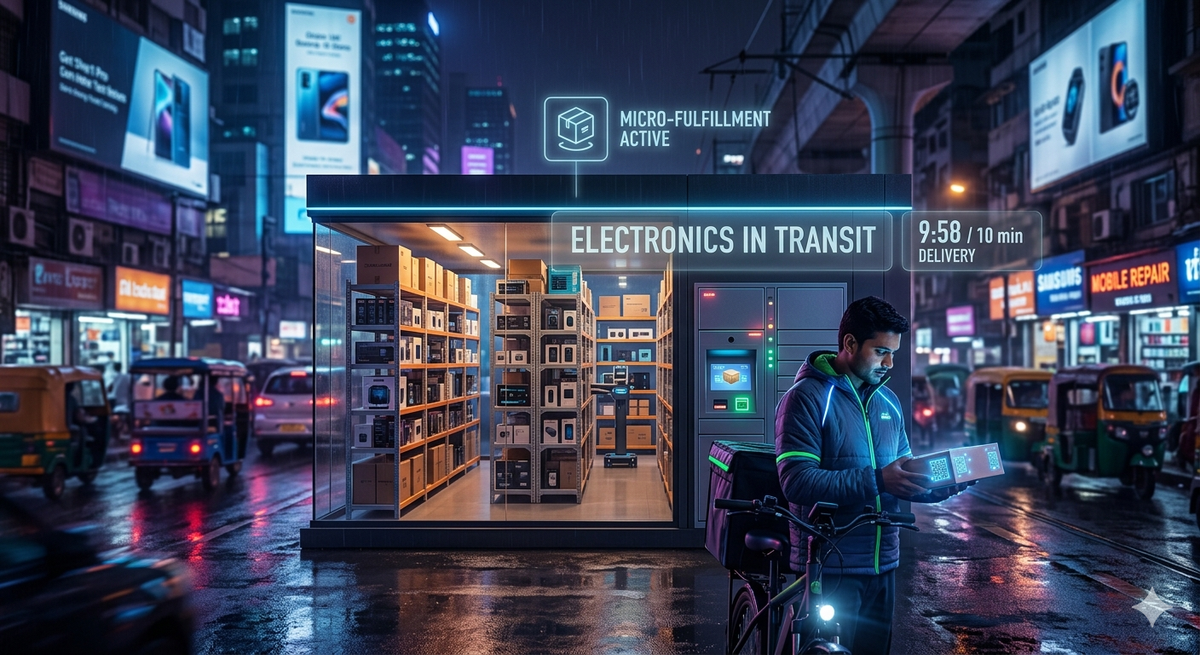
What happens when one of India’s biggest retail giants decides that even electronics should not have the luxury of time? That is exactly what is unfolding as Reliance Retail piloting quick delivery for electronics in metro cities moves from experiment to early rollout across urban hubs.
Consumers have already normalized instant groceries. Now the same expectation is creeping into gadgets, accessories, and everyday electronics. And yes, the waiting game is getting cancelled in real time.
Why the shift is happening now
Reliance Retail piloting quick delivery for electronics in metro cities is not a random growth hack. It is a response to a very visible behavioral shift in urban India. People no longer want “delivery by tomorrow” when apps can deliver dinner in 10 minutes.
Electronics, once considered a planned purchase category, are slowly turning into impulse and urgency-driven buys. A broken charger, a lost pair of earbuds, or a last-minute work-from-home setup cannot wait for standard logistics cycles anymore.
How Reliance is building the speed machine
The core challenge behind Reliance Retail piloting quick delivery for electronics in metro cities is obvious. Electronics are high-value, fragile, and require precise inventory control. This is not a packet of chips being tossed into a bike delivery bag.
To solve this, Reliance is leaning on its massive offline store network. Stores are being positioned as micro-fulfillment centers, reducing distance between inventory and customer. This shortens delivery loops and cuts dependency on large warehouses.
The result is a hybrid model where offline retail quietly powers digital speed. It is less futuristic fantasy and more brutal logistics engineering.
What products will actually arrive faster
In its early phase, Reliance Retail piloting quick delivery for electronics in metro cities is expected to focus on low to mid-ticket electronics. Think chargers, cables, power banks, earbuds, Wi-Fi routers, and basic smart accessories.
These are high-frequency, low-decision products. People do not spend days researching them. They just need them to work and arrive fast.
If the model stabilizes, expansion into smartphones and higher-end devices is likely, but that introduces sharper risks around handling, fraud prevention, and returns.
The hidden complexity behind “fast delivery”
Speed looks simple from the outside. It is not.
Reliance Retail piloting quick delivery for electronics in metro cities has to deal with inventory accuracy, theft risk, packaging damage, and unpredictable demand spikes. Electronics also have thinner margins compared to groceries, which makes logistics costs more sensitive.
There is also a consumer trust angle. People may love speed, but they still expect sealed, authentic, undamaged products. One bad experience in high-value delivery can erase dozens of successful ones.
What this means for India’s retail future
If this experiment scales, Reliance Retail piloting quick delivery for electronics in metro cities could permanently change buying behavior in urban India. Electronics will no longer be tied to “planned shopping.” They will sit inside the same instant-commerce mindset as food and fashion.
It also raises competitive pressure across the ecosystem. Once one player proves that high-value quick commerce works, others will be forced to follow or lose relevance in metro markets.
Still, this is not a guaranteed win. It is a stress test of infrastructure, margins, and consumer trust all at once. And those are not forgiving variables.
Conclusion
Reliance Retail piloting quick delivery for electronics in metro cities is essentially a bet on impatience becoming the default consumer behavior. If the model holds, it does not just improve delivery times. It rewires how India thinks about buying technology altogether.
Fast Facts: Reliance Retail piloting quick delivery for electronics in metro cities Explained
What is this initiative trying to achieve?
It focuses on enabling ultra-fast delivery of electronics in urban regions by compressing supply chains and using local inventory hubs. Reliance Retail piloting quick delivery for electronics in metro cities aims to make gadget access nearly instant in major cities.
Which products are expected to be delivered first?
Early rollout prioritizes accessories and small electronics like chargers, earbuds, and routers. Reliance Retail piloting quick delivery for electronics in metro cities starts with high-demand, low-complexity items before expanding to larger devices.
What are the biggest risks in this model?
Key challenges include inventory accuracy, product safety, and profitability under fast logistics costs. Reliance Retail piloting quick delivery for electronics in metro cities must balance speed with trust and operational efficiency.