Samsung Increasing Investment in On-Device AI Features for Upcoming Smartphone Lineup
Samsung is doubling down on on-device AI for its next smartphone lineup, aiming to deliver faster, more private, and more personalized mobile experiences without relying heavily on the cloud.
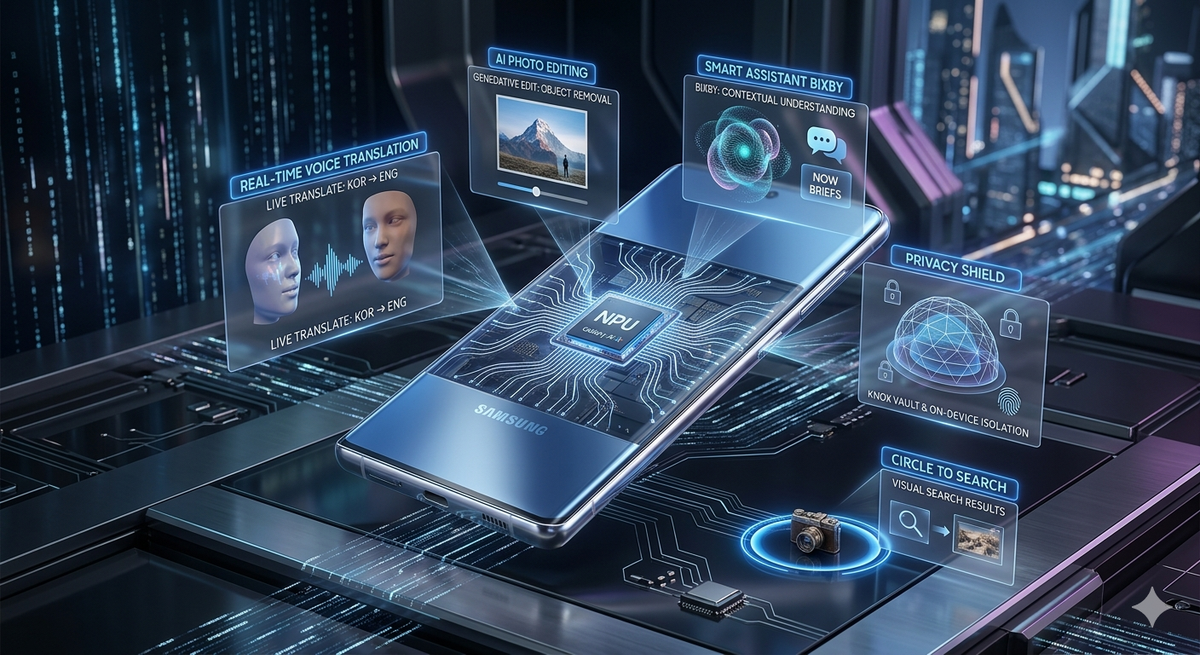
Artificial intelligence is no longer just a software feature inside smartphones. It is becoming the foundation of the entire mobile experience. Samsung is now significantly increasing its investment in on-device AI capabilities for its upcoming smartphone lineup, signaling a major shift in how mobile AI will work in the years ahead.
Instead of relying heavily on cloud servers, Samsung wants more AI tasks to run directly on users’ devices. The strategy could make smartphones faster, more private, and more reliable even without a constant internet connection. In an era where every company collects data like it is preparing for the apocalypse, local AI processing suddenly sounds refreshingly practical.
Samsung Pushes AI Processing Directly Onto Smartphones
On-device AI allows smartphones to process data locally using specialized hardware such as neural processing units, or NPUs. This means tasks like language translation, image editing, voice recognition, and app recommendations can happen instantly on the phone itself.
Samsung has already introduced AI-powered features across recent Galaxy devices, including live translation, AI photo editing, and smart search tools. The company now appears focused on expanding those capabilities further with future flagship releases.
Industry analysts believe Samsung’s investment reflects a wider industry trend toward edge AI, where computing happens closer to the user rather than in distant data centers.
Privacy and Speed Are Driving the AI Shift
One of the biggest advantages of on-device AI is privacy. Since information stays on the device, users gain more control over sensitive personal data. This is becoming increasingly important as regulators around the world scrutinize how technology companies handle user information.
Speed is another major factor. Cloud-based AI systems often depend on internet quality and server response times. On-device processing removes that delay, allowing features to work in real time.
For users, this could mean faster voice assistants, smoother AI photography tools, and more responsive personalization features. It also allows some AI services to function offline, which could become a major selling point in regions with inconsistent connectivity.
Samsung’s Hardware Strategy Is Becoming AI-Centric
Samsung’s growing AI ambitions are closely tied to its semiconductor business. The company is reportedly investing heavily in optimizing memory chips, mobile processors, and AI accelerators designed specifically for machine learning workloads.
Future Galaxy smartphones are expected to feature upgraded NPUs capable of handling more advanced generative AI tasks directly on the device. Samsung’s in-house Exynos chips may also play a larger role in supporting these AI experiences.
The company is balancing partnerships with its own AI development efforts. Samsung has worked closely with Google on several Galaxy AI features while also building its proprietary Samsung Gauss generative AI model.
This hybrid approach could allow Samsung to combine the power of cloud AI with the privacy and speed benefits of local processing.
Challenges Still Exist for On-Device AI
Despite the excitement, on-device AI still faces technical limitations. Smartphones have restricted battery life, limited thermal capacity, and less raw computing power compared to cloud infrastructure.
Advanced AI tasks such as large-scale video generation or complex reasoning may still require cloud-based support for the foreseeable future. Running powerful AI models locally also increases demands on battery efficiency and hardware optimization.
Samsung will need to balance performance with practical usability. Consumers may appreciate smarter features, but not if their phone battery disappears faster than common sense in internet comment sections.
The Smartphone Industry’s Next Big Battle
Samsung’s increased investment in on-device AI reflects a broader transformation happening across the smartphone market. AI is becoming a central part of device competition alongside cameras, displays, and battery life.
Companies are racing to create smartphones that feel more personal, predictive, and context-aware. Samsung appears determined to position itself at the center of that transition.
If successful, the company’s future devices could offer a more seamless AI experience that prioritizes speed, privacy, and everyday usability. The smartphone is evolving from a communication device into a real-time AI assistant that travels everywhere with its user. Humanity spent decades building machines that fit inside pockets, and now those machines are slowly learning how humans think. Tiny glowing rectangles with growing opinions. Beautifully unsettling.