SK Telecom AI Native Strategy Unveiled at MWC26
SK Telecom’s AI Native Strategy signals a high-stakes shift from telecom operator to AI infrastructure powerhouse, positioning Korea at the forefront of the global AI race.
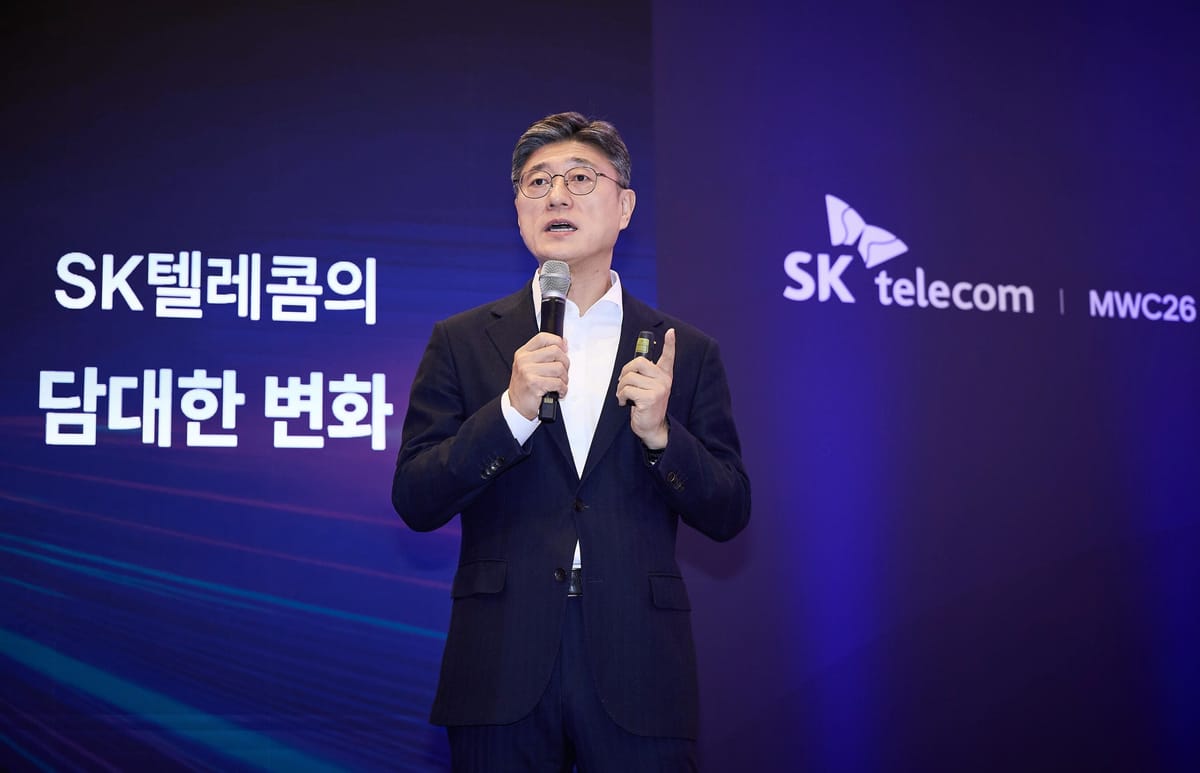
Can a telecom giant reinvent itself as an AI powerhouse? At Mobile World Congress 2026, SK Telecom CEO Ryu Young-sang made a bold case that it can. Unveiling the company’s SK Telecom AI Native Strategy, Ryu positioned South Korea’s largest mobile carrier at the center of the country’s next leap in artificial intelligence innovation.
The announcement signals more than a technology upgrade. It reflects a structural shift in how telecom networks, data infrastructure, and AI services converge to create what SK Telecom calls an “AI-native” enterprise.
What Is SK Telecom’s AI Native Strategy?
The SK Telecom AI Native Strategy is a company-wide transformation plan to embed artificial intelligence into core telecom infrastructure, enterprise services, and consumer platforms.
Speaking at MWC26 in Barcelona, Ryu outlined how SK Telecom is evolving from a traditional telco into an AI-driven technology company. The strategy focuses on AI data centers, advanced network optimization, AI-powered customer services, and industry-specific AI solutions.
According to SK Telecom’s announcement via PR Newswire, the company aims to accelerate Korea’s AI ecosystem by building scalable AI infrastructure and expanding partnerships with global technology leaders.
This aligns with broader industry trends. Research from McKinsey estimates that generative AI could contribute up to $4.4 trillion annually to the global economy. Telecom operators, with vast data and infrastructure, are uniquely positioned to capitalize on this shift.
Building AI Infrastructure for Korea
A central pillar of the SK Telecom AI Native Strategy is AI infrastructure development. The company is investing in AI data centers optimized for high-performance computing and large-scale model training.
AI data centers are becoming critical assets worldwide. NVIDIA, Google Cloud, and OpenAI have all emphasized the importance of specialized computing clusters to support advanced AI workloads. SK Telecom is betting that localized AI infrastructure will strengthen Korea’s competitiveness.
By integrating AI directly into network operations, SK Telecom also plans to enhance 5G and future 6G efficiency. AI-driven network management can reduce latency, improve energy efficiency, and optimize traffic in real time.
AI Transformation Beyond Telecom
The SK Telecom AI Native Strategy extends into enterprise and public sectors. The company aims to offer AI-based solutions for manufacturing, healthcare, and finance.
For example, AI-powered analytics can predict equipment failures in factories or assist hospitals with diagnostic insights. These use cases reflect how telecom operators are leveraging existing data capabilities to create new revenue streams.
Globally, telecom firms such as Deutsche Telekom and Singtel have launched similar AI initiatives. However, SK Telecom’s strategy emphasizes national competitiveness, positioning Korea as a leader in AI innovation.
Risks, Ethics, and Competitive Pressures
No AI strategy is without risks. AI deployment raises concerns about data privacy, algorithmic bias, and energy consumption in large data centers.
The SK Telecom AI Native Strategy must navigate regulatory scrutiny and global competition. Hyperscalers like Amazon Web Services and Microsoft Azure dominate AI cloud infrastructure. SK Telecom’s challenge will be differentiation through localized services and telecom integration.
Ethical AI governance will also be critical. Transparency in data usage and responsible model deployment will determine public trust.
Why This Matters for the AI Industry
The SK Telecom AI Native Strategy reflects a broader industry shift from connectivity providers to AI platform builders.
Telecom companies control vast data flows and infrastructure. By embedding AI natively into networks and services, they can move up the value chain rather than remain commodity bandwidth providers.
For businesses and startups in Korea, this could mean easier access to AI computing resources and localized innovation support.
Conclusion
The SK Telecom AI Native Strategy unveiled at MWC26 is a calculated pivot toward becoming an AI-centric technology leader. If executed effectively, it could strengthen Korea’s position in the global AI race.
However, success will depend on infrastructure scalability, ethical governance, and strategic partnerships. The telecom industry is entering an AI-first era, and SK Telecom has made it clear that it intends to lead.
Fast Facts: SK Telecom AI Native Strategy Explained
What is the SK Telecom AI Native Strategy?
The SK Telecom AI Native Strategy is a transformation plan to embed AI into telecom networks, data centers, and enterprise services, turning the company into an AI-driven technology provider.
How does the SK Telecom AI Native Strategy benefit Korea?
The SK Telecom AI Native Strategy aims to strengthen Korea’s AI ecosystem by building local AI infrastructure, supporting enterprises, and accelerating national innovation.
What are the risks of the SK Telecom AI Native Strategy?
The SK Telecom AI Native Strategy faces challenges like data privacy concerns, energy use in AI data centers, and competition from global cloud giants.