Spotify experimenting with AI-curated playlists that adapt in real time to user mood
What if your music could read the room better than you do? That’s exactly the bet Spotify is making as it leans deeper into artificial intelligence.
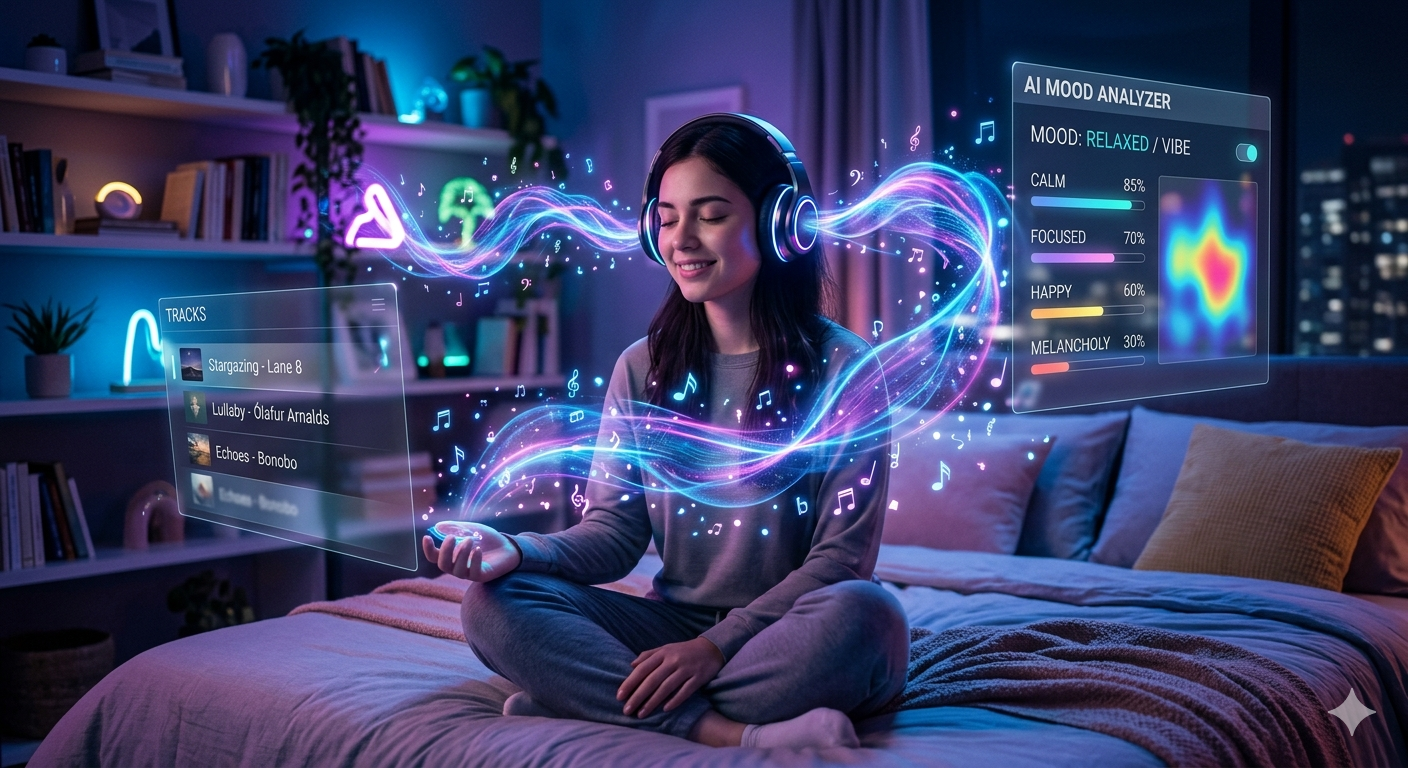
What if your music could read the room better than you do? Spotify is moving in that direction, testing AI systems that don’t just recommend songs but react to your mood in real time.
Spotify experimenting with AI-curated playlists that adapt in real time to user mood marks a shift from static personalization to something far more dynamic. Instead of relying only on listening history, the platform is exploring ways to adjust music continuously based on how users behave in the moment.
How Spotify’s AI is redefining music discovery
Spotify has spent years refining machine learning models behind features like Discover Weekly. Now, Spotify experimenting with AI-curated playlists that adapt in real time to user mood adds a new layer of context awareness.
The system looks at signals such as time of day, listening patterns, skips, replays, and session behavior. Some experiments also include user prompts and voice interaction, building on earlier AI-driven features.
The idea is simple. Make playlists feel responsive instead of pre-built.
Real-time mood adaptation in action
Traditional playlists refresh every few hours or days. This system updates continuously during playback. If a listener skips energetic tracks, the AI shifts toward slower or calmer songs.
Spotify experimenting with AI-curated playlists that adapt in real time to user mood uses feedback loops to adjust instantly. The playlist evolves based on user interaction rather than fixed assumptions.
This means a session can move from high-energy tracks to relaxed music without manual changes.
Impact on listeners and artists
For users, the advantage is convenience. Less searching, more relevant music. The experience becomes smoother and more aligned with mood shifts.
For artists, the implications are mixed. AI-driven systems may surface songs based on emotional fit rather than popularity, creating new opportunities. At the same time, algorithmic bias and reduced visibility remain concerns.
Industry data suggests that more than 70% of listeners rely on algorithmic recommendations for discovery. Real-time adaptation could increase that dependence.
Privacy and ethical concerns
Spotify experimenting with AI-curated playlists that adapt in real time to user mood raises questions about how much the platform understands about its users.
Inferring mood from behavior or voice data can feel intrusive. There is also the risk of systems optimizing for engagement in ways that encourage passive or addictive listening habits.
Spotify has indicated that transparency and user control are priorities, but the balance between personalization and privacy is still unresolved.
What comes next
This approach reflects a broader shift in AI from recommendation engines to real-time experience design. Future systems may integrate data from wearables, environment, or activity to refine responses further.
Spotify experimenting with AI-curated playlists that adapt in real time to user mood could eventually turn music streaming into a fully adaptive experience that reacts continuously to user context.
Conclusion
Spotify is pushing beyond playlists into something closer to emotional computing. If executed well, it could make music feel more personal than ever. If not, it risks turning listening into an over-optimized algorithmic loop.
Either way, passive listening is fading. Music platforms are becoming active participants in shaping how people feel.
Fast Facts: Spotify experimenting with AI-curated playlists that adapt in real time to user mood Explained
What does this feature actually do?
Spotify experimenting with AI-curated playlists that adapt in real time to user mood creates playlists that shift instantly based on listening behavior, skips, and engagement during a session.
How is this different from normal playlists?
Unlike static recommendations, Spotify experimenting with AI-curated playlists that adapt in real time to user mood updates continuously as user behavior changes.
Are there any risks with this AI feature?
Spotify experimenting with AI-curated playlists that adapt in real time to user mood raises concerns about privacy, emotional profiling, and over-reliance on algorithm-driven listening.