Swiggy and Zomato Face Fresh Competition from Quick Commerce Players Entering Food Delivery
India’s food delivery giants are no longer alone. Quick commerce platforms are rapidly entering the space, reshaping convenience, speed, and competition in ways that could redefine the entire market.
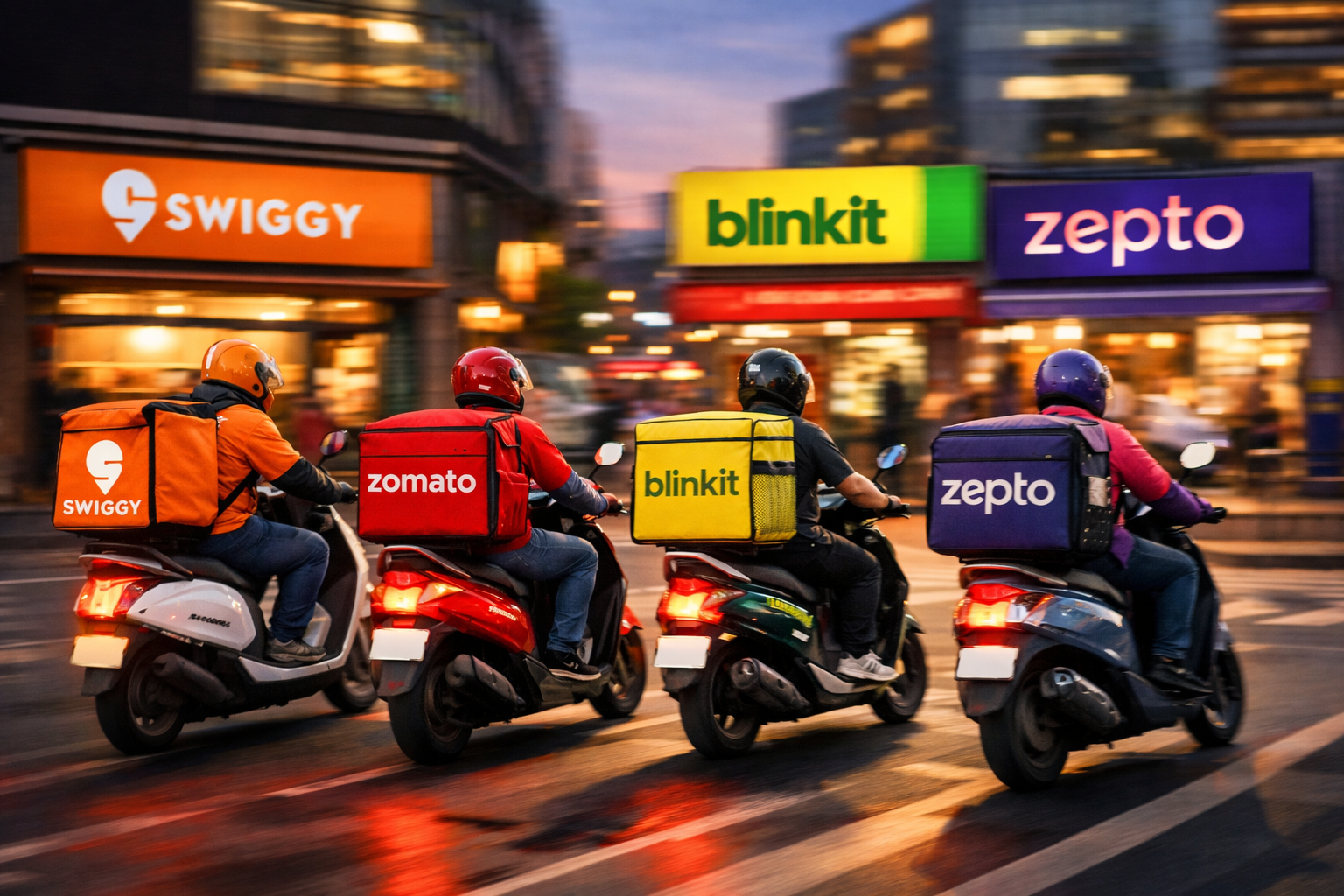
Is faster always better when it comes to food delivery? India’s biggest platforms are about to find out.
The dominance of Swiggy and Zomato is being challenged as quick commerce players push aggressively into food delivery. What began as a race to deliver groceries in minutes is now evolving into a broader fight for everyday consumption.
The Rise of Quick Commerce in Food Delivery
Quick commerce platforms like Zepto, Blinkit, and Instamart are expanding beyond essentials. They are offering ready-to-eat meals, snacks, and curated food options with delivery times as low as 10 to 15 minutes.
This model is powered by dark stores and tightly controlled supply chains. Unlike traditional platforms, these companies manage inventory and preparation, cutting down on delays caused by restaurant workflows.
Industry estimates suggest that India’s quick commerce market could exceed $5 billion by 2025, driven by urban demand for speed and convenience.
Swiggy and Zomato Face Fresh Competition from Quick Commerce Players Entering Food Delivery
The biggest disruption is control over delivery time. Traditional platforms depend on restaurant partners, which introduces variability. Quick commerce platforms eliminate that uncertainty by standardizing operations.
Consumers are responding. Many are willing to trade menu variety for faster delivery. This shift is especially visible among younger users who value immediacy over extensive choices.
Swiggy and Zomato are not standing still. Both have invested in their own quick commerce verticals, but this creates overlap within their business models and raises operational challenges.
Changing Consumer Behavior
Convenience is being redefined. It is no longer just about having multiple options. It is about getting what you want almost instantly.
According to RedSeer, more than 40 percent of urban consumers are willing to switch platforms for faster delivery. This signals a clear shift in expectations.
Quick commerce platforms also benefit from impulse buying. Late-night cravings and quick meal needs are increasingly fulfilled through these services rather than traditional food delivery apps.
The Profitability Problem
Speed comes at a cost. Quick commerce relies on dense logistics networks and inventory management, both of which are expensive to maintain.
Adding food delivery introduces further complexity, including food quality control and compliance requirements. Margins remain thin, and scaling profitably is still uncertain.
Swiggy and Zomato already face profitability pressures in their core businesses. Competing on speed could intensify these challenges unless new revenue models emerge.
What Comes Next
The competition is shifting from food delivery to overall convenience. Platforms are moving toward integrated ecosystems that combine groceries, meals, and daily essentials.
Swiggy and Zomato retain strong restaurant networks and brand recognition. However, quick commerce players are reshaping expectations in ways that could redefine the industry.
The likely outcome is convergence. The platforms that balance speed, variety, and sustainable economics will shape the future of food delivery in India.
The market is no longer about who delivers food. It is about who delivers life faster.
Fast Facts: Swiggy and Zomato Face Fresh Competition from Quick Commerce Players Entering Food Delivery Explained
What is driving this new competition in food delivery?
Swiggy and Zomato face fresh competition from quick commerce players entering food delivery because users now prioritize speed, and controlled supply chains enable faster delivery than traditional restaurant-based models.
How are quick commerce platforms different from traditional apps?
Swiggy and Zomato face fresh competition from quick commerce players entering food delivery as these platforms manage inventory and preparation, allowing deliveries in minutes instead of relying on restaurant timelines.
What are the biggest risks in this shift?
Swiggy and Zomato face fresh competition from quick commerce players entering food delivery, but high logistics costs and thin margins make profitability a major challenge for both models.