Taiwan Weather App Adds AI Voice Assistant to Transform Forecast Access
The new feature is designed to make weather information more accessible, particularly for seniors who may be unfamiliar with keyboards and touchscreens.
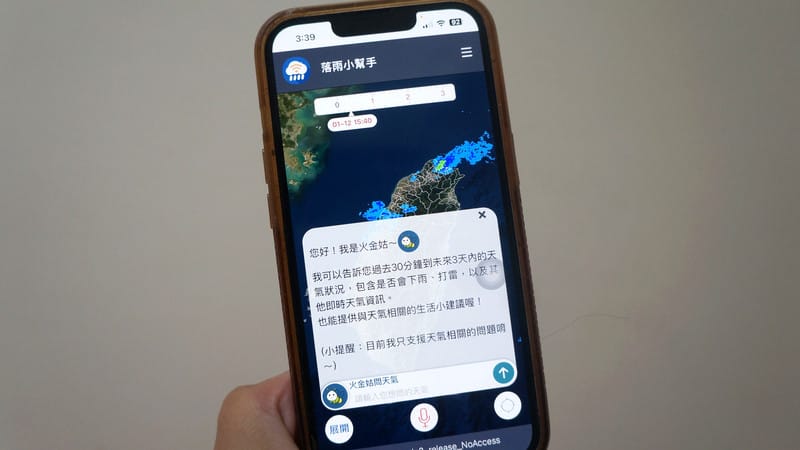
Can you ask the weather for the next three days using your voice like you do with smart assistants? In Taipei, that is now a reality. Taiwan’s popular weather app AI voice assistant feature is being rolled out to help residents get spoken weather forecasts in natural language without typing.
The upgrade is part of a broader push to make daily weather information more accessible using artificial intelligence, especially for seniors and users unfamiliar with smartphones.
What the Taiwan Weather App AI Voice Assistant Offers
The “Raining Bell” weather app, originally launched in 2020 through a collaboration between the National Center for High-Performance Computing and the National Science and Technology Center for Disaster Reduction, now includes an AI voice assistant called “Firefly.”
Instead of entering text-based queries, users can simply speak questions in Mandarin or Taiwanese Hokkien and receive spoken responses about upcoming weather conditions over the next three days.
This shift from text to voice marks a meaningful leap in interaction design for local weather apps. It makes forecasts easier to access for a broader range of users.
Built on Taiwan’s Trustworthy AI Framework
The AI voice assistant is powered by the Taiwan AI Dialogue Engine (TAIDE), a sovereign AI initiative created to support generative AI technologies rooted in local languages and cultural context.
TAIDE began development in 2023 and is meant to provide a foundation for various voice-enabled and conversational AI applications across Taiwan.
According to developers, the new voice feature leverages AI models trained to understand and respond in natural Mandarin and Taiwanese Hokkien, setting it apart from many global AI assistants that focus on major international languages.
Why Voice Interaction Matters
Using voice input for a weather app is more than a convenience. It reduces barriers for older citizens and those unfamiliar with digital interfaces. Seniors or users uncomfortable with touchscreens can now ask about rainfall forecasts and disaster risks without typing.
In addition to voice queries, the forecast window has been extended from a few hours to three days, in collaboration with the Central Weather Administration.
What Comes Next for the AI Feature
Officials say future upgrades could include support for Indigenous Taiwanese languages like Truku and Tsou and features that allow users to upload weather photos or satellite images for AI-assisted analysis.
For now, users should note that the app remains an experimental research tool, and official forecasts are still issued by Taiwan’s Central Weather Administration.
Suggested Internal Linking Anchor Texts
- AI in mobile apps
- Voice assistant technology trends
- Generative AI use cases
- Local language AI development
- Taiwan tech innovation updates
Fast Facts: Taiwan Weather App AI Voice Assistant Explained
What is the Taiwan weather app AI voice assistant?
It is an upgrade to the “Raining Bell” app that lets users speak weather questions in Mandarin or Taiwanese Hokkien and get spoken answers using AI.
What can the Taiwan weather app AI voice assistant do?
The AI voice assistant provides hands-free weather forecasts for the next three days, helping users retrieve rainfall and risk information without typing.
What are the limitations of the Taiwan weather app AI voice assistant?
The AI feature is experimental and complements, not replaces, official weather forecasts from Taiwan’s Central Weather Administration.