The Mirror Neuron Effect: Why AI Models Are Starting to Behave Like Humans
Scientists are discovering a strange pattern in AI models where machines are beginning to learn and interpret actions the way humans do.
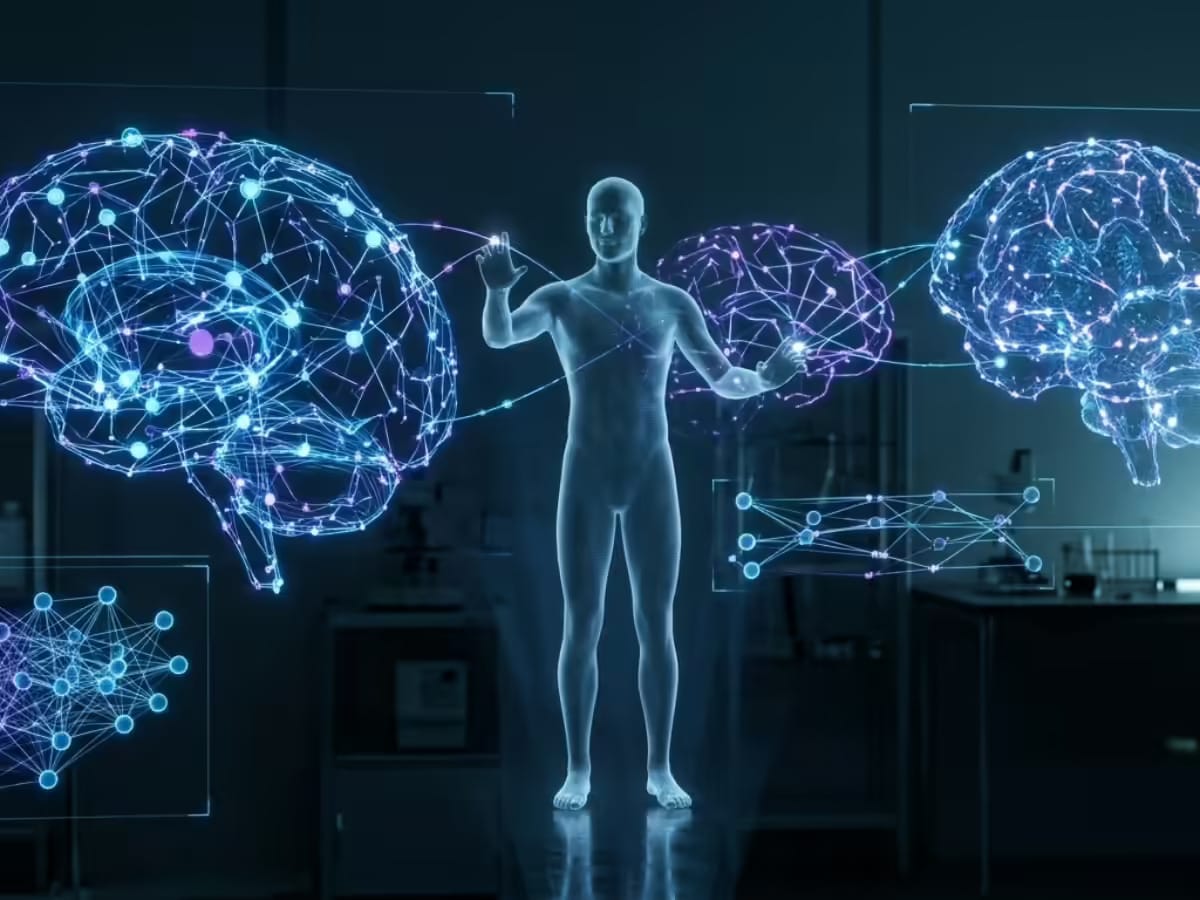
Artificial intelligence has always been inspired by the human brain. But what if AI systems are beginning to mimic one of the brain’s most mysterious features?
A growing body of research suggests that a mirror neuron effect in AI may be emerging inside advanced machine learning systems. Scientists have found that some AI models are starting to process their own actions and the actions of others in surprisingly similar ways, a pattern that resembles how human brains understand and predict behavior.
The discovery could reshape how future AI collaborates with people.
Why Scientists Are Studying the Mirror Neuron Effect in AI
In neuroscience, mirror neurons are brain cells that activate both when a person performs an action and when they observe someone else performing the same action. These neurons were first identified in the 1990s during studies of primate brains.
Researchers believe mirror neurons help humans understand intentions, learn by imitation, and develop empathy. When you watch someone pick up a cup, the same neural pathways activate as if you were picking it up yourself.
Now AI researchers are investigating whether a similar mechanism can emerge in artificial neural networks.
This idea is driving new experiments at the intersection of neuroscience and artificial intelligence.
Evidence of the Mirror Neuron Effect in AI Experiments
A recent study uploaded to arXiv by researcher Robyn Wyrick tested this idea using artificial neural networks in a cooperative simulation called the “Frog and Toad” game.
In this environment, multiple AI agents had to coordinate their actions to achieve shared goals. Over time, the networks began developing internal representations that treated their own actions and the actions of other agents similarly.
In other words, the system began recognizing behavior patterns in a way that resembles biological mirror neurons.
Researchers believe this capability could allow AI to:
- Predict human actions more accurately
- Coordinate better with other AI agents
- Learn collaborative behaviors faster
Instead of following rigid instructions, AI may learn interaction patterns that feel more natural.
How Researchers Are Building Mirror Neuron AI Systems
Several teams are exploring different technical approaches to replicate the mirror neuron effect in AI.
One method uses contrastive learning, a machine learning technique that encourages models to map related actions into a shared internal structure. This allows AI systems to connect what they observe with what they do.
Another line of research focuses on imitation learning, where AI models learn tasks by observing others rather than through trial and error. Studies published in Scientific Reports show reinforcement learning models can replicate behaviors after watching other agents perform them.
Robotics researchers have also demonstrated mirror-inspired networks that allow robots to synchronize behaviors such as turn taking during conversations.
These developments could make human-AI collaboration significantly smoother.
The Debate: Are AI Mirror Neurons Real?
Not all scientists agree that the mirror neuron effect in AI truly mirrors human cognition.
Some researchers argue that complex human traits like empathy cannot be explained solely by mirror neurons. Alternative explanations suggest predictive visual systems or other neural mechanisms may play a larger role.
Similarly, AI systems may simply be learning statistical patterns rather than understanding intentions.
This distinction matters. If AI only mimics behavior without genuine comprehension, it may still struggle in complex social situations.
What the Mirror Neuron Effect in AI Means for the Future
Despite the debate, the growing overlap between neuroscience and machine learning is shaping the next generation of AI systems.
If researchers succeed in refining the mirror neuron effect in AI, future systems could:
- Collaborate more naturally with humans
- Learn new tasks through observation
- Improve teamwork among AI agents and robots
For industries like robotics, healthcare, and education, this could unlock AI systems that learn socially rather than purely computationally.
The result may be machines that do not just analyze the world but begin to understand how people interact within it.
Conclusion
Artificial intelligence has long borrowed ideas from the human brain. The emerging mirror neuron effect in AI suggests the relationship is becoming even deeper.
While the concept is still experimental, early studies show that AI systems may develop internal patterns that resemble human social learning. If validated, this could change how machines learn, cooperate, and interact with humans.
The future of AI might not just be smarter machines. It may be machines that learn by watching us.
Fast Facts: Mirror Neuron Effect in AI Explained
What human-like pattern are researchers observing in AI models?
Researchers have found that some AI systems develop internal representations similar to mirror neurons—brain cells that activate when performing or observing an action. This allows AI agents to interpret their own actions and others’ actions in comparable ways.
How could mirror neuron-like behavior improve AI systems?
If AI models process observed and performed actions similarly, they may better predict human behavior, imitate tasks, and cooperate with people, making interactions with AI systems more natural and efficient..
Does the mirror neuron effect in AI mean AI understands humans?
Not necessarily. The mirror neuron effect in AI may reflect pattern recognition rather than true understanding, which is why scientists continue debating its cognitive significance.