The race to dominate the creator economy and who’s actually winning
Platforms are throwing billions at creators, but attention is the real currency. So who’s actually winning the creator economy war in 2026?
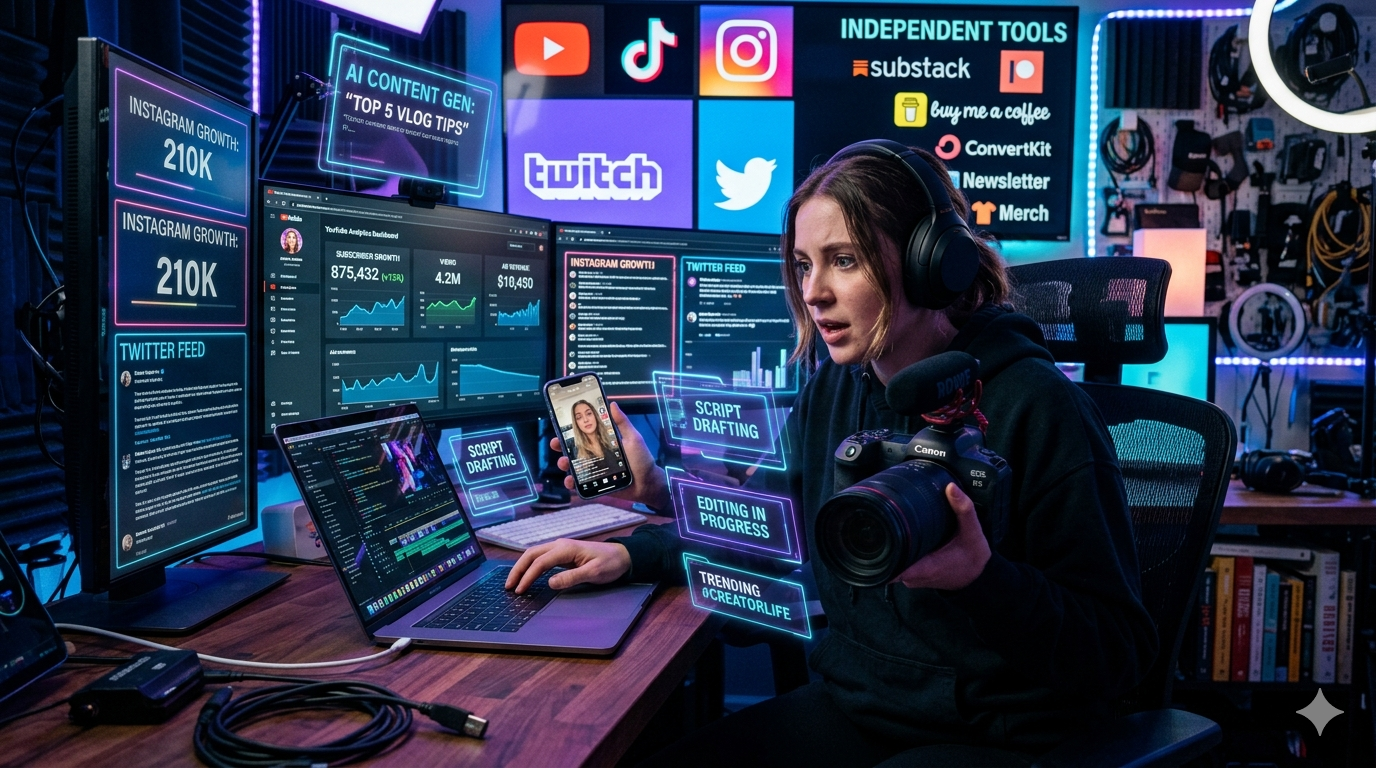
The creator economy was supposed to be simple. Post content, build an audience, get paid. Instead, it has turned into a high-stakes platform war where tech giants, startups, and creators themselves are competing for control. The real question is not who is participating, but who is actually winning.
Platforms Are Paying, But Not Always Winning
YouTube, TikTok, Instagram, and newer platforms like Substack and Patreon have poured billions into creator funds, ad revenue sharing, and monetization tools. YouTube alone paid over $70 billion to creators between 2021 and 2024, according to company reports.
But throwing money at creators does not guarantee loyalty. TikTok’s Creator Fund faced backlash for low payouts, while Instagram struggled to keep creators from posting elsewhere. Creators follow audience and income, not brand loyalty.
The Rise of Creator Independence
A major shift in the creator economy is creators building outside platforms. Email newsletters, personal websites, and subscription communities are growing fast. Tools like Substack and Patreon allow creators to own their audience directly instead of relying on algorithms.
This changes the power dynamic. Instead of chasing reach, creators are building predictable income streams. It is slower, but more stable.
AI Is Quietly Changing the Game
AI is not just assisting creators. It is reshaping the entire ecosystem. From automated video editing to AI-generated scripts, production costs are dropping fast. According to McKinsey, generative AI could add up to $4.4 trillion annually to the global economy, with content creation as a major contributor.
Lower barriers also mean more competition. More creators can enter the space, making it harder to stand out.
Attention, Not Content, Is the Real Currency
The internet does not have a content shortage. It has an attention shortage. Short-form platforms dominate because they capture attention quickly. Long-form creators are adapting, but speed and engagement often win.
Platforms still control discovery. Even independent creators depend on algorithms to grow their reach.
So Who’s Actually Winning
There is no single winner in the creator economy. Platforms win on scale and distribution. Creators win on flexibility and ownership. AI companies win by becoming the infrastructure behind content creation.
The real winners are hybrid creators. Those who use platforms for reach, build direct relationships with their audience, and use AI tools to improve efficiency.
Conclusion
The creator economy is not a winner-takes-all market. It is a shifting balance between platforms, creators, and technology. Creators who rely entirely on platforms risk instability. Platforms that fail to support creators risk losing talent. AI is accelerating both sides.
The most effective strategy is to diversify, build owned channels, and treat platforms as tools rather than dependencies.
Fast Facts: The race to dominate the creator economy and who’s actually winning Explained
What is the creator economy race really about?
The race to dominate the creator economy and who’s actually winning is about platforms, creators, and AI companies competing for control over content, audience, and revenue streams.
Who is currently winning the creator economy?
In the race to dominate the creator economy and who’s actually winning, hybrid creators are ahead because they combine platform reach with owned audiences and AI tools.
What is the biggest risk in the creator economy?
The biggest risk in the race to dominate the creator economy and who’s actually winning is over-reliance on platforms, which can change algorithms or payouts at any time.