What the OpenAI Chief’s Latest Warning Means for the Future of AI
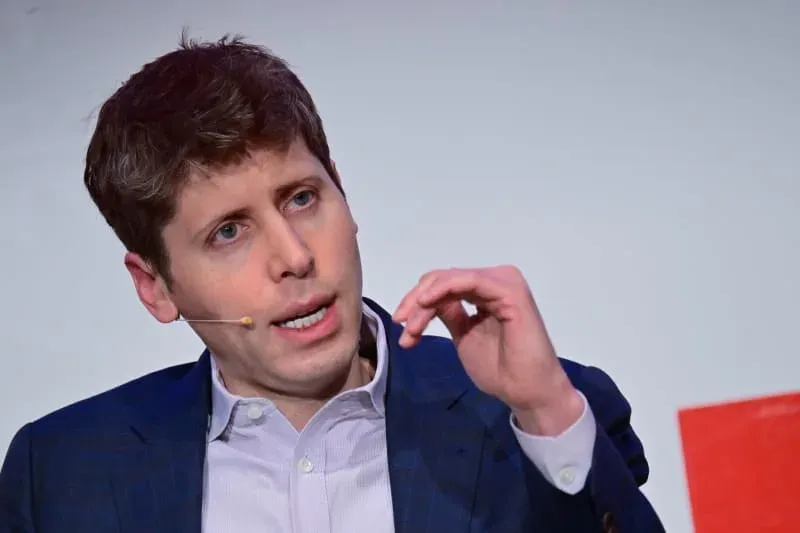
Warnings about the potentially destructive power of AI have grown louder again as Sam Altman calls for a global regulatory authority for artificial intelligence (AI) modelled on the International Atomic Energy Agency.
What happens when artificial intelligence becomes smarter than humans at most tasks?
That question is no longer science fiction. It sits at the center of the latest warning, as the OpenAI CEO speaks candidly about the risks and responsibilities tied to artificial general intelligence, or AGI. His comments, reported by Yahoo News, signal a pivotal moment in the global AI race.
Altman’s message is clear. AGI could unlock extraordinary progress, but it could also reshape economies, labor markets, and power structures in ways society is not prepared for.
What Is Behind the Sam Altman's Warning?
AGI refers to systems that can outperform humans at most economically valuable work. Unlike narrow AI tools such as ChatGPT or image generators, AGI would demonstrate broad, flexible intelligence across domains.
OpenAI has long stated that its mission is to ensure AGI benefits all of humanity. In past blog posts, the company has acknowledged that AGI could generate immense wealth while also concentrating power if not carefully governed.
The warning highlights a core tension. The technology is advancing rapidly, yet global regulatory frameworks remain fragmented. Governments in the United States, Europe, and China are still shaping AI policies, while companies continue to scale models with trillions of parameters and unprecedented computing power.
Economic Disruption Is No Longer Theoretical
One of the most striking aspects of the Sam Altman AGI warning is its focus on economic disruption.
A 2023 Goldman Sachs report estimated that generative AI could impact up to 300 million full-time jobs globally. Meanwhile, research from MIT and Stanford has shown that AI tools can significantly boost productivity in certain knowledge roles, while potentially reducing demand for others.
Altman has suggested that entire categories of work may change or disappear. However, he also emphasizes that new industries will emerge, as they have in past technological revolutions.
The difference now is speed. AI systems are improving on timelines measured in months, not decades.
The Governance Challenge
A central theme in the Sam Altman AGI warning is governance.
OpenAI has previously called for regulatory guardrails, including safety testing and licensing regimes for powerful models. The European Union’s AI Act and ongoing discussions in the United States reflect growing concern about misuse, misinformation, and national security risks.
AGI could amplify these risks. From autonomous cyberattacks to misinformation at scale, the societal impact could be profound if safety frameworks lag behind innovation.
Altman’s position appears pragmatic. He supports innovation but acknowledges that unchecked development could create instability.
Balancing Optimism With Realism
Despite the caution, the Sam Altman AGI warning is not purely alarmist.
AI already drives measurable gains in medicine, education, and scientific research. Tools powered by large language models assist developers, automate routine tasks, and accelerate drug discovery. According to McKinsey, generative AI could add trillions of dollars annually to the global economy.
The key question is distribution. Who benefits from this growth? And how can policymakers ensure access without increasing inequality?
Altman’s comments suggest that the future of AGI will depend as much on governance and ethics as on technical breakthroughs.
What This Means for Businesses and Policymakers
For business leaders, the message is straightforward. Prepare for rapid AI integration, invest in workforce reskilling, and prioritize responsible deployment.
For policymakers, the Sam Altman AGI warning underscores urgency. Regulation must be informed, flexible, and globally coordinated.
For individuals, the takeaway is equally practical. Build AI literacy. Understand how automation could affect your field. Adapt early.
AGI may not be here yet. But the debate around it is already reshaping how the world thinks about intelligence, work, and power.
Fast Facts: Sam Altman AGI Warning Explained
What is the Sam Altman warning?
The Sam Altman's warning refers to the OpenAI CEO’s caution that artificial general intelligence could disrupt economies and power structures if not properly governed and aligned with human interests.
Why does the Sam Altman's warning matter?
The Sam Altman's warning matters because AGI could outperform humans at many tasks, affecting jobs, security, and global competition at a scale never seen before.
What are the main risks in the Sam Altman's warning?
The Sam Altman AGI warning highlights risks like job displacement, misuse of powerful AI systems, and concentrated control of technology if regulation and safety standards fall behind innovation.