When Robots Learn to Bend, Feel, and Collaborate
Soft robotics and AI are transforming human robot collaboration, enabling safer interaction, flexible automation, and new applications across industries.

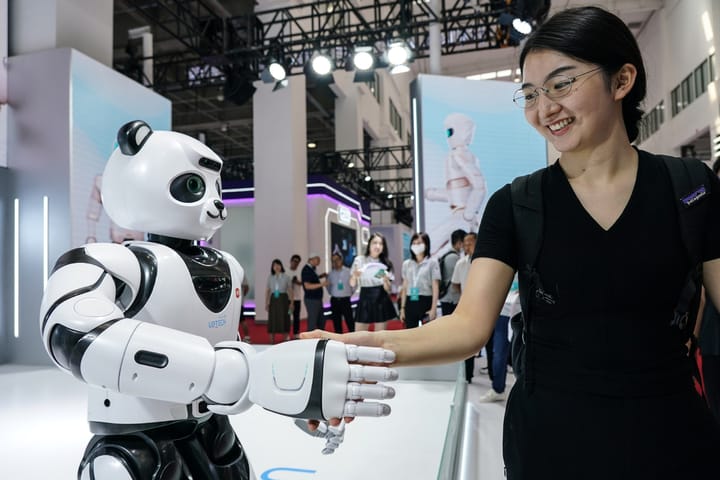
Robots are shedding their rigid shells. A new generation of machines is emerging that bends, stretches, senses, and adapts to humans rather than forcing humans to adapt to machines.
Soft robotics, powered by advances in artificial intelligence, is redefining how robots work alongside people in factories, hospitals, farms, and homes. This shift marks a fundamental change in robotics design philosophy, moving from control and isolation to collaboration and trust.
Why Soft Robotics Is a Break from Traditional Automation
For decades, robots were built from metal joints, hard edges, and predictable movements. These systems excelled at repetitive tasks in controlled environments but struggled anywhere humans were present. Safety cages and strict separation became standard.
Soft robotics changes that equation. Inspired by biology, such as octopus arms and human muscles, soft robots are made from flexible materials like silicone, elastomers, and textiles. They absorb impact, adapt to irregular shapes, and interact more safely with people.
This flexibility opens doors that traditional robotics could not. Handling fragile objects, working in unpredictable spaces, and operating directly next to humans becomes feasible rather than risky.
How AI Turns Soft Machines into Smart Collaborators
Soft hardware alone is not enough. Flexibility introduces complexity, as soft bodies deform in countless ways. This is where artificial intelligence becomes essential.
Machine learning models analyze sensor data from soft robots to understand shape, force, and movement in real time. Instead of relying on rigid equations, AI systems learn how a soft robot behaves under different conditions. Research labs at institutions like MIT have demonstrated AI-driven control systems that allow soft robots to adapt on the fly.
Advances in AI research from organizations such as Google DeepMind and OpenAI are also influencing how robots learn from demonstration, enabling machines to observe human actions and replicate them safely.
Real World Applications Where Humans and Robots Share Space
The impact of soft robotics and AI is already visible across sectors.
In healthcare, soft robotic gloves assist stroke patients with rehabilitation by adjusting support based on muscle response. Surgical tools made with soft components reduce tissue damage and improve precision.
In manufacturing, collaborative robots equipped with soft grippers handle delicate electronics and irregular parts without damaging them. This allows small and medium businesses to adopt automation without expensive retooling.
Agriculture benefits from robots that can pick fruits without bruising them, addressing labor shortages while reducing waste. In elder care and assistive technology, soft robots offer physical support without the intimidation or danger of rigid machines.
These use cases highlight a broader trend. Robots are moving closer to everyday human environments.
The Technical and Ethical Challenges Ahead
Despite progress, soft robotics faces real limitations. Soft materials wear out faster than metal. Controlling flexible bodies remains computationally demanding. Training AI systems requires extensive data, which can be expensive and time-consuming to collect.
Ethical questions are also emerging. As robots become more human-like in movement and interaction, expectations and trust increase. Clear boundaries must be maintained so users understand what robots can and cannot do. Safety certification standards are still evolving, particularly for healthcare and caregiving roles.
Experts cited by MIT Technology Review emphasize that collaboration must be designed responsibly, with transparency and fail-safe mechanisms built in from the start.
Why This Shift Matters for the Future of Work
Soft robotics and AI represent more than a technical upgrade. They signal a philosophical shift in automation. Instead of replacing humans, robots are increasingly designed to augment human capabilities.
For workers, this could mean less physical strain and fewer dangerous tasks. For businesses, it offers flexibility rather than full-scale replacement. For society, it opens the possibility of robotics that integrates more naturally into daily life.
The next decade will likely determine whether this promise is fulfilled. Investment, regulation, and public trust will play decisive roles.
Conclusion
The next era of robotics is not defined by speed or strength alone. It is defined by adaptability, safety, and collaboration. Soft robotics, combined with AI, is pushing machines out of cages and into shared human spaces. If developed thoughtfully, these technologies could reshape work, care, and industry in ways that feel less mechanical and more human.
Fast Facts: The Next Era of Robotics Explained
What is soft robotics?
The next era of robotics focuses on soft robotics and AI for human collaboration, using flexible materials and intelligent control to safely interact with people.
Where is this technology being used today?
The next era of robotics appears in healthcare, manufacturing, agriculture, and assistive devices where soft robots handle delicate tasks alongside humans.
What are the main limitations?
The next era of robotics still faces challenges around durability, control complexity, and ethical deployment in sensitive human environments.