Why Beijing Is Betting Big on Artificial Intelligence
China declares AI central to its industrial future, reshaping factories, innovation and global tech dominance.
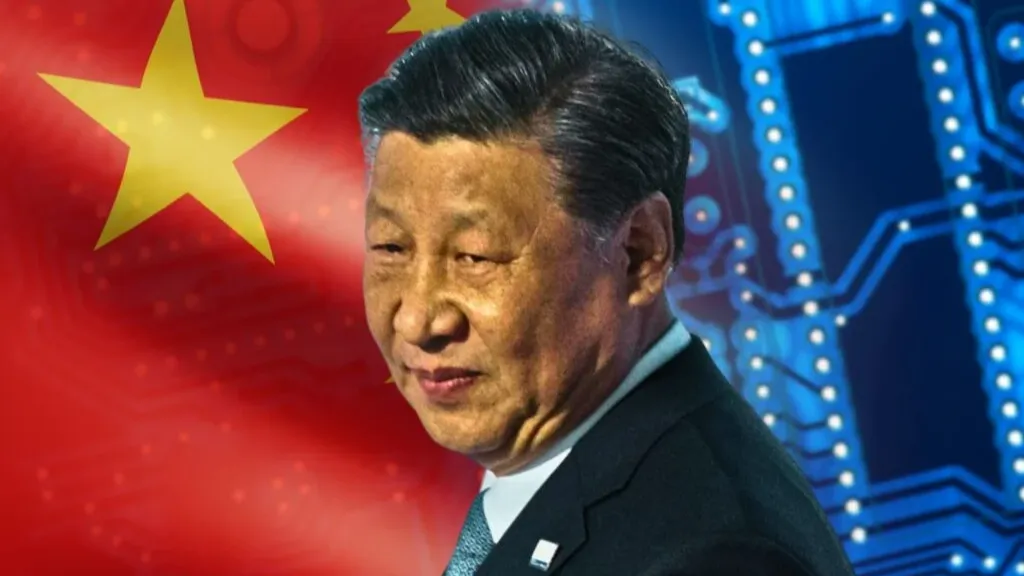
What happens when the world’s second-largest economy decides to place artificial intelligence at the center of its industrial strategy?
China appears to be answering that question right now. At the recent National People’s Congress meetings in Beijing, senior officials emphasized that AI is no longer just a technological curiosity. It has become a core engine of industrial modernization and economic growth.
Government officials say the integration of artificial intelligence across manufacturing, robotics, and consumer technology is accelerating rapidly. The goal is clear: reshape industries, increase productivity, and secure global leadership in next-generation technology.
AI Industrial Strategy in China Gains Momentum
The AI industrial strategy in China is built around integrating artificial intelligence into traditional industries while expanding high-tech sectors such as robotics and smart devices.
According to China’s Minister of Industry and Information Technology, Li Lecheng, more than 30 percent of large-scale industrial enterprises in China had adopted AI technologies by the end of last year.
This adoption spans multiple industrial processes including:
- Product design optimization
- Automated manufacturing
- Quality inspection systems
- Supply chain efficiency
Factories increasingly rely on human-machine collaboration, where workers supervise AI-driven production lines rather than performing repetitive tasks themselves.
This transformation is part of China’s broader push to create what policymakers call “new quality productive forces,” meaning industries powered by advanced technology and innovation.
Smart Factories and Human-Machine Collaboration
Inside Chinese factories, the concept of “unmanned production” is gaining traction. AI-powered systems now monitor production lines, detect defects, and optimize workflows in real time.
Instead of replacing workers entirely, these systems often complement them. Engineers oversee AI-driven machines that perform repetitive or precision-based tasks with greater consistency.
This shift is especially visible in sectors such as:
- Automotive manufacturing
- Electronics assembly
- Semiconductor packaging
- Industrial equipment production
As AI models become more capable, factories are expected to become increasingly autonomous while still requiring human oversight for complex decision-making.
China’s Expanding Robotics Leadership
Another pillar of the AI industrial strategy in China is robotics.
Officials revealed that China unveiled more than 300 types of humanoid robots in a single year, representing over half of the global total.
These robots are being developed for diverse applications including:
- Industrial automation
- Logistics and warehouse operations
- Healthcare assistance
- Service roles in retail and hospitality
Combined with AI-driven computer vision and machine learning, these robots could dramatically reshape labor-intensive industries.
China already dominates the global industrial robot installation market, and its growing humanoid robotics ecosystem suggests it aims to lead the next phase of robotics innovation as well.
The Role of Regional Innovation Hubs
To accelerate innovation, the government plans to strengthen regional technology clusters.
Key regions expected to drive the AI industrial strategy in China include:
- Beijing-Tianjin-Hebei region
- Shanghai and the Yangtze River Delta
- Guangdong and the Pearl River Delta
These areas will serve as hubs for research, talent development, and commercialization of advanced technologies.
Officials also emphasized the importance of strengthening basic research and creating world-class innovation ecosystems to sustain long-term technological breakthroughs.
Challenges and Global Implications
Despite rapid progress, the strategy faces several challenges.
First, scaling AI across industries requires significant infrastructure investment and skilled talent. Second, international competition in AI remains intense, with the United States and Europe investing heavily in similar technologies.
There are also broader concerns around automation and employment. While AI may increase productivity, it could also reshape labor markets by reducing demand for certain repetitive jobs.
At the same time, China’s aggressive push into AI could accelerate global technological competition and reshape supply chains across multiple industries.
Conclusion
China’s decision to place artificial intelligence at the center of its industrial strategy signals a major shift in global technology competition.
By combining AI, robotics, and smart manufacturing, the country aims to modernize its industrial base while strengthening economic growth. The success of this strategy will likely influence the future of global manufacturing, automation, and technological leadership.
For businesses and policymakers worldwide, one message is clear: AI is no longer experimental technology. It is becoming the backbone of modern industry.
Fast Facts: AI Industrial Strategy in China Explained
What is the AI industrial strategy in China?
China's AI industrial strategy is a centrally planned, multi-layered approach aimed at achieving global leadership in AI by 2030. The strategy has shifted from a "catch-up" phase to a "deployment-first" model, focusing on embedding AI into the "real economy" through the national "AI Plus" action plan.
How widely is AI used in Chinese industries?
AI adoption in Chinese industry has reached a critical scale, with more than 30% of major manufacturing enterprises (those with annual turnover above $2.8 million) integrating AI by the end of 2025.
What are the biggest risks of China’s AI push?
The AI push in China may accelerate automation and global competition, raising concerns about job displacement, technological rivalry, and the need for stronger AI governance frameworks.